
Business leaders share optimism on Asean


Play
"Asean will be the biggest economic-growth area in the world," said Harish Manwani, chief operating officer of Unilever in Singapore, when asked how he saw the region developing in the next decade. "I put my money on Asean. Asean is bigger than Asean t
Sharing the same thought was Yorihiko Kojima, chairman of the board of Mitsubishi Corporation in Japan, and a co-chairman of the World Economic Forum on East Asia.
“The secret is that Asean [countries are] at different stages of development, allowing companies to be more selective about where they set up production bases and focus on adding value across the region,” Kojima said.
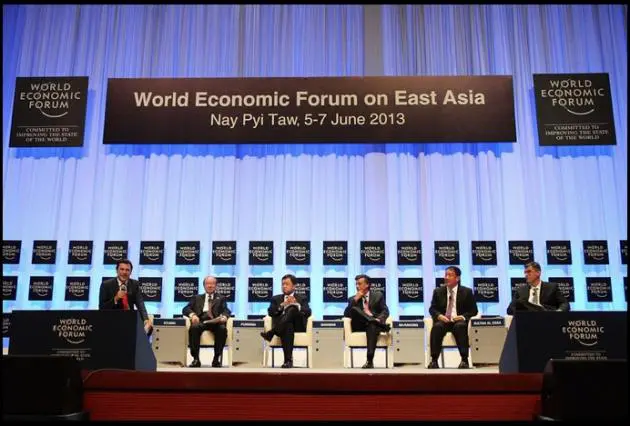
The panellists at the WEF on East Asia’s “Vision for East Asia’s Networked Future” session were all optimistic on the region’s outlook. The business and political leaders emphasised the need for greater connectivity and regulatory harmonisation to unlock the region’s vast growth potential.
While tariff harmonisation is about to be complete before the Asean Economic Community kicks off in 2015, Cesar V Purisima, secretary of finance of the Philippines, envisaged a more integrated financial market to attract a larger amount of capital to fund investment.
While Thai Finance Minister Kittiratt Na-Ranong said it was “impossible” for Asean to adopt a single currency as in Europe, Purisima said there could be platforms to boost intra-regional trade, which could be executed in any regional currency.
“After the 1997 financial crisis, we see the benefits of flexible foreign-exchange rates,” said Kittiratt, who is also a deputy prime minister.
Purisima noted: “There is no room for regulatory nationalism in Asean.” Asean’s strength, he said, is in its role as a regional trading bloc and it must not be derailed by bilateralism. He also expressed concern over the application of some countries in the bloc to join the Trans-Pacific Partnership, which might leave others at a disadvantage.
To Tarek Sultan Al Essa, chairman and managing director of Kuwaiti logistics company Agility, the integration makes the region attractive given that harmonisation in rules and regulations will facilitate the supply chain.
Manwani of Unilever added that more and more companies were moving towards regional supply chains. He noted that business always followed people. While Asean shows impressive economic development, to sustain its position it needs to focus on building a consumption network, building an intellectual community (as the number of PhDs compared with the world average is much lower than its economic share), and ensuring sustainable energy and water.
“It should create a growth model which is good for the economy and for sustainability,” he said. “What matters for multinational companies is simplicity. Asean can include anything that works, but it must be as simple as possible.”
