
BYD begins exporting Dolphin EVs from Thailand to Europe
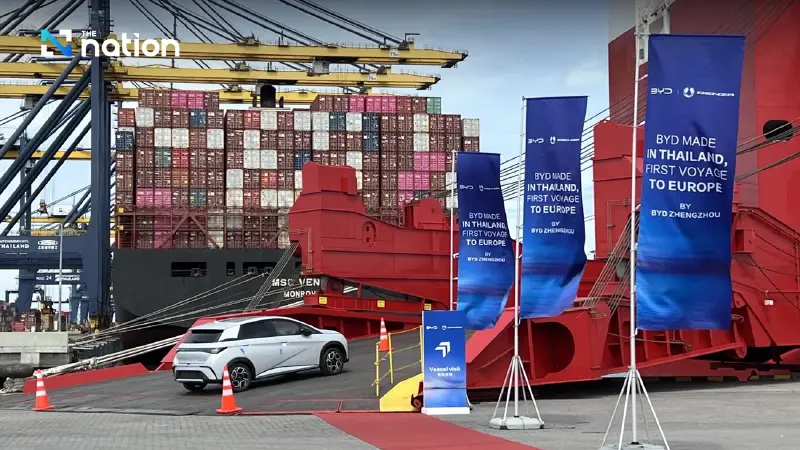


BYD has exported electric vehicles (EVs) from its production base in Thailand for the first time, beginning with the Dolphin left-hand drive model.
The first batch of 959 cars is destined for the European market, including Germany, Belgium and the Netherlands.
The Chinese automaker entered the Thai market in 2022 with the BYD ATTO 3, which drew overwhelming customer demand, with some queuing overnight to reserve cars. Since then, BYD has steadily expanded both its product line—covering EVs and plug-in hybrids—and its local manufacturing presence.
The company invested in a plant at WHA Industrial Estate in Rayong on a 600-rai site, with production starting on July 4 2024. The facility has an annual production capacity of up to 150,000 units and currently employs around 6,100 people, with a target of 10,000.
BYD’s investment plan, submitted to the Board of Investment (BOI), covers nine projects worth more than 35 billion baht, including battery and powertrain manufacturing. The current activities represent the first phase of its long-term expansion.
Initially, the plant was designed to serve as a right-hand drive production hub for the domestic market and right-hand drive ASEAN countries. However, BYD has now decided to extend output to left-hand drive models for export.

This adjustment not only expands BYD’s market reach but also supports compliance with Thailand’s EV 3.0 scheme, which grants tax breaks and subsidies to promote EV adoption.
The scheme allows 0% import duty, a reduced excise tax of 2% (from 8%), and direct subsidies of up to 150,000 baht per vehicle, provided that manufacturers offset imports with domestic production.
The offset ratio requires one locally produced car for every imported unit in 2024, rising to 1.5 units in 2025. With the scheme ending on December 31 2025, authorities have grown concerned that some manufacturers may struggle to meet the requirements.
Recent adjustments allow more flexibility, including the option to count exports as part of the offset quota—at a rate of 1.5 times.
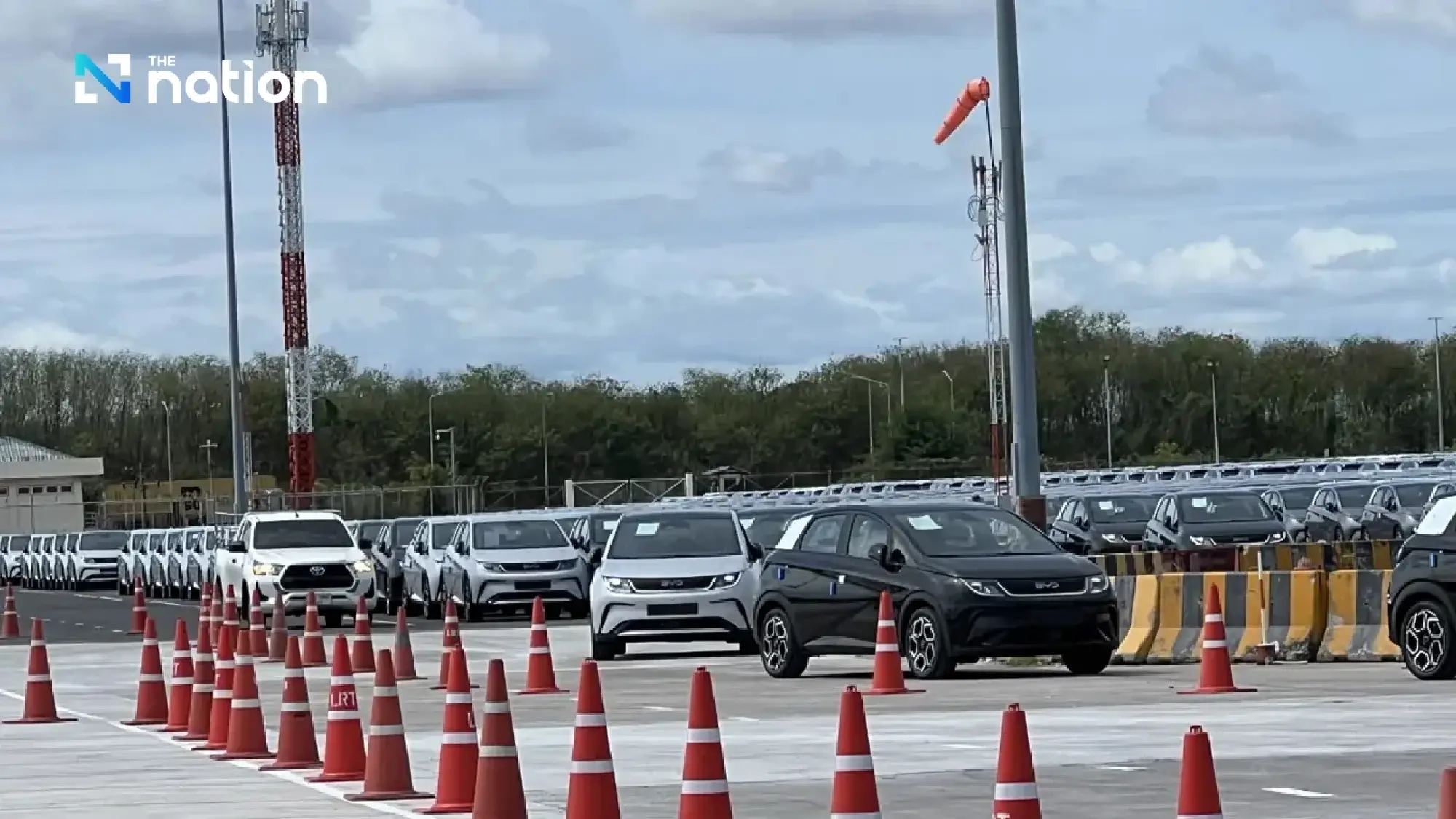

Higher sales, higher offset obligations
As Thailand’s leading EV brand and the country’s fourth-largest carmaker overall, with an 8% market share, BYD faces one of the heaviest obligations. It must produce about 30,000 units to offset imports under EV 3.0.
While it has already begun fulfilling this requirement, significant volumes remain to be produced by the end of 2025.
Although EV sales have risen sharply—66,000 new registrations in the first seven months of this year, up more than 50%—the scale of BYD’s offset obligation means domestic sales alone cannot balance its import volumes.
Exporting therefore offers a way to accelerate compliance and reduce the risk of oversupply in Thailand’s market.
“Allowing exports to be counted as production offsets is an effective approach,” a BYD executive said. “If we couldn’t export, all units would have to be sold domestically, intensifying competition and distorting the market structure.”
The government also benefits, as exported vehicles do not require subsidy payments, unlike units sold domestically, which remain eligible for up to 150,000 baht per car.
EV exports set to expand
Thailand’s EV exports are expected to grow more rapidly in the coming months, ahead of the scheme’s expiry.
The country’s first export of EVs from a local base took place in April, when the Federation of Thai Industries reported a shipment of 660 vehicles—1.43% of total exports that month.
