
Chinese EV makers push to extend relaxed battery rules, slowing Thai local-content use
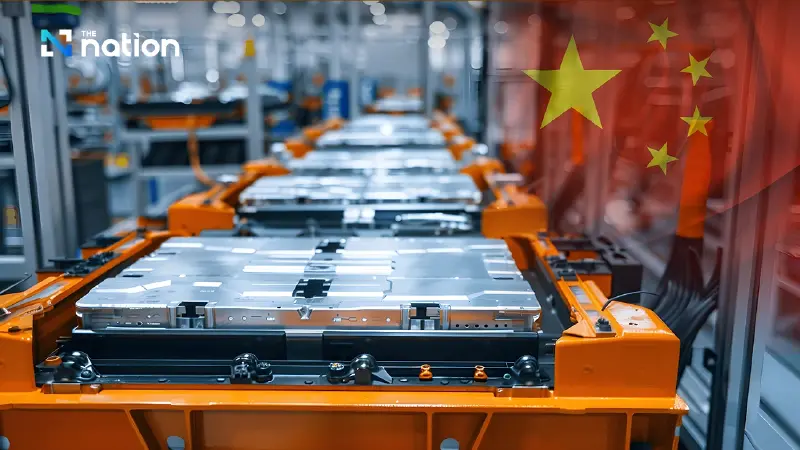


Chinese carmakers seek an extension to EV battery cell exemptions as Thailand pushes for higher local content and upstream battery investment.
Chinese carmakers operating in Thailand are reportedly lobbying the national EV board to extend relaxed rules on using imported EV battery cells, a move aimed at controlling production costs and reducing reliance on locally made components.
Although Chinese manufacturers have pledged to use more than 40% local content—meeting legal requirements—and plan to gradually increase this to support Thailand’s automotive supply chain and create local jobs, Thai suppliers say the reality on the ground looks very different.
Suppliers across multiple tiers confirm that Chinese brands still use far fewer Thai-made parts than their Japanese counterparts. This aligns with data from the Federation of Thai Industries (FTI), which says Thai parts manufacturers want major Chinese firms to allow more domestic companies into their supply chain.
Nawa Chantanasurakon, vice-chairman of the FTI, said that although production costs in Thailand may be slightly higher, supporting local parts manufacturers strengthens confidence, employment and public perception. Employment in the automotive and parts sector has already fallen from over 600,000 workers to around 400,000 due to rising import dependency.
A key issue now concerns the import of battery cells or modules for assembly into battery packs. Under a temporary measure ending in 2025, the government allows these imported cells to be counted as up to 15% of domestic production value for EVs. Without this exemption from 2026 onwards, Chinese brands would need to increase their use of local components, raising production costs.
Chinese manufacturers argue that Thai suppliers are slower and more expensive than Chinese parts makers.
Between 2022 and 2025 the government allowed foreign battery cells to be counted as domestic value when used to assemble batteries in bonded zones, but only up to 15% of an EV’s ex-factory price. This was intended to support early-stage EV investment.
Despite surging EV sales and nearly ten Chinese EV plants now being established in Thailand, most current battery-related investment remains focused on pack-assembly technologies such as Cell-to-Pack (A3 incentive tier) and Cell-to-Module (A2). The government’s real target, however, is to attract upstream cell-manufacturing projects (A1)—the highest-technology segment.
Investors in A1-level cell manufacturing receive eight-year corporate income tax exemptions, zero import duty on machinery and raw materials used for export production, and 90% duty reductions for domestic-market raw materials, along with additional non-tax incentives.
BYD Auto (Thailand) said its Rayong plant now employs over 5,800 workers, of whom 92% are Thai—up from 80% last year and expected to reach 95% by year-end. BYD’s local-content ratio has risen to 54%, up from 45%, supported by more than 35 local suppliers and 529 locally sourced parts.
Changan Auto Sales (Thailand) said Thailand is its key ASEAN hub, with an investment of over 10 billion baht in its first plant outside China, also located in Rayong. The project is expected to create over 20,000 jobs across the supply chain. More than 90% of Changan’s workforce is Thai, and the company uses over 60% locally made parts—aiming for 80% by 2030.
Between January and September 2025, Thailand sold 447,000 vehicles, up 2.1% year-on-year. EV sales totalled 81,351 units—an increase of 55.8%.
