
Global EV Fleet to Hit 116 Million in 2026, Driven by China and Surge in Hybrid Adoption
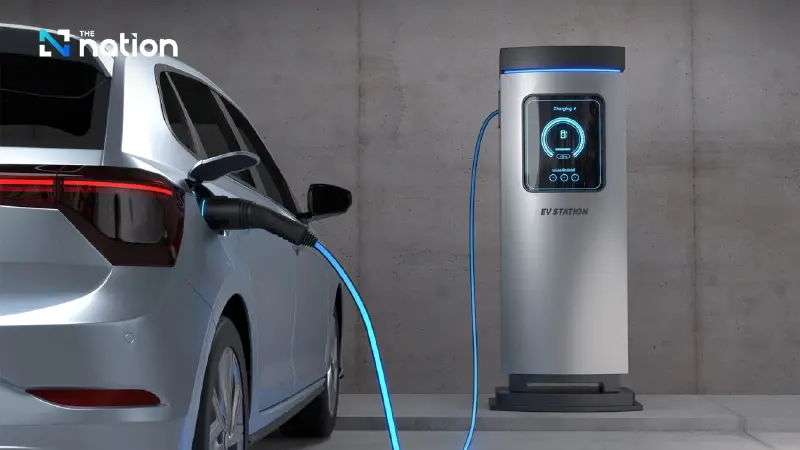


Despite policy shifts and tariff barriers in the US, the number of electric vehicles on the road is forecast to jump 30%, with Plug-in Hybrids gaining crucial market share
- The global electric vehicle fleet is projected to reach 116 million units in 2026, a 30% increase from the previous year.
- China is expected to be the primary driver of this growth, accounting for 61% of the total global EV fleet in 2026.
- A significant trend is the accelerated adoption of Plug-in Hybrid Electric Vehicles (PHEVs), with ownership forecast to grow by 32% in 2026 due to consumer preference for flexibility.
- While Battery Electric Vehicles (BEVs) will still form the majority of the fleet, their projected sales share has been revised downward in favor of the growing popularity of PHEVs.
Despite policy shifts and tariff barriers in the US, the number of electric vehicles on the road is forecast to jump 30%, with Plug-in Hybrids gaining crucial market share.
The worldwide adoption of electric vehicles (EVs) is set for a substantial acceleration in 2026, with the total installed base of cars, buses, vans, and heavy trucks projected to reach 116 million units, according to a new forecast from Gartner.
This represents a robust 30% year-on-year increase from the 89.6 million vehicles in use in 2025.
This growth is maintained despite policy headwinds, including the removal of subsidies in many markets and the introduction of tariffs on vehicle imports by the US government.
"Despite the U.S. government introducing tariffs on vehicle imports and many governments removing the subsidies and incentives for purchasing EVs, the number of EVs on the road is forecast to increase 30% in 2026," said Jonathan Davenport, Sr Director Analyst at Gartner.

The Hybrid Surge and Market Shift
While Battery Electric Vehicles (BEVs) are still expected to account for the majority of the fleet, a key trend is the accelerating adoption of Plug-in Hybrid Electric Vehicles (PHEVs).
PHEV Growth: Global ownership of PHEVs is forecast to rise by 32% year-over-year in 2026, reaching an installed base of 39,835,111 units (up from 30,074,582 in 2025).
BEV Share Adjustment: The dominance of BEVs in terms of sales has been revised down in the 2026 forecast from an expected 77% to 63%, reflecting slower-than-anticipated adoption for fully electric models.
The BEV installed base is still forecast to grow significantly, reaching 76,344,452 units in 2026 (up from 59,480,370 in 2025).
Analysts attribute the strong PHEV momentum to customer preference for flexibility.
Davenport noted, "customers value the reassurance of a back-up petrol engine for use, should they need it."
This dynamic has led major EV manufacturers, such as BYD, to pivot their offerings to focus on PHEV models.
A small but growing sub-category includes range extender vehicles—PHEVs where the petrol engine exclusively powers a generator to charge the battery, providing a smoother electric-only driving experience.

Regional Dynamics
The global distribution of the EV fleet is heavily skewed toward Asia:
China's Dominance: China is projected to account for a massive 61% of the total global EV installed base in 2026. The demand outlook for China has been revised up, with expected shipments increasing from 13.4 million to 16.5 million in 2026.
This surge is driven by high competition among domestic vendors, which has lowered prices, alongside continued investment in charging infrastructure.
However, the Chinese government has recently intervened to curb excessive discounting and is scaling down its subsidies.
US Market Contraction: Demand in the US market has softened, following the introduction of tariffs on imported vehicles and the removal of purchasing subsidies and incentives.
Regulatory Influence
The forecast underlines that the overall drive toward electrification remains primarily a response to regulatory pressure rather than purely organic consumer demand.
Automakers are developing EVs mainly in response to government concerns over air quality and climate change.
Governments worldwide are signalling their commitment to phasing out Internal Combustion Engine (ICE) vehicles by refusing to approve new models, with the objective of reducing particulate matter (PM) and CO₂ emissions, which are viewed as significant contributors to environmental issues.
