
Thai Automotive Market Surges 53% as EV Deliveries Hit Top Gear
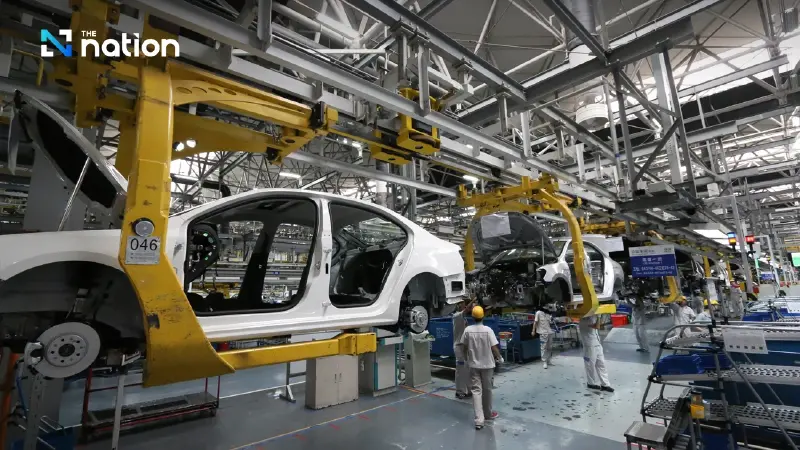


Passenger car and SUV sales skyrocket on the back of government EV subsidies, while the struggling pickup sector awaits a stimulus from the new government
- Thailand's domestic automotive market surged by 53.77% year-on-year in January 2026.
- The growth was primarily propelled by a record number of electric vehicle (EV) deliveries, causing passenger car and SUV sales to soar.
- This spike in EV sales is directly attributed to government subsidy schemes, specifically the 'EV 3.0' and 'EV 3.5' programs.
- In stark contrast to the EV boom, the traditionally strong pickup truck market contracted by 5.5% due to tighter credit conditions.
Passenger car and SUV sales skyrocket on the back of government EV subsidies, while the struggling pickup sector awaits a stimulus from the new government.
The Thai automotive industry has kickstarted the "Year of the Horse" with a remarkable 53.77% surge in year-on-year sales for January 2026.
The growth was primarily propelled by a record-breaking influx of electric vehicle (EV) deliveries, though the heavy-duty pickup sector continues to flounder amidst tightening credit conditions.
According to data released on Tuesday by the Automotive Industry Club of the Federation of Thai Industries (FTI), domestic vehicle sales reached 73,936 units.
The spike is attributed to the final delivery phase of the government’s ‘EV 3.0’ subsidy scheme and the transition into ‘EV 3.5’, which mandates a 2:1 domestic production offset. This regulatory push saw sales in the passenger car and SUV segments soar by 76.2% and 93.6% respectively.
In stark contrast to the electric boom, the pickup truck market—traditionally the backbone of the Thai economy—contracted by 5.5%. Industry analysts point to a "perfect storm" of sluggish domestic growth and diminished consumer purchasing power.
Financial institutions have significantly tightened their lending criteria, leading to high rejection rates for hire-purchase loans. As a result, the wider manufacturing sector is currently operating at less than 60% of its total capacity.
Despite the uneven performance, the FTI noted encouraging macroeconomic signals from the final quarter of 2025, which saw 2.5% growth. Private sector investment rose by 6.5%, spurred by a 12.2% increase in factory construction and a 21.8% jump in machinery imports.
Surapong Paisitpatanapong, spokesperson for the FTI’s Automotive Industry Club, expressed optimism for the year ahead, setting a production target of 550,000 units—a 10% increase over 2025. However, he stressed that sustained recovery depends heavily on the incoming administration.
"We are waiting for the new government to fast-track investment projects valued at 1.8 trillion baht," Surapong said. "Stimulating these investments is vital to create jobs and restore the 5% GDP growth levels Thailand enjoyed in the past."

The FTI has urged the new cabinet to prioritise the "ease of doing business" and to maintain support for high-growth sectors, specifically Artificial Intelligence (AI), digital infrastructure, and data centres.
