
Motor Show 2026 signals Thailand’s shift into EV era


SCB EIC says record Motor Show bookings show Thailand’s car market has turned EV-led, though import reliance still limits the wider economic gain.
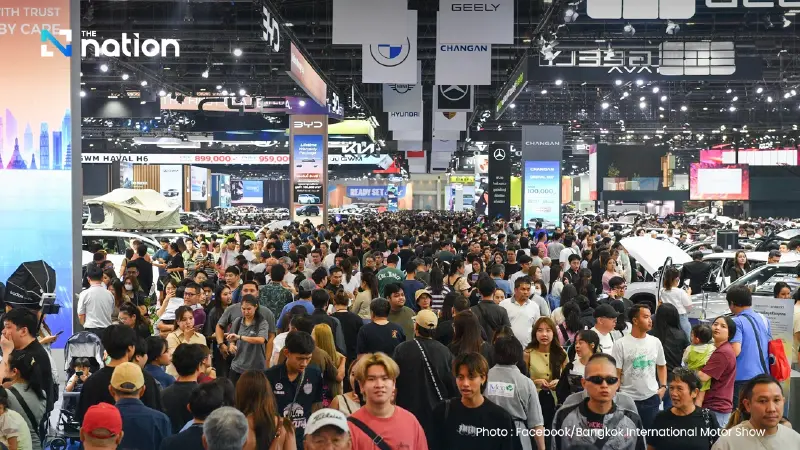
The 47th Bangkok International Motor Show was more than a rebound in showroom traffic. According to SCB EIC, it marked a clearer turning point for Thailand’s car market, with EVs emerging as the main force reshaping demand, competition and consumer choice. The event closed with a record 132,951 car bookings, the highest in its history.
Record bookings point to an EV-led market shift
SCB EIC said higher oil prices linked to Middle East tensions helped sharpen the cost advantage of EVs. It said the running cost of internal combustion vehicles had risen to about 2.2 baht per kilometre, compared with roughly 0.5 baht per kilometre for EV charging. Chinese brands captured 65% of bookings, reflecting how strongly the market has swung towards new EV offerings.

The deeper shift, SCB EIC said, is in consumer behaviour. Thai buyers are placing more weight on value and technology than on traditional brand loyalty, helping newer entrants gain traction as the market moves further into the EV era.
Bookings are strong, but deliveries will be lower
Even so, the surge in reservations is unlikely to translate fully into actual sales. SCB EIC estimates that only about 70% of bookings, or roughly 91,000 units, will be delivered, down from an average of 75-80% during 2022-2025. It pointed to stricter loan approvals, especially for EVs, where buyers often face higher down payments and shorter repayment periods.

The research house also warned that some orders could still be cancelled if more attractive new models are launched or if delivery times prove too long. That means the headline booking figure, while striking, still overstates the market’s likely real sales outcome.
The bigger challenge is capturing the economic gain
SCB EIC said the more important question now is not whether EV demand is rising, but how much of that boom Thailand can convert into domestic economic value. It warned that the current upturn is relying increasingly on imported vehicles, limiting the benefit to local value added even as sales rise.
That, in turn, leaves pressure on policymakers to move faster. SCB EIC said Thailand still needs to strengthen domestic parts supply, expand charging infrastructure and improve related services such as insurance, while accelerating investment in local EV manufacturing and helping Thai component makers move deeper into the EV supply chain.
Overall, the message from Motor Show 2026 is clear: Thailand’s auto market is no longer simply recovering. It is being reorganised around EVs. The next phase will depend less on booking momentum than on whether Thailand can build an industrial ecosystem strong enough to keep more of that transition at home.
