
Thai Airways Board 'Gravely Concerned' Over $400m Jet Lease Proposal
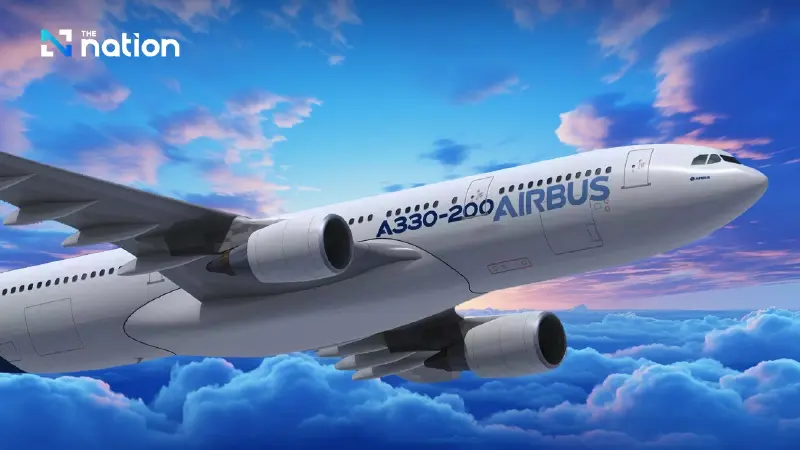


Post-restructuring, THAI management's push to lease eight-year-old Airbus A330s sparks internal row over high costs and breach of fleet simplification strategy
- The Thai Airways board is expressing grave concern over a management proposal to lease second-hand Airbus A330 aircraft, a deal valued at over $400 million which they have repeatedly refused to approve.
- The board's primary objection is that the proposal contradicts the airline's post-restructuring strategy, which was designed to simplify the fleet and reduce costs, not re-introduce an older, less fuel-efficient model.
- Directors are also concerned about the financial risk so soon after the airline's business rehabilitation and question the operational logic, as the shorter-range A330 is not a suitable substitute for delayed long-haul Boeing jets.
Thai Airways International Public Company Limited (THAI) is facing intense internal debate after its management repeatedly proposed a controversial plan to lease second-hand Airbus A330-200 aircraft, a move that would incur costs exceeding $400 million.
The push for the expensive deal comes despite the national carrier only having exited its court-supervised business rehabilitation plan in June 2025.
Sources within the airline revealed that the initial effort to introduce the Airbus A330s began in April 2025 under the tenure of former plan administrator Piyasvasti Amranand.
The jets were ostensibly meant to temporarily replace Boeing 777 deliveries, which are now anticipated to be delayed until 2027.
However, the proposal has been met with persistent questions from the new Board of Directors, who have refused to approve the investment across at least three submissions.
The board's scepticism centres on two main areas: operational fit and financial prudence.
Management's argument for the lease was twofold: to counter the delayed delivery of new Boeing 787s and 777s, and to mitigate potential financial underperformance caused by the grounding of some existing aircraft due to a shortage of spare parts for their Rolls-Royce Trent 1000 engines.
Yet, critics point out a fundamental flaw: the A330 (with a maximum range of approximately seven hours) is not a direct substitute for the long-haul Boeing 777 (which flies ten hours or more).

The proposed plan involves leasing approximately eight-year-old aircraft, with the total expenditure, including associated costs, estimated to be more than 13.2 billion baht ($400 million).
This sum is split between the lease payments and a further estimated $140 million required for essential cabin refurbishment (retrofit) and spare engines.
The board’s principal concerns are:
Breach of Strategy: The core strategic plan post-restructuring was to drastically simplify the fleet down to just four core types (777, 787, A350, A321). Introducing the A330 directly contradicts this goal, which was designed to cut the previous excessive costs associated with maintenance, spare parts, and pilot training.
Previous Phase-Out: THAI had previously cancelled A330 orders and has plans to decommission the entire model by 2030, making the decision to re-introduce them a questionable step.
High Operating Costs: The A330 uses older aluminium technology, making the aircraft heavy and less fuel-efficient. Coupled with its current Rolls-Royce engines, its high fuel consumption would exacerbate an operational cost that already accounts for 30% of the airline's total expenditure.
Better Alternatives: Directors have instead suggested leasing or purchasing newer, more efficient models, such as the Boeing 787, which uses lighter, more economical carbon composite materials.

The Board maintains that as the company embarks on its recovery, long-term asset decisions must be made with extreme caution to avoid imposing future financial liabilities that could jeopardise its renewed viability.
Meanwhile, Chai Eamsiri, THAI's Chief Executive Officer, issued a statement to the Stock Exchange of Thailand, clarifying that internal rumours about board changes and movements were without any "final conclusion whatsoever."
The CEO affirmed that the company is adhering strictly to corporate law in preparing for its 2025 Annual General Meeting, assuring shareholders that the process would uphold their rights and corporate governance standards.
