
OR overhauls foreign investment plans


PTT Oil and Retail Business (OR) is expanding globally with strategic shifts in Cambodia, Vietnam, and Myanmar, while focusing on EV infrastructure and sustainable growth
-
OR halts operations in Vietnam and plans a “wind down” due to inefficient business models, high local competition and high hidden costs.
-
OR evaluates Cambodia as a “high-risk area,” with sales dropping by 50-60% and the number of stations decreasing due to political tensions.
-
Despite these challenges, OR is expanding EV infrastructure with a target of 7,000 charging stations by 2030 and aims to expand Intelligent Station to 200 this year to analyse customer’s needs.
-
OR aims to increase the revenue share from its Non-Oil business to 10%, as this sector generates nearly 30% of the group’s profits, despite currently accounting for only 4-5% of revenue. The long-term goal is to adjust the revenue share to 30% from Non-Oil and 70% from Oil.
PTT Oil and Retail Business Public Company Limited (OR) aims to elevate the Thai brand to global standards by learning the lifestyles of consumers in various countries and adapting its business model accordingly. OR currently operates in Cambodia, Vietnam, Laos, the Philippines, Oman, Malaysia, and Japan.
The company’s international business includes retail oil outlets (PTT stations), oil storage facilities, aviation fuel sales, PTT Lubricants, Café Amazon, and Jiffy convenience stores. Café Amazon is the only business to have been fully invested in all seven countries. OR is currently reassessing its investment in Vietnam, where it previously operated 22 Café Amazon branches. Additionally, there were plans to collaborate with local partners to study coffee beans.
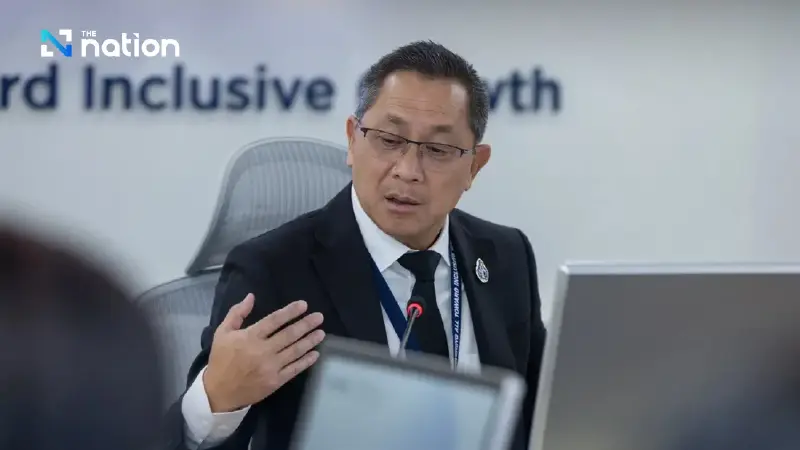
M.L. Peekthong Thongyai, CEO of PTT Oil and Retail Business, shared the company’s international strategy amidst economic and political uncertainties in the CLMV (Cambodia, Laos, Myanmar, and Vietnam) region. Although international business is a key pillar of OR’s growth, operations in several countries require significant strategic adjustments to maintain long-term organisational strength.
The primary strategy is to apply the “formula for success in Thailand” to international markets. Neighbouring countries such as Cambodia, Myanmar, Laos, and Vietnam are seen as ideal expansion areas due to Thailand’s geographical and infrastructural advantages, which enable seamless expansion, especially in transportation systems, energy transport, and logistics networks in Southeast Asia.
M.L. Peekthong stated that Myanmar, Laos, and Cambodia are markets where Thailand can benefit from its existing infrastructure, such as roads, railways, waterways, and energy connectivity, aiding the efficient expansion of business. He views “neighbouring countries” or the “inner continental” region as the most suitable area for OR's investment moving forward.
“Although international business remains a key pillar, OR must slow new investments in several countries due to significant changes in circumstances, particularly in Vietnam and Cambodia, which face structural challenges in competition and political factors,” he added.
Regarding the decision to close all operations in Vietnam and enter the “wind-down” process, this is due to the inability to effectively adapt the Thai service station model. Despite operating around 20-30 stations, OR faced strong local competitors and high hidden costs, making operations unprofitable. Closing the Vietnam operation will reduce the company’s loss burden and improve overall profitability.
Cambodia continues to be considered a “high-risk area,” with sales dropping by 50-60%, and the number of stations reduced to around 150 from 200. Local dealers have rebranded over 40 stations due to political tensions.
On Myanmar, the situation has eased from the worst of the tensions, and elections may take place in the future. If recognised by the global community, Myanmar will return to being a high-potential market, particularly for energy, with its growing population. If international sanctions are lifted, investments can be ramped up immediately, as the necessary infrastructure is already in place. In the short term, OR will focus on the gas business, which is vital to Thailand’s energy system.
In Laos, the business continues to grow, especially Café Amazon, which remains highly popular. OR has nearly full coverage of stations across the country. The close economic and logistics ties help keep the Laos market stable.
“The case of Cambodia serves as an important lesson. No matter how good international relations are, political changes can bring a long-standing business to a halt in a short period. This has led OR to adjust its international strategy based on new risk factors,” said M.L. Pheektong.
Nevertheless, OR continues to expand its electric vehicle (EV) charging infrastructure. The company now has 3,300 charging points across the country, an increase of more than 2,000 from last year, with an average usage rate of six hours per day. OR aims to reach 7,000 charging points by 2030. Several partners are eager for OR to install charging points in locations with near 24-hour usage. OR has developed the EV Cube, a mobile charging station with 4-6 units and 8 charging points per unit, which is highly popular in densely populated areas.
Additionally, OR has developed the EV Station Plus, which allows customers to check reservation slots in advance, enhancing convenience for EV users. Given that Thailand’s electricity system is not yet ready for 800kW charging points at a large scale, the target for the next 1-2 years is to achieve 120-180kW stations, with a charging time of around 30 minutes, in line with the behaviour of most users.
“Due to the longer charging time compared to refuelling, OR has adapted service stations to cater to those with longer waiting times, such as laundromats, fast food restaurants, cafés, and community service areas.”
Currently, OR serves 3.9-4 million customers daily, with plans to increase this number to 5 million daily by next year, targeting 4.3-4.4 million customers daily. Despite holding a 36% share of the oil market, OR aims for future growth to come from “customer traffic” rather than oil volume, as the energy market transitions towards electricity.
OR is also adjusting its revenue structure significantly, moving from 90% oil and 10% non-oil to a new target of 70% oil and 30% non-oil. Although non-oil revenue currently accounts for only 4-5%, it contributes nearly 30% of the company’s profit. Therefore, OR plans significant investment in this sector to increase its revenue share to 10%.
Furthermore, OR has raised its target for expanding Intelligent Stations from 20 to 200 by the end of this year, focusing on Bangkok and surrounding areas and major highways. The company will use customer data and in-depth analysis systems to design services and products that meet the needs of each location.
Regarding oil prices for 2026, OR expects them to remain steady at $60-70 per barrel, a price level that consumers can “still tolerate.” This means the push to switch to EVs will not accelerate as much as expected. While EV sales will increase, oil consumption in the country is unlikely to decrease significantly in the near future.
“OR’s mission is to ensure that when Thailand transitions to new energy, charging stations must always be ready, so consumers don’t have to carry both internal combustion engine vehicles and EVs at the same time.”
