
Bangkok Airways Reports Resilient Performance Amid Regional Aviation Recovery
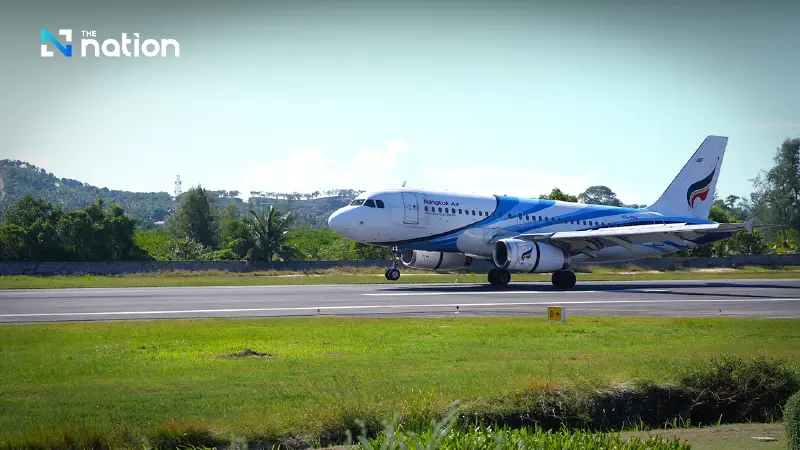


The Thai carrier posts THB 3.14bn profit in first nine months whilst accelerating fleet renewal and infrastructure investments to capitalise on tourism rebound
- Bangkok Airways reported a net profit of 3.14 billion baht in the first nine months of 2025, demonstrating financial resilience despite a 2% decrease in passenger numbers.
- The airline's strong performance is anchored by its Samui routes, which account for 66% of all passengers and achieve a high load factor of 87%.
- To capitalize on the tourism recovery, the carrier is accelerating fleet renewal with new aircraft and investing 600-700 million baht in upgrading its key hub at Samui Airport.
- While profitable, the airline experienced a 12% decline on international routes, highlighting the uneven nature of the regional aviation recovery amid geopolitical uncertainties.
The Thai carrier posts 3.14 billion baht profit in first nine months whilst accelerating fleet renewal and infrastructure investments to capitalise on the tourism rebound.
Bangkok Airways has navigated a challenging aviation landscape in 2025, posting a net profit of 3.14 billion baht on revenues of 19.99 billion baht for the first nine months, despite carrying 2% fewer passengers year-on-year at 3.24 million.
The airline's president, Puttipong Prasarttong-Osoth, on Friday, outlined ambitious plans to strengthen the carrier's competitive position through fleet expansion, airport development, and enhanced connectivity, as Thailand's aviation sector continues its recovery from pandemic-era disruptions.
The carrier's Samui routes remain its commercial backbone, accounting for 66% of all passengers and achieving an impressive 87% load factor—well above the airline's 76% average.

Domestic flights to the resort island grew 4% year-on-year, driven by tourism revival and improved passenger confidence.
Connecting services from Samui to destinations including Chiang Mai, Phuket, and Krabi performed particularly strongly, with load factors approaching 90%.
International markets continue to dominate revenue generation, contributing 82% of total passenger income, with European and Middle Eastern travellers representing 55% of this segment.
However, the carrier experienced a 12% decline in international routes overall, attributed to lingering travel restrictions and geopolitical uncertainties affecting global travel patterns.

Fleet Modernisation and Infrastructure Investment
Bangkok Airways operates a fleet of 22 Airbus aircraft, comprising 11 A320s, one A319, and two ATR72-600s.
The airline plans to add two A320s in 2026 and has signed agreements to acquire 10-12 ATR72-600 aircraft, with initial deliveries scheduled for the fourth quarter of 2026.
The carrier is investing 600-700 million baht in Samui Airport renovations, with construction expected to commence in mid-2026.
The project focuses on upgrading passenger lounges, baggage handling systems, and transit areas to accommodate growing passenger numbers and enhance service quality.
Puttipong also highlighted the Utapao Airport development near Pattaya as a strategic priority.
The project, undertaken in collaboration with government authorities, aims to position the facility as a regional aviation hub within Thailand's Eastern Economic Corridor through expanded terminal capacity, runway improvements, and enhanced cargo facilities.
Environmental considerations feature prominently in Bangkok Airways' strategy.
The carrier has begun utilising sustainable aviation fuel on approximately 1% of flights departing Thailand, with ambitions to increase this to 10% over the coming years.
The airline has signed a memorandum of understanding with the Civil Aviation Authority of Thailand and other domestic carriers to promote environmentally responsible practices aligned with the country's net-zero emissions target by 2050.
The carrier recently added ITA Airways, a Lufthansa Group member, to its interline partnership portfolio, strengthening access to European markets.
Bangkok Airways now maintains codeshare agreements with six international carriers to enhance connectivity across its regional network.

Thailand's Broader Aviation Context
Bangkok Airways' performance reflects wider trends in Thailand's aviation sector, where carriers are recalibrating strategies to capitalise on the tourism recovery whilst managing persistent headwinds.
Thai Airways International, the national flag carrier, has been restructuring under court-supervised rehabilitation since 2020, focusing on route optimisation and fleet efficiency as it works towards profitability.
The carrier has emphasised premium services and long-haul connectivity to differentiate itself in an increasingly competitive market.
Meanwhile, Thai AirAsia has pursued aggressive capacity expansion, leveraging its low-cost model to capture price-sensitive leisure travellers.
The budget carrier has been adding routes across Southeast Asia and expanding domestic services to secondary cities, betting on sustained demand growth from middle-class Thai and regional travellers.
Industry observers note that Asia's aviation sector has expanded approximately 13% this year, with European routes growing 14%, driven largely by increased connectivity through Middle Eastern hubs.
However, the recovery remains uneven, with airlines carefully balancing capacity additions against fuel costs, currency fluctuations, and uncertain consumer confidence.

Outlook
Puttipong expressed cautious optimism about Bangkok Airways' prospects, emphasising operational stability, controlled network expansion, and contribution to Thailand's tourism sector as core priorities.
The airline's revenue declined modestly by 14 million baht compared to the previous year, primarily due to reduced ticket sales, though disciplined cost management has maintained profitability.
Management aims to optimise operational expenses whilst developing ancillary revenue streams and selectively expanding routes.
"Our focus remains on maintaining financial discipline whilst investing strategically in assets that will support long-term growth," Puttipong stated, noting the airline's commitment to enhancing passenger experience and operational efficiency.
The carrier faces ongoing challenges from geopolitical tensions, economic uncertainties, and competitive pressures, but its concentration on high-yield routes, particularly Samui operations, provides a degree of insulation from broader market volatility.
