
Thai Business Giants Demand Law Reform to Tackle Waste Crisis
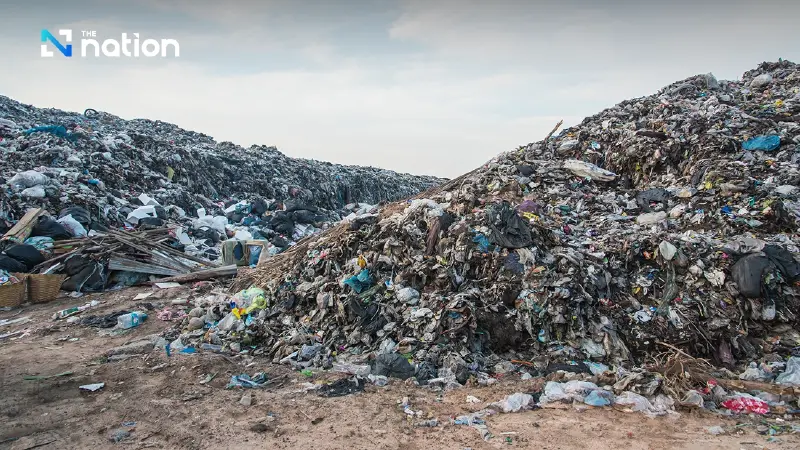


Private sector leaders urge government to overhaul outdated waste-to-energy regulations and tackle massive food waste volumes for economic gain
- Thai business leaders are demanding the government reform outdated local laws that mandate landfilling, which obstructs the implementation of modern waste-to-energy (WtE) solutions.
- A key demand is to accelerate the slow, multi-stage permit process for WtE plants, which currently causes delays of over a year and hinders progress.
- The call for reform is also driven by the massive economic impact of waste, particularly food waste, with executives highlighting Bangkok's 7 billion baht annual disposal cost.
Private sector leaders urge government to overhaul outdated waste-to-energy regulations and tackle massive food waste volumes for economic gain.
Thailand’s leading corporations have united to call upon the government to urgently address the country’s escalating urban waste crisis, citing slow regulatory processes and outdated laws as major obstacles to implementing modern solutions.
The demands were raised at the "Sustainability Forum 2026 Shift Forward: Overcoming Challenges," organised by Krungthep Turakij on Wednesday.
Call to Reform Waste-to-Energy Laws
Pakkapol Leopairut, executive vice president of TPI Polene Power Public Company Limited, highlighted the need for policy reform to accelerate waste-to-energy (WtE) projects, which he noted are a globally efficient alternative to landfilling.

He identified two critical regulatory failures:
Outdated Local Rules: Some local administrative bodies still mandate landfilling as the sole disposal method, or impose rigid operator qualification criteria based on 20-year-old guidelines that only recognised landfill operations.
Permit Delays: The multi-stage, sequential approval process for setting up WtE plants, particularly the requirement to complete the Environmental Impact Assessment (EIA) before construction begins, causes significant delays.
“In the past, we could build concurrently with the EIA study, saving time. Now, we have to wait 1 to 1.5 years idle while 70,000 tonnes of waste are produced daily nationwide,” Pakkapol stated.
He stressed that continued landfilling is a missed economic opportunity, adding that land currently used for dumping could be used for higher-value developments like hospitals or shopping centres, simultaneously reducing environmental and visual pollution.

The Economic Impact of Food Waste
Siriporn Dechsingha, chief Sustainability and Corporate Communication Officer of CP Axtra Public Company Limited, emphasised the magnitude of the food waste problem.
Globally, one-third of all waste is food, an issue magnified by the fact that half the world's population faces hunger.
She noted that food waste creates greenhouse gases and carries a massive economic cost, pointing out that the Bangkok Metropolitan Administration (BMA) spends a reported 7 billion baht annually on waste disposal—a sum equivalent to its combined public health and education budget.
CP Axtra, which operates Makro and Lotus’s, is leveraging its central position between 50,000 producers and millions of consumers to reduce waste:
Innovation: Introducing 'breathable bags' for produce and 'skin packaging' to extend meat shelf life from seven days to 21 days.
Consumer Incentives: Promoting 'yellow-label' food nearing its expiry date at 50-60% discounts to encourage purchase and reduce in-store spoilage.

Driving the Circular Economy
Voralak Tulaphorn, CEO of Group Marketing for The Mall Group Company Limited, detailed how shopping centres can accelerate sustainability through the Circular Economy.
With millions of monthly visitors, the centres are a direct communication channel to encourage recycling and reuse:
Creative Reuse: The Mall Group donates seasonal decorations (like those from their 2026 Monchhichi campaign) to children after use, and uses recycled materials for display booths.
Recycling Incentives: A collaboration with Coca-Cola saw 100,000 plastic bottles returned within the first 10 days via a reverse vending machine in exchange for a free drink.
Retail Inspiration: The Group provides space for sustainable brands, such as Pipatchara, which turns plastic waste into fashion, to inspire consumers and illustrate the social value of recycled products.
