
AOT to overhaul PSC and leases to plug 10bn-baht gap
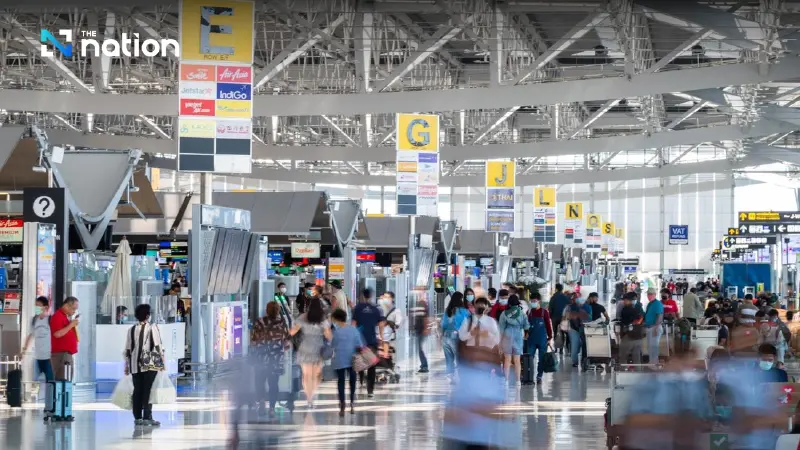


AOT plans to charge passenger service fees for transit/transfer passengers and revamp commercial leases, aiming to add 13bn baht a year and cut a 10bn subsidy gap
Airports of Thailand Plc (AOT) is preparing to overhaul its aviation revenue structure by restructuring passenger service charges (PSC) and revising commercial lease contracts, in a bid to plug what it describes as a recurring gap of more than 10 billion baht a year.
AOT president Paweena Jariyathitipong said revenue from aviation operations remains below the costs of safety and airport operations, forcing the company to use non-aviation (non-aero) income to subsidise aviation activities by more than 10 billion baht annually. She said raising PSC is not about maximising profit, but about aligning revenue with unavoidable costs, as safety standards cannot be lowered.
Plan to collect PSC from transit and transfer passengers
Paweena said international comparisons show more than 90% of airports worldwide collect PSC from both departing passengers and transit/transfer passengers. Thailand, she said, is among the roughly 5% that charge PSC only for outbound travellers, limiting revenue potential despite Thailand’s role as an aviation hub.
AOT plans to propose amendments to a ministerial regulation to enable PSC collection from transit and transfer passengers, laying a more stable revenue foundation for the future.
She added that studies indicate PSC has little impact on travel decisions compared with airfares and other costs. If the overhaul proceeds, AOT estimates it could increase revenue by around 13 billion baht per year, while reducing the need for borrowing to fund future investment.
“Smart investment” and preventive maintenance
On investment, Paweena said AOT is shifting from choosing the lowest-cost option to a smart investment strategy focused on long-term value and passenger experience at every touchpoint — from toilet cleanliness and air-conditioning to internal transport within terminals.
AOT is also moving towards preventive maintenance rather than “fix-when-broken”, to reduce systemic risks such as power failures or emergencies that could undermine international confidence.
She said AOT will continue investing in smaller regional airports. Even if some are loss-making on paper, upgrades are needed so passengers do not feel a gap in service quality when travelling through airports in the AOT network.
Revamping commercial leases and exploring new businesses
AOT is also accelerating changes to its commercial-area management to build sustainability with more than 2,000 partners. It is gradually revising lease contracts so returns better reflect real sales performance and passenger volumes, with an approach that covers both major concessionaires and smaller operators.
The aim is to avoid rent levels that are too high for shops to survive, which would ultimately hurt AOT’s long-term income.
In addition, AOT said it is studying expansion into new businesses, including an aviation security training company, a logistics centre, hotels, and the installation of electric-vehicle charging stations at airport sites.
