
DOITUNG EVERYDAY: How a Thai Social Enterprise is Weaving Sustainability into Modern Life
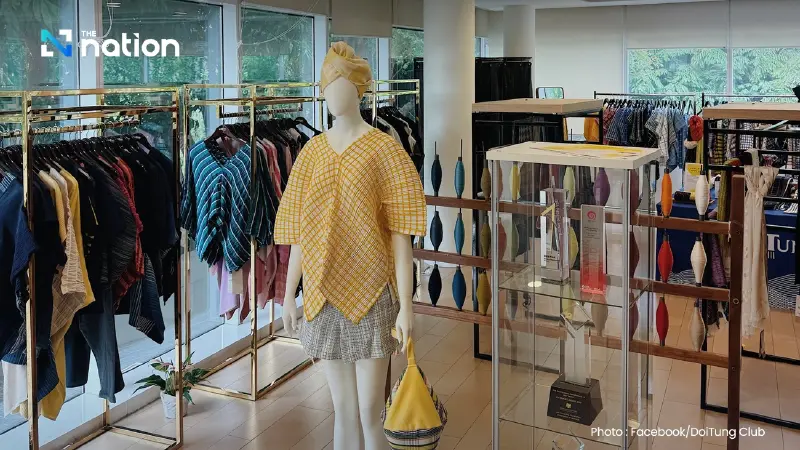


Mae Fah Luang Foundation's social enterprise arm reinvents its Doi Tung label with affordable, design-led products that bring circular fashion into daily life
- The Mae Fah Luang Foundation is launching DOITUNG EVERYDAY, a new sub-brand aimed at making its sustainable, community-led products more affordable and accessible to younger Thai consumers (Gen Y and Gen Z).
- To promote circular fashion, the new product line incorporates deadstock fabric from Doi Tung's factory blended with handwoven textiles from community artisans, reducing material waste.
- The brand is adopting a modern, design-forward identity with vibrant colors and contemporary patterns, marketed through digital channels like Instagram to integrate into urban lifestyles.
- The initiative continues the foundation's core social mission of providing sustainable income and skills training to community villagers, particularly women, who are the primary producers.
Mae Fah Luang Foundation's social enterprise arm reinvents its Doi Tung label with affordable, design-led products that bring circular fashion into daily life.
Doi Tung, the craft and lifestyle brand operated by the Mae Fah Luang Foundation, is preparing to launch a new sub-brand called DOITUNG EVERYDAY — a bold repositioning aimed at bringing its long-standing philosophy of community-led, sustainable production closer to the wallets and wardrobes of younger Thai consumers.
The soft launch is expected to take place informally towards the end of the second quarter of this year, with products available at Doi Tung Lifestyle stores.
The move reflects a deliberate shift in strategy.
While the original Doi Tung brand has built its reputation on premium handcrafted goods — some priced between 50,000 and 60,000 baht — the foundation recognises that this high-end segment, though valuable, represents a limited customer base.
DOITUNG EVERYDAY is designed to serve the broader, younger market: Gen Y and Gen Z consumers who are drawn to purposeful brands but want accessible, everyday products.
Prasert Trongcharoenkiat, president of social business at the Mae Fah Luang Foundation, explains the logic through a pyramid framework.
The apex represents high-spend, low-volume buyers. The base — the mass market — offers far greater potential for volume growth.
The strategy is to develop "small items": affordable, easily purchased products such as tote bags, hair ties, sleep masks and AirPods cases, which can be sold at airports and lifestyle retail outlets.

By converting occasional buyers into repeat customers, the foundation aims to build a more resilient and diversified revenue base.
By 2030, the foundation is targeting a sales split of 70% business-to-business and 30–40% retail.
The B2B segment will focus on private-sector companies seeking to reduce their carbon footprint or source gifts with a credible social impact story, as well as partnerships in global supply chains.
The retail channel, though competitive, is considered essential for maintaining brand visibility and cultural relevance.

A contemporary identity with purpose at its core
Kamonnart Ongwandee, the foundation's specialist in strategy and sustainable craft, describes DOITUNG EVERYDAY as a rebranding exercise as much as a product launch.
The aim is to move away from an image that some younger consumers may perceive as traditional or inaccessible, towards one that is "cool", design-forward and woven into everyday life.
The brand's visual identity draws on vivid "pop" colours and contemporary patterns — including motifs featuring the lady's slipper orchid, a species native to Doi Tung — targeting the aesthetic appeal of Scandinavian design labels such as Marimekko and HAY.
Storytelling will be central to the brand's communications, linking products to familiar lifestyle moments such as café-hopping culture, a pastime that resonates strongly with young urban Thais.
Coffee, already a signature product of the Doi Tung range, will serve as an entry point to draw in students and young professionals.
Target consumers are divided into two profiles: the "Joyful Intentional" group, motivated by aesthetics and self-expression; and the "Conscious" group, driven by environmental and social values.
Both will be reached primarily through digital channels, with Instagram (@doitung_everyday) as the flagship platform, featuring video content and lifestyle photography set in urban environments — on the BTS Skytrain, for instance — to demonstrate that these are products for daily, practical use.

Circular economy, community income
Behind the fresh look, the foundation's founding principles remain intact. DOITUNG EVERYDAY will incorporate deadstock fabric from Doi Tung's own high-specification factory – which already supplies global brands – blended with handwoven textiles from community artisans.
The combination reduces material waste while creating new value, addressing the growing consumer appetite for transparency in production.
The foundation is also exploring a Digital Product Passport, which would allow customers to scan a product and trace the origin of its fibres and the details of its production process — a direct response to ESG-conscious buyers who expect accountability as standard.
Community livelihoods remain the bedrock of the model. Villagers, particularly women who benefit from working close to home, continue to be the primary producers.
Short-course sewing training programmes are being rolled out to equip community members with the skills needed to produce the new product range quickly and consistently, ensuring a reliable supplementary income.
The foundation is also preparing to extend this model to community forest areas under a carbon credit management scheme, linking craft production with environmental stewardship and distributing income across a wider network of villages.
Areas including Pang Mahan, Puna and Ban Huay San have already generated several million baht in combined income through the expanded handcraft programme.

A blueprint for sustainable development
M.L. Dispanadda Diskul, secretary-general and chief executive of the Mae Fah Luang Foundation, frames the broader ambition in terms of systemic change.
The foundation is redefining its role as a "sustainable economy intermediary" – connecting resources, communities and capital to create a new model of national development.
Market mechanisms, he argues, must drive this process if it is to be scalable and self-sustaining, rather than dependent on public subsidy.
"The heart of it remains the same," he said. "If you want to plant a forest, you must first plant the people."
That principle, born on the hills of Doi Tung, is now being tested at a national scale — and, through DOITUNG EVERYDAY, on the high streets and phone screens of a new generation.
