
Luzhou Port: Thailand’s Strategic Multi-Modal Gateway to Western China
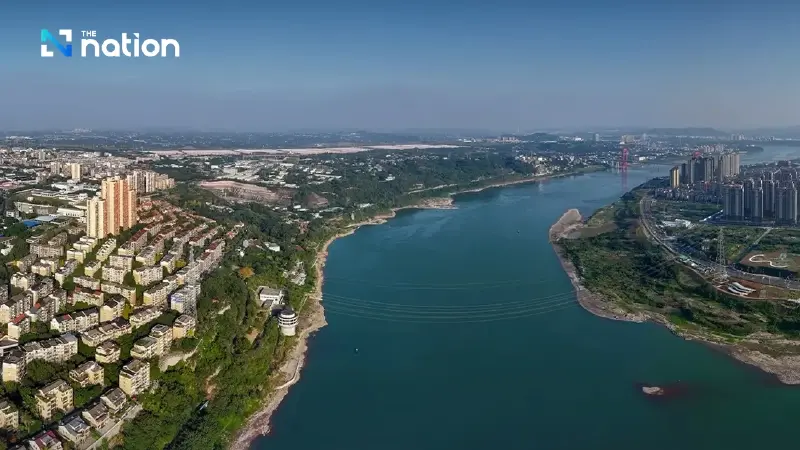


Thai exporters are urged to leverage Luzhou Port as a primary hub, utilising the China-Laos Railway to bypass coastal congestion and slash inland delivery times
- Luzhou Port is being promoted as a strategic multi-modal gateway for Thai exporters to access inland markets in Western China.
- The port's key advantage is its integration with the China-Laos Railway, creating a "land bridge" that bypasses congested coastal ports.
- This route significantly reduces delivery times for perishable Thai goods like fruit and provides direct distribution to high-demand regions like Sichuan and Chongqing.
- Thai businesses can benefit from logistical advantages such as on-site customs clearance and government freight subsidies to enhance efficiency.
Thai exporters are urged to leverage Luzhou Port as a primary hub, utilising the China-Laos Railway to bypass coastal congestion and slash inland delivery times.
The Department of International Trade Promotion (DITP), Thai Ministry of Commerce has identified Luzhou Port in Sichuan Province as a critical "Gateway to the West," offering Thai businesses a high-efficiency alternative for penetrating China’s deep inland markets.
Strategically positioned at the confluence of the Yangtze and Tuo Rivers, the port has evolved into a sophisticated multi-modal hub connecting sea, road, and rail networks.
The most significant shift for Thai trade is the port’s integration with the China-Laos Railway.
This route allows Thai commodities—specifically fresh fruit, rubber, and rice—to be transported from the Nong Khai-Vientiane border through Kunming and directly into Luzhou.
This inland "land bridge" offers a dual advantage:
Time Efficiency: Fresh produce, such as durian and mangosteen, reaches consumers in Chengdu and Chongqing significantly faster than traditional maritime routes via eastern Chinese ports.
Direct Distribution: Luzhou serves as a central clearinghouse, allowing immediate dispatch to the high-purchasing-power regions of Sichuan and Guizhou.
A Competitive Logistics Model
While the port faces geographical challenges, such as fluctuating water depths in the upper Yangtze during the dry season, its role as an Inland Port Customs centre provides a distinct edge.
Thai exporters can complete all customs formalities on-site, eliminating redundant processing at the coast.
Furthermore, the Sichuan and Luzhou governments frequently offer freight subsidies to attract international cargo.
For non-urgent or heavy bulk shipments—such as minerals, fertilisers, or processed foods—the river-to-sea route via Shanghai remains a cost-effective alternative for Thai firms looking to manage overheads.
Navigating Market Rivalry
Luzhou operates in a competitive landscape, contending with the larger Chongqing Port and the rapid expansion of the China Railway Express (the "New Silk Road").
High-value goods are increasingly migrating to rail, yet Luzhou remains a vital "cog" in the regional economy through its transition into a "green and smart" port.
The Department of International Trade Promotion (DITP) concludes that Thai entrepreneurs should no longer view Luzhou as a mere destination but as a distribution hub.
By leveraging local incentives and the proximity to the China-Laos rail link, Thai brands can maintain quality and competitive pricing in one of China’s fastest-growing economic clusters.
