
"I Just Hate to Be a Thing": The World Remembers Marilyn Monroe at 100
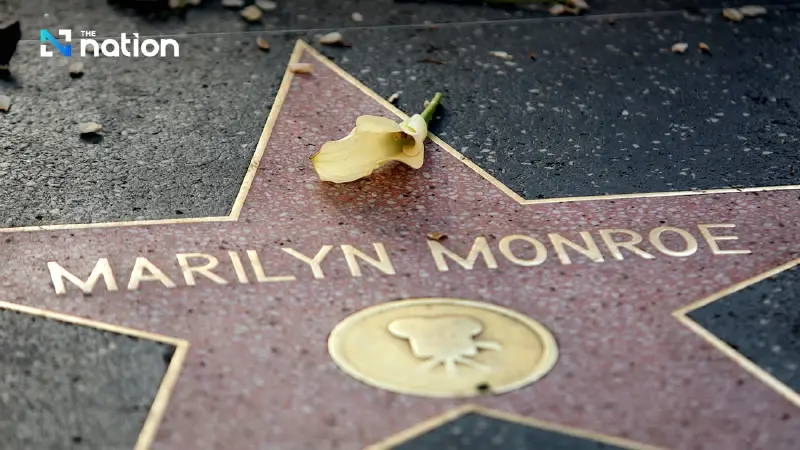


A rare auction, a major museum exhibition, and a final interview resurface as the world honours one of Hollywood's most enduring legends on her 100th birthday
- Marilyn Monroe's 100th birthday is being commemorated with a rare auction of newly discovered personal items and a major museum exhibition.
- The auction features a trove of intimate artifacts from close friends, including handwritten letters and notes that reveal a more vulnerable and human side to the star.
- A new exhibition at the Academy Museum of Motion Pictures reframes her legacy, focusing on her agency in creating her own image rather than just the narrative of tragedy.
- These events, along with a resurfaced final interview, highlight Monroe's struggle against being objectified, reflecting her famous quote, "I just hate to be a thing."
A rare auction, a major museum exhibition, and a final interview resurface as the world honours one of Hollywood's most enduring legends on her 100th birthday.
On 1 June, the platinum-blonde icon who captured the world's imagination would have turned 100. From a landmark auction to a major exhibition, her centenary is rewriting the narrative.
On the same day the world marks what would have been Marilyn Monroe's 100th birthday, the Hollywood star's most intimate secrets are going under the hammer — and onto museum walls.
A trove of Monroe's personal artefacts, including handwritten letters, photographs, clothing, artwork and accessories, is going up for auction for the first time, while across Los Angeles, a sweeping new museum exhibition makes a bold case that the woman behind the legend was far more than a symbol.

The Auction: A Discovery Six Decades in the Making
Heritage Auctions opens bidding on 1 June with its Hollywood/Entertainment Signature® Auction, featuring The Marilyn Monroe Collection from the Estate of Norman and Hedda Rosten.
The Rostens — a poet couple who were among Monroe's closest confidants — preserved an archive that has remained largely hidden from the world for more than sixty years.
The collection includes handwritten letters, private notes, poetry, watercolours, documents, and personal effects — many previously unknown and never before offered at auction. These materials capture Monroe in her own voice: candid, searching, witty, and vulnerable.

"Marilyn is just an icon," said Brian Chanes, senior director of Hollywood and entertainment at Heritage Auctions. "People love and adore Marilyn to this day."
What makes this sale extraordinary, he noted, is its freshness.
"It's really special because this isn't material that's been bought and sold over the decades. This is something that's a discovery."
Among the marquee pieces is a two-piece Christian Dior skirt suit (starting at $20,000) that Monroe wore before the paparazzi at San Francisco airport in 1954, as she and Joe DiMaggio departed for their honeymoon in Japan — a marriage that would last less than a year.
The letters and notes reveal a side of Monroe that has remained largely unseen — deeply personal, searching, and profoundly human, according to Heritage Auctions executive vice president Joe Maddalena.

Among the most striking items are documents never before seen publicly, shedding light on Monroe's inner life: her romantic relationships, fears surrounding a lost pregnancy, and her reflections on mortality.
The collection also includes correspondence from her ex-husband, playwright Arthur Miller, as well as an unseen letter from Monroe's psychiatrist describing the day leading up to her death.
One piece, in particular, encapsulates the anguish Monroe endured behind the glamour. While filming Some Like It Hot, she wrote from the Hotel del Coronado stationery: "I feel like I'm drowning" — and sketched a small stick figure submerged in water beside the words, pleading for help.
Production had to be halted shortly afterward when she nearly overdosed.

The Woman Behind the Image
Born Norma Jeane Mortenson on 1 June 1926 in a Los Angeles charity hospital, Monroe's rise from a childhood spent in orphanages and foster homes to become the world's most recognisable sex symbol is one of Hollywood's most remarkable — and most tragic — stories.
She reinvented herself at 18 after being spotted working in a munitions factory by an army photographer who suggested modelling.
She dyed her hair platinum and, as one of her few surviving friends, James Haspiel, 88, has said: "Marilyn Monroe was her invention."
But the invention, as she herself acknowledged, came at a cost.

In the summer of 1962, in what would become her final interview, she told Life magazine editor Richard Meryman: "That's the trouble — a sex symbol becomes a thing. I just hate to be a thing."
The Life interview ran in the 3 August 1962 issue. Two days later, Monroe was found dead from acute barbiturate poisoning at her Brentwood home. She was 36. To this day, her final hours remain the subject of endless questions.
She is best remembered for the 1950s films Gentlemen Prefer Blondes, How to Marry a Millionaire, and The Seven Year Itch, as well as her high-profile marriages to baseball legend Joe DiMaggio and playwright Arthur Miller.
Yet those closest to her insist the films and the fame never fully captured who she was. As Haspiel put it: "In real life, she was Norma Jeane."

The Exhibition: Strategist, Not Symbol
A century after Monroe was born, the institution that represents Hollywood's highest honours has turned its attention to a woman it never once nominated for an Oscar during her lifetime.
"Marilyn Monroe: Hollywood Icon" at the Academy Museum of Motion Pictures celebrates Monroe as a visionary actor and image-maker, examining the many facets of how she created and shaped her public image within the classical Hollywood studio system. The exhibition runs from 31 May 2026 through 28 February 2027.
Major highlights include two costumes by Orry-Kelly from Some Like It Hot (1959), as well as the rarely exhibited famous pink dress by William Travilla from Gentlemen Prefer Blondes (1953).
Also on display are pieces ranging from a dress featured in Love Happy (1949) to garments from her final unfinished film, Something's Got to Give (1962).
The exhibition deliberately sets aside the dominant narrative of tragedy and overdose, insisting instead on Monroe's own agency.
Presenting hundreds of original objects — including posters, portraits, photographs, production documents, letters, and rarely seen personal materials, many on display for the first time — it offers unique insight into her role in shaping her own iconic status.

Taken together — the auction, the exhibition, the final interview resurfaces in a new book — the centenary of Marilyn Monroe amounts to a collective reckoning: a world still trying to separate the woman from the myth and finding, each time, that the woman was more fascinating than the myth ever was.
The Heritage Auctions sale opens on 1 June. "Marilyn Monroe: Hollywood Icon" is open at the Academy Museum of Motion Pictures, Los Angeles, through 28 February 2027.
