
Thai rice exports expected to meet target after boost from Singapore
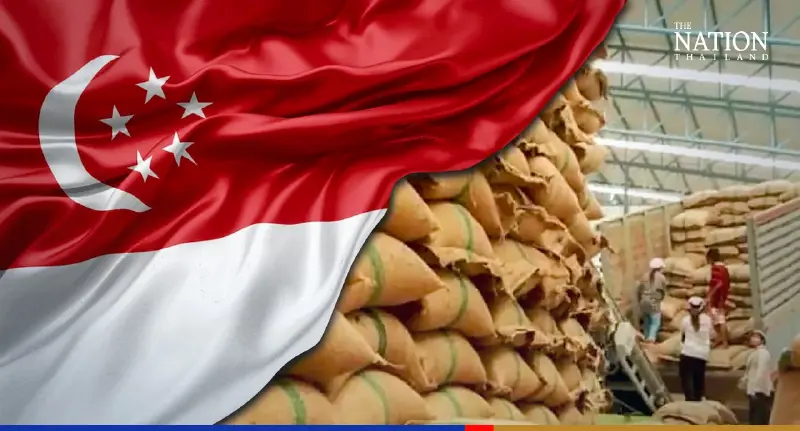


Thailand’s total rice exports in 2022 should meet the target of 7.5 million tonnes after successful negotiations with Singapore to increase its imports from Thailand in the rest of the year, the Department of Foreign Trade said on Tuesday.
Department director-general Pitak Udomwichaiwat said recent negotiations between the department, the Singapore General Rice Importers Association, and the Rice Exporters Association of Thailand held in Singapore had been successful and Singapore had agreed to import more rice from Thailand in the rest of the year.
Pitak said Singapore’s demand for rice is starting to climb up after the country’s reopening due to the improving Covid-19 situation, as can be seen from a 2 per cent bump in July’s rice imports compared to the same period last year.
“Singapore also imports rice from other countries, and they tend to use price as a factor in choosing the exporter,” he said. “Fortunately, this year Thailand has seen increased rice output due to abundant rainfall, which has resulted in a lower price, making our product more competitive than some rice producers. Furthermore, Singaporean consumers already have a long-established confidence in the quality of Thai rice.”

The department reported that from January 1 to August 31 this year, Thailand exported 4.92 million tonnes of rice, valued at US$2.53 billion (86.06 billion baht), up 51.37 and 30.47 per cent year on year, respectively. The department estimated that total rice exports this year would reach 7.5 million tonnes.
The department also said that currently the price of Thai rice has a tendency to drop following the weakening of baht, although it is still more expensive than rice from other countries. As of August 31, the price of Thai white rice with 5 per cent humidity was $428 per tonne, while the same rice from Vietnam cost $397, $382 from Pakistan and $342 from India.
Thailand’s steamed rice is sold at $442 per tonne, while Pakistan and India are selling theirs at $402 and $382 US dollar per tonne, respectively.
