
Thai seafood exports to US risk losing 4.8 billion baht this year
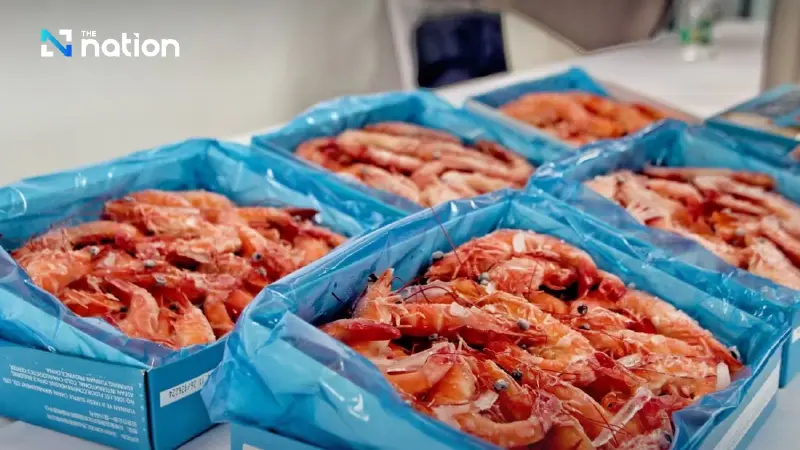


Thailand’s fisheries exports to the United States are expected to decline by about 4.8 billion baht this year after Washington imposed a 19% reciprocal tariff, raising costs for key products such as shrimp and tuna.
The United States is Thailand’s largest seafood market and the world’s top importer, with annual purchases averaging 3 million tonnes worth around 811 billion baht over the past decade.
Thailand has consistently maintained a trade surplus, with an average fisheries trade balance of 40.55 billion baht per year between 2015 and 2024. In 2024 alone, the surplus reached 47.08 billion baht.
According to Praphan Noradee, head of the international fisheries trade analysis group at the Department of Fisheries, Thai seafood exports to the US account for 21.79% of total export value, averaging 236,255 tonnes worth 46.41 billion baht per year. While volumes have grown by 3.09% annually over the past decade, value has increased by 2.26%.
Key export products include shrimp, marine fish, tuna and seasonings.
The new 19% tariff rate is roughly in line with Thailand’s main competitors — Indonesia at 19% and Vietnam at 20%. Ecuador faces a slightly lower tariff at 15%, while India’s rate is higher at 25%.
Praphan noted that Thailand is not disadvantaged compared with competitors, but higher overall US import tariffs will depress market demand and increase exporters’ costs. Exports are projected to shrink by 5–10% this year, equivalent to a volume drop of 12,321–24,641 tonnes and a value loss of 2.41–4.82 billion baht.

For Thai shrimp, an additional challenge looms as a new round of anti-dumping (AD) reviews is due on October 5 2025. At present, Thai shrimp faces an AD duty of 0.81%, which combined with the reciprocal tariff totals 19.81%.
One option under consideration is to settle with the petitioners via a Changed Circumstance Review (CCR), which would permanently eliminate the AD duty if Thailand pays US$10–12 million (about 350–420 million baht). This would reduce the effective AD rate to zero, though the outcome depends on the forthcoming review.
On the import side, Thailand buys fisheries products from the US such as salmon, Alaskan pollock and fresh or frozen tuna. Most are subject to duties between 0–5%, with frozen salmon already tariff-free and salmon fillets taxed at 5%.
However, the bulk of salmon imports come from Norway and Chile, with the US ranking third. US tuna accounts for just 0.33% of Thai tuna imports, meaning tariff reductions for US seafood are unlikely to flood the Thai market.
In the first half of 2025, Thailand’s fisheries trade totalled 187.22 billion baht, down 0.7% year-on-year. Exports were valued at 109.55 billion baht, imports at 77.66 billion baht, leaving a trade surplus of 31.88 billion baht.
