
Thailand to chair 2026 World Bank-IMF meetings, highlighting economic leadership
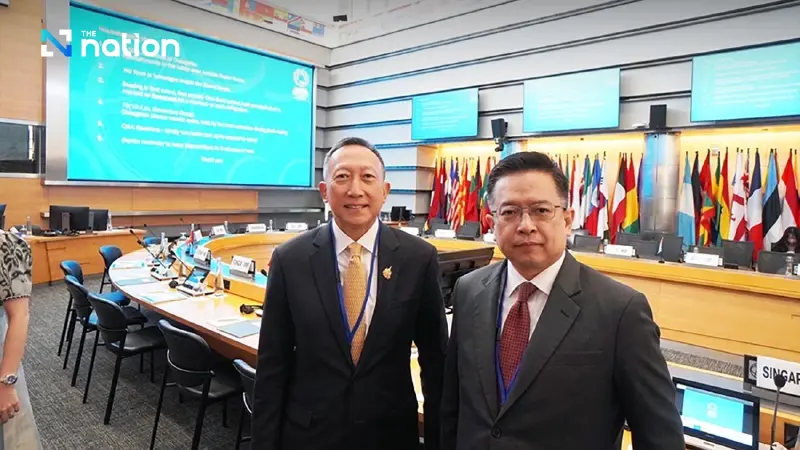


Thailand will host the 2026 World Bank-IMF meetings, offering a platform to shape global economic policy and present strategies amid financial uncertainty.
Deputy Finance Minister Vorapak Tanyawong revealed that last week, a Thai delegation attended the annual meeting of the World Bank and International Monetary Fund (IMF) in Washington, D.C., one of the most significant forums in the global financial system. Thailand has been selected to host the event in October 2026, marking a major milestone for the country’s economic and financial sectors.
Vorapak said:
“Hosting this event gives Thailand the opportunity to play a role in shaping global economic policy and to present proactive strategies to address economic and financial challenges in an era of uncertainty.”
Thailand has had a long-standing relationship with both organisations since joining in 1949, with a notable experience during the 1997 Asian Financial Crisis, when the baht came under attack. Thailand received over US$17 billion from the IMF under a Stand-By Arrangement to stabilise the economy and restore international financial confidence.
Today, the IMF continues to play a key role in managing fiscal vulnerabilities, monitoring financial risks, and supporting member countries in adapting to geopolitical uncertainties and energy transitions. Meanwhile, the World Bank focuses on long-term infrastructure development, including electricity, water systems, roads, and hospitals.

Vorapak added that since the 1997 crisis, Thailand and the wider ASEAN region have built their own safety mechanisms, such as the Chiang Mai Initiative Multilateralisation (CMIM) — a regional reserve fund of US$240 billion to respond to crises without sole reliance on the IMF.
The ASEAN+3 Macroeconomic Research Office (AMRO) also monitors regional economic risks, providing data to guide CMIM usage. These mechanisms reflect the region’s effort to strengthen its financial resilience.
Thailand’s role on the global economic stage
Thailand, a member of the IMF and World Bank since 1949, has experienced direct economic crises linked to the IMF. Today, as a middle-income country, Thailand serves both as a policy shaper and a beneficiary of the international financial structure.
Being chosen to host the World Bank-IMF meetings in 2026 is more than a ceremonial event; it provides an opportunity for Thailand to assert its presence on the global economic stage and advance proactive strategies against financial and economic challenges.
The IMF and World Bank are not just financial organisations; they are pillars of the global economic order, shaping frameworks for international financial, fiscal, and developmental cooperation. This week’s meetings in Washington, and next year’s hosting by Thailand, are therefore crucial for the future of the global economy and the ASEAN region.
