
Finance Minister declares Thai economy has “escaped the rut”, expects Q4 GDP growth of at least 1%
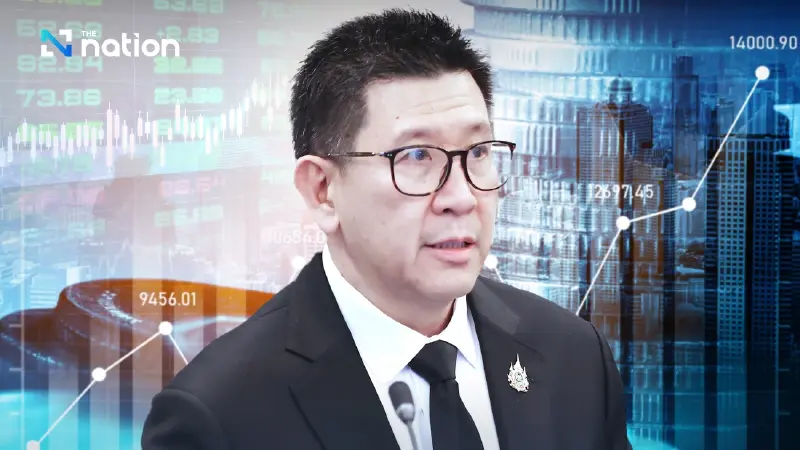


Deputy PM and Finance Minister Ekniti Nitithanprapas says Thailand’s economy has rebounded from stagnation, with Q4 GDP expected to grow by at least 1%.
Ekniti Nitithanprapas, Deputy Prime Minister and Minister of Finance, announced that Thailand’s economy has “emerged from the rut”, following the success of the government’s short-term stimulus measures. He predicted fourth-quarter GDP growth of no less than 1%, with the potential to exceed 2%, while outlining long-term plans to unlock the country’s growth potential.
Speaking under the theme “Unlocking Growth and Shared Prosperity”, Ekniti credited the government’s “Quick Big Win” policies — including the welfare card scheme, Let’s Go Halves Plus, and the Tiew Dee Mee Kuen (Travel and Earn Back) tourism campaign — for helping the economy recover within four to five weeks.
“Thailand’s economy has now recovered from the slowdown. Earlier projections placed Q4 growth between 0% and -0.3%, but we now expect it to be at least 1%, possibly above 2%. These quick-impact measures have successfully revitalised the economy,” Ekniti said.
However, he noted that low investment remains the key structural weakness, with investment currently accounting for less than 25% of GDP, compared with 40-50% in the past.

The government plans to boost infrastructure investment without increasing public debt, using financial instruments such as the Thailand Future Fund (TFF) to mobilise non-debt financing. Examples include attracting ESG-focused investors to fund floating solar and solar farm projects, backed by future revenue streams.
“This model allows the government to avoid borrowing while creating new investment opportunities, promoting clean energy, supporting stock market listings, and strengthening corporate governance,” he explained.

Ekniti also stressed the importance of human capital development through reskilling and upskilling. As Thailand transitions into an ageing society, he said the government will use the 10-billion-baht Competitiveness Enhancement Fund to support training programmes that match future global demand — including data centres, digital industries, EVs, smart farming, and medical hubs.
To accelerate investment, the government will cut red tape and streamline regulations. In the short term, the “Fast Pass” mechanism will be used to unlock 470 billion baht in pending BOI investment projects, while in the long term, a Regulatory Guillotine Committee, chaired by another deputy prime minister, will remove outdated laws that hinder business — such as delays in obtaining water and electricity permits.
“Our goal is to build a foundation for sustainable, investment-driven growth while ensuring Thailand keeps pace with global economic transformation,” Ekniti said.
Regarding household debt management, one of the country’s most critical issues, the government is pressing ahead with measures to resolve non-performing loans (NPLs) among small debtors within the formal banking system through two key mechanisms:
1. Asset Management Company (AMC) for general debtors: The Sukhumvit Asset Management Company (SAM) will take over unsecured personal debts below 100,000 baht from commercial banks, non-bank financial institutions owned by banks, and specialised financial institutions (SFIs).
In the first phase, the scheme will cover approximately 2 million debtors, representing a total debt value of 60 billion baht. Funding will come from the remaining budget of the “You Fight, We Help” programme, amounting to over 20 billion baht, without using new government funds — in line with the government’s commitment to fiscal discipline.
The long-term outcome will include debt principal and interest reductions, loan term extensions, and the reopening of access to the National Credit Bureau (NCB). Debtors who demonstrate improved repayment discipline and make payments on time will be eligible to apply for new loans, under the principle of restoring responsible borrowers to the financial system.
2. AMC for farmers: Recognising that farmers’ borrowing behaviour depends heavily on weather conditions and seasonal cycles, the government is working with the Bank for Agriculture and Agricultural Cooperatives (BAAC) to establish a dedicated in-house AMC to manage agricultural debts.
This AMC will handle the debts of approximately 100,000 farming households, worth between 7-8 billion baht, and is expected to become operational within this month.
