
Study finds Thais the ‘burden-bearers of ASEAN’ as expenses rise but incomes stagnate



Thais grow more cautious with spending amid high living costs, focusing on health, education and savings, despite rising confidence in the economy

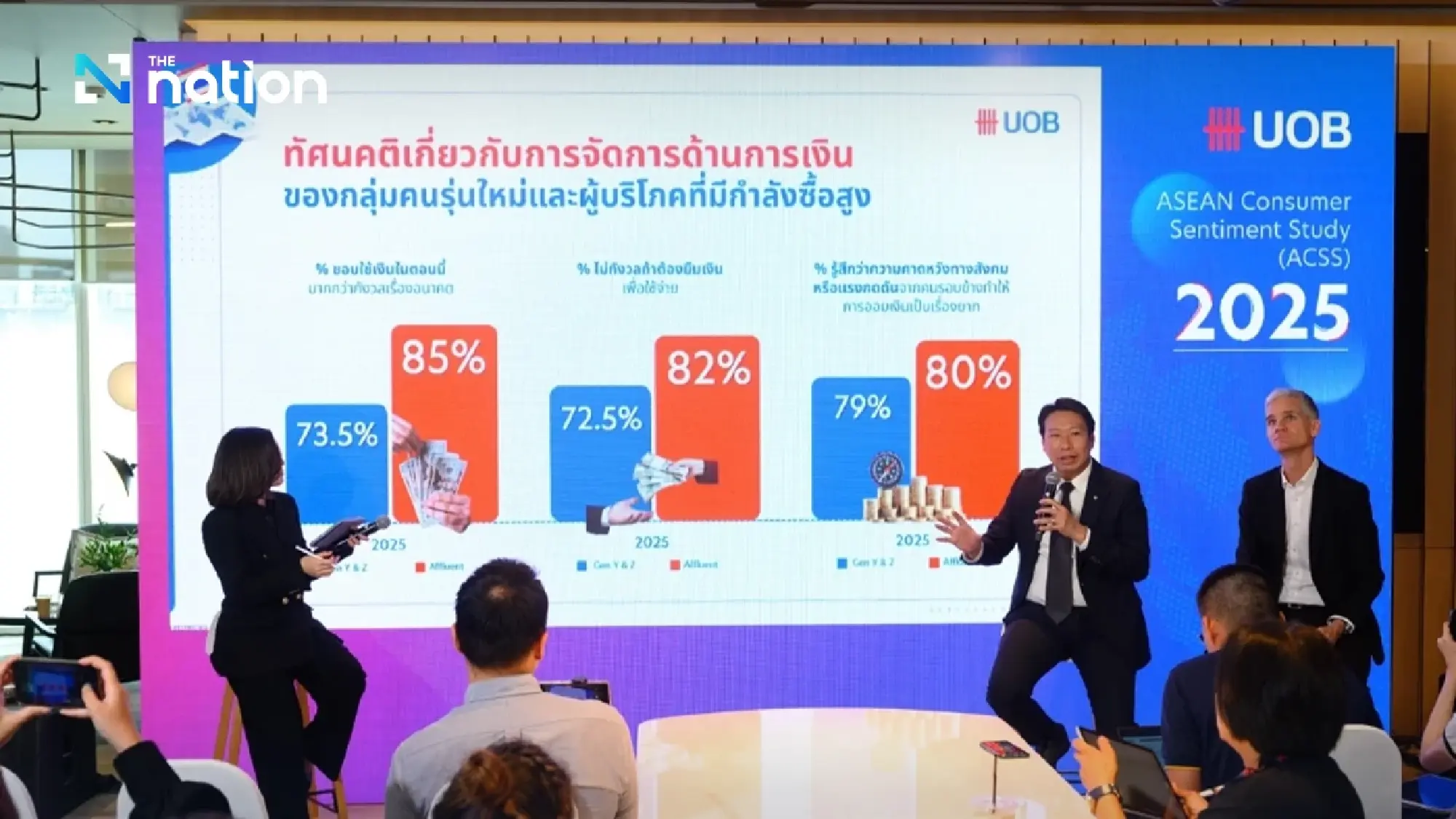
Despite a slight rise in Thailand’s consumer confidence index in 2025, Thai households remain in “cautious spending mode”, reflecting persistent economic uncertainty and high living costs, according to the ASEAN Consumer Sentiment Study (ACSS) by UOB Bank in collaboration with the Boston Consulting Group (BCG).
The survey found that 39% of Thai consumers are confident in the country’s economic outlook, up 4% from the previous year. However, most respondents continue to spend conservatively, prioritising quality of life, health, and education over immediate consumption.

Yuttachai Teyarachakul, Managing Director, Country Function Head of Personal Financial Services at UOB Thailand, said Thai consumers are in a period of “financial rebalancing,” giving more importance to self-development and future planning. “We are seeing stronger financial responsibility among consumers. Despite lingering risks, they are striving to maintain both financial stability and quality of life,” he said.

Thais save more, spend on health and education
The study revealed that 44% of Thai respondents have increased spending on education, healthcare, and overall well-being, while spending on luxury goods and travel continues to decline. This shift reflects a growing focus on long-term financial stability and retirement planning, with more than half of respondents expecting to retire after age 60 and aiming to save around 3.9 million baht on average, rising to 10.5 million baht among higher-income groups.
This trend underscores ongoing pressure from rising living costs and a structural transformation in household priorities, as Thais increasingly value health and personal investment over short-term consumption.
Social media reshapes spending habits
A notable change in the 2025 ACSS results is the influence of social media on consumer behaviour. While 45% of Thai consumers said they are purchasing more via social platforms, 47% also report taking longer to make purchase decisions.
Although immediate sales are slower than during the pandemic, brands are now gaining stronger engagement and loyalty. Analysts see this as a shift from short-term conversion marketing toward community building, where brands focus on fostering long-term relationships with customers.
Financial confidence rises, but Gen Z faces social pressure
The study also found that 87% of Thai consumers feel confident in managing their personal finances, and more than 70% save at least 10% of their monthly income. Among affluent consumers, the savings rate rises to 88%, while Gen Z saw a 48% increase in new savings accounts, reflecting growing financial awareness among younger Thais.
However, challenges persist: 82% of Gen Z and 76% of Gen Y admit that social expectations and image-driven spending hinder their ability to save consistently.
Personal finance becomes a national issue
According to UOB, personal financial management is no longer just an individual responsibility but a structural economic concern, influencing consumption and national growth.
While cautious spending shows stronger financial discipline, it also highlights the strain of rising living costs, pushing the Thai economy to rely more on investment and exports in the medium term. Analysts say the Thai attitude of being “optimistic but prudent” is a positive sign of sustainable adaptation. If the public and private sectors can create the right incentives for saving and investment, it could strengthen Thailand’s grassroots economy in the years ahead.
