
Thailand Speeds Up OECD Bid, Aims for Membership Ahead of 2030 Target
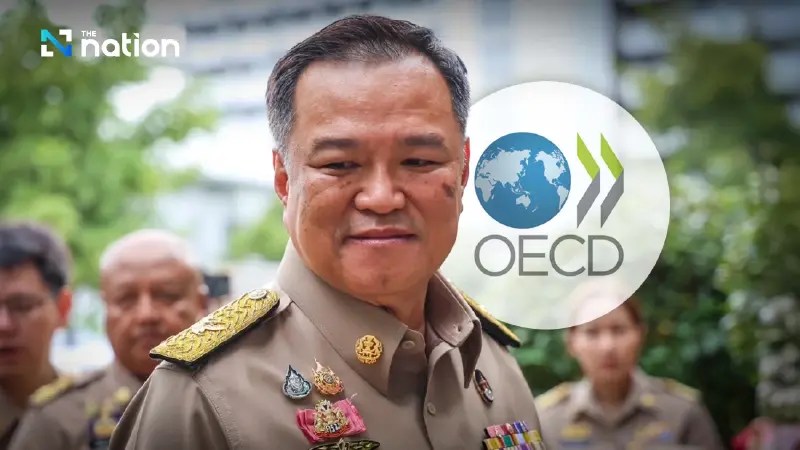


The government plans to use the organisation's legal standards as key performance indicators (KPIs) for civil service chiefs to drive rapid structural
- The Thai government is accelerating its bid to join the OECD, with the Prime Minister demanding membership be achieved significantly earlier than the original 2030 target.
- To fast-track the process, standards from OECD legal instruments will be integrated as Key Performance Indicators (KPIs) for the heads of civil service agencies.
- This accelerated timeline is strongly supported by the private sector, with industry leaders suggesting preparatory work could be finalized within two to three years.
The government plans to use the organisation's legal standards as key performance indicators (KPIs) for civil service chiefs to drive rapid structural.
The Thai government is accelerating its push to join the Organisation for Economic Co-operation and Development (OECD), with the Prime Minister urging relevant agencies to achieve membership well ahead of the initial 2030 target.
Sources from Government House confirmed that the recent Cabinet Economic Committee meeting, chaired by Prime Minister and Interior Minister Anutin Charnvirakul, endorsed a crucial proposal from the Office of the Council of State (the Juridical Council).
The proposal mandates that the Office of the Civil Service Commission (OCSC) and the Office of the Public Sector Development Commission (OPDC) will integrate standards drawn from OECD legal instruments as Key Performance Indicators (KPIs) when evaluating the performance of heads of government agencies.
Pakorn Nilprapunt, Secretary-General of the Council of State, informed the Committee that his office has already published over 240 OECD legal instruments.
These documents outline best practices among member countries, which are seen as vital for fostering sustainable economic growth, meeting international benchmarks, and improving citizens’ quality of life.
The adoption of these new civil service KPIs is designed to ensure that public sector agencies adapt their operations swiftly, aligning with OECD best practices in preparation for accession.
While the original timeline for joining the OECD was set for 2030, Prime Minister Anutin deemed this period "too long" and ordered a rapid acceleration of all related processes.
The move has strong backing from the private sector.
Commerce Minister Suphajee Suthumpun emphasised that achieving OECD membership will necessitate extensive cooperation from businesses, given the required structural overhaul of both the economy and society.
Supporting this view, Kriengkrai Thiennukul, president of the Federation of Thai Industries (FTI), proposed a more aggressive timeline, suggesting that preparatory work should be finalised within the next two to three years to secure faster entry.
In conclusion, the Economic Committee has instructed the Ministry of Foreign Affairs and related agencies to expedite all necessary procedures for Thai accession to the OECD, with the mandate to secure membership quicker than previously scheduled.
