
Thailand in transition, not crisis, with SMEs driving the new economy: Anutin
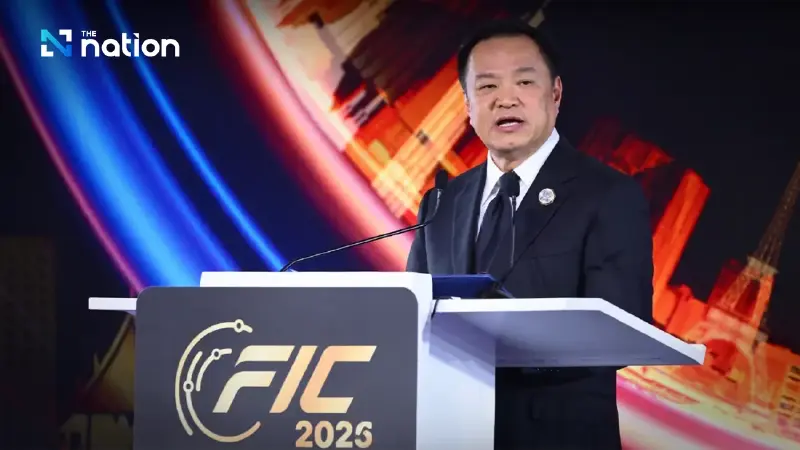


PM Anutin Charnvirakul announces Thailand is in a transition to a new economy, urging bold thinking, tech adoption, carbon reduction, and SME integration into the supply chain to drive long-term economic reform.
- Prime Minister Anutin Charnvirakul asserts that Thailand is undergoing a strategic economic transition, not a crisis, by focusing on risk diversification, digital transformation, and carbon reduction.
- This new economy is being driven by targeted industries where Thailand can excel, including electric vehicles (EVs), semiconductors, future foods, and high-tech medical and biotech sectors.
- Small and Medium-sized Enterprises (SMEs) are identified as the backbone of this transition, with a government strategy to support them through easier financing, reduced regulations, and integration into large company supply chains.
The Federation of Thai Industries (FTI) hosted the Foreign Industrial Club (FIC) 2025 event on Tuesday (November 25), under the theme "Leading Thailand Through Global Challenges."
The event, held at the Dusit Thani Hotel, built on the success of FIC 2023 and was warmly received by foreign investors and Thai business leaders.
It served as a crucial platform for exchanging perspectives and fostering cooperation between the government, the private sector, and foreign investors in Thailand, reflecting confidence in Thailand's potential as a regional investment hub.
In his address, Prime Minister Anutin Charnvirakul highlighted that Thailand is not entering a crisis but is undergoing a transitional period. If managed well, this transition could mark a significant turning point for the country.
Over the past decade, Thailand's economy has grown at an average rate of 1.8%, but this year, positive signs have emerged. The National Economic and Social Development Council (NESDC) forecasts a growth of around 2%, while the Ministry of Finance anticipates a growth rate of 2.4% in 2025, driven by improved exports and accelerated government spending.
However, economic figures alone do not capture the full picture. The world is changing, globalisation is slowing, technology is advancing faster than the law, the ageing population is growing, the impacts of climate change are intensifying, and “trust” between nations and between governments and citizens is steadily declining.
To navigate this evolving world, Thailand must "think differently." We can no longer rely on old formulas. Our strategies must be driven by three key forces for the future: risk diversification, digital transformation, and carbon reduction.

"Risk diversification" means reducing dependence on any single market or industry. This is why Thailand is expanding trade partnerships with the Middle East, Africa, Eastern Europe, South Asia, and Latin America.
"Digital transformation" focuses on using AI and advanced technologies to boost productivity while enhancing digital skills for the population to ensure security and transparency standards.
"Carbon reduction" is essential to prepare for an era where green supply chains will determine global market access. Reducing energy and transportation costs will ease the burden on households and businesses, stimulate domestic demand, prevent an economic slowdown, and expand SME access to credit, strengthening the backbone of the Thai economy. Reviving confidence in tourism will ensure continued foreign income.
These measures are not the destination but a "runway" for long-term economic restructuring, and we must identify which industries Thailand can truly "win" in.
Electric vehicles (EVs) are one such area. Thailand leads ASEAN in both EV production and usage. As you walk through shopping malls or visit large gas stations, you’ll see a growing number of EV charging stations. The next step is to develop a "complete ecosystem," driven by battery innovations, recycling, software-driven vehicles, and green logistics. Another key sector is semiconductors.

Our goal is not to compete with global giants but to "complement" them, especially in packaging, testing, and speciality chips for the medical and healthcare industries. Thailand has a competitive edge, strengthening its AI, medical, biotech, regenerative tourism, and elderly care sectors. As the world slows down, countries will seek "solutions," not just services, and Thailand is well-equipped for this.
Food is another strategic opportunity, not just processed foods, but future foods such as plant-based proteins, halal innovations, and climate-resilient production. Food security is no longer just an economic issue, but a geopolitical one. Thailand has the potential to become the "kitchen of the world."
None of this would be possible without strong SMEs
Our SME strategy is clear: easier access to financing, reduced regulatory complexity, promoting digital transformation, and connecting SMEs with the supply chains of large companies. These measures will strengthen financial resilience, enhance domestic immunity, and elevate products to the “Made in Thailand” (MiT) standard.
Anutin stated that the government is actively driving the digital industry, which will increase transparency, speed up processes, and allow businesses to reach their full potential. This will help build confidence in the supply chain and ensure consumers receive safer products. These tools are not merely financial policies, but a "signal" that businesses across the country are not alone, and every capable business is a driving force behind the country's economy.
In today’s world, the ability to compete is not only dependent on industry but also on the efficiency and credibility of the government. We will reduce delays, minimise opportunities for corruption, and create a predictable environment for investors, all of which are crucial for boosting confidence and establishing Thailand’s credibility in the global supply chain.
This is why Thailand is moving towards becoming a member of the Organisation for Economic Co-operation and Development (OECD) to raise standards in transparency, fairness, and long-term investment according to international standards. Last month, Thailand participated in both the ASEAN and APEC summits.
At ASEAN, we emphasised the importance of strong and resilient supply chains, alongside our commitment to peace and stability. At APEC, Thailand promoted its role as the "economic connector," a leader in future industries, and a supporter of environmentally friendly growth.
Thailand is ready to collaborate with like-minded partners on innovation, openness, and long-term prosperity. Our goal is to place Thailand at the heart of Asia, making it interconnected, competitive, and sustainable. Thailand’s future will be shaped by the partnerships we build today, and together we will create a region full of confidence, possibilities, and stability, not uncertainty.
"Thailand does not want to 'choose sides'; Thailand seeks 'stability, cooperation, and opportunity.' Our value to the world is not as a follower, but as a connector, coordinator, and creator of stability," Prime Minister Anutin concluded.
