
Thailand must adopt new laws to meet soaring AI and data centre demand, business leaders say
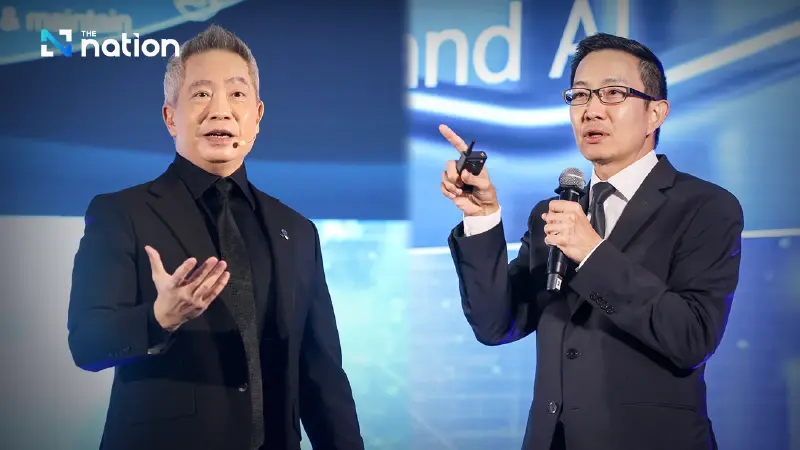


Business leaders urge Thailand to implement laws on data sovereignty to support the growing demand for AI and data centres, while managing energy challenges.
Smith Banomyong, Executive Officer at Gulf Development Public Company Limited, spoke at the Smart City 2026 seminar on "Thailand’s Goal to Become a Data Centre & Cloud Service Hub in the Region", highlighting a shift in Thailand’s data centre landscape. He explained that data centres are increasingly being concentrated in the Eastern Economic Corridor (EEC), rather than near Bangkok as seen in earlier stages. This shift is driven by the “explosive growth” in demand for data centres, with the largest data centre in Thailand just two years ago having a capacity of 8-10 MW, while today new clients are requesting hundreds of MWs.

This growth reflects the changing role of data centres, from simply storing data for backup purposes (such as for banks and companies) to processing large amounts of data, especially for AI. Data centres now require significantly more computing power than before.
Smith cited Singapore’s 1,000 MW data centre as a benchmark, while Thailand’s largest centre only has 60 MW. Despite Singapore being a small country with limited clean energy, it has become a data centre hub, partly due to data sovereignty laws that require data to be stored within the country.
"Twenty years ago, multinational companies, especially financial institutions, were prohibited from sending critical data abroad. Governments like Singapore, South Korea, and those in the US and Europe foresaw the need for keeping financial and healthcare data within their borders,” said Smith.

To support the growth of Thailand’s data infrastructure, Smith stressed the need for data sovereignty laws, asserting that Thailand must develop legal frameworks to require sensitive data to be stored within the country for security and economic reasons. Current definitions of national security data are too narrow, typically only considering military data, whereas countries like South Korea and Singapore have much broader definitions, encompassing government and citizen data.

He added that businesses in Thailand must also rapidly adjust to meet clean energy demands, with major global clients and hyperscalers increasingly requiring clean energy for their operations. However, the transition to clean energy will come with high costs, as solar power can only generate electricity for 5-6 hours per day, requiring significant investment in additional power production and energy storage.
Thailand enjoys an advantage over its neighbours in terms of cleaner energy, using natural gas (50-60%) instead of coal (only 8%). However, Smith warned that Thailand must carefully balance its move towards clean energy to remain competitive. Moving too quickly could harm its competitiveness, while moving too slowly could result in international pressure for not being environmentally friendly.
The development of clean energy must be done strategically to avoid negative impacts on electricity costs and ensure Thailand’s position as a competitive data centre hub in the region.
Speaking on the same topic, Chawapol Jariyawiroj, President of Huawei Technologies (Thailand), explained that today, AI, cloud computing, and data centres cannot be discussed without considering sustainability. He highlighted the massive energy consumption required for advanced processing and stressed that these two elements must work together to drive Thailand’s economy forward.

To provide a clear picture, Chawapol broke down the infrastructure into three key layers, likening them to the interconnected systems of the human body:
- Data Layer
In the era of AI, data is the primary resource. However, this data is no longer limited to basic numbers in Excel spreadsheets. It now includes behavioural data (insights), preferences, and in-depth information from various IoT devices. - Connectivity Layer
With vast amounts of data, efficient data pipelines are essential. Thailand is a global leader in telecom infrastructure, and with the arrival of 5G and Wi-Fi 7, the goal is not just faster internet but to support critical, error-free tasks such as financial services, telemedicine, and autonomous driving.
A major challenge is data sovereignty—the ownership of data. Chawapol stressed that the critical data of Thai citizens and national infrastructure must be stored and protected within Thailand for the highest level of security and stability.
- AI & Energy Layer
When data reaches the data centre, new challenges arise. AI chips (GPUs) process data hundreds of times faster than traditional CPUs, but they consume immense amounts of power. Therefore, modern data centres must incorporate clean energy technologies such as solar power and battery storage to ensure a stable, sufficient, and environmentally friendly energy supply.

Huawei does not view AI merely as a technological novelty but focuses on Industrial AI, solving real problems in the real sector to generate positive economic impacts. Examples include:
- Smart City & Safety: Drawing lessons from major cities in China that use millions of AI-powered CCTV cameras, not just for surveillance but for behavioural analysis, such as identifying fights or accidents instantly. Additionally, digital twins of cities help manage utilities and traffic more accurately.
- Transport: High-speed rail systems are now using robots and computer vision to detect damage to components, reducing human error and saving time.
- Healthcare: AI Assistants are helping general practitioners (GPs) in remote areas summarise symptoms and recommend treatments, ensuring wider access to expert-level care.
- Revolutionising factories and retail: Dark factories run 24 hours with machines operated by AI, ensuring safety, or retail stores using AI to predict sales and manage stock efficiently.

Chawapol concluded by emphasising that despite technological advancements, cybersecurity remains a major risk. As data becomes one of the most valuable assets, investment in technology must consider efficiency, total cost of ownership (TCO), and most importantly, data security.
