
Thailand’s jewelry industry hits 800 billion baht, a 20-year high
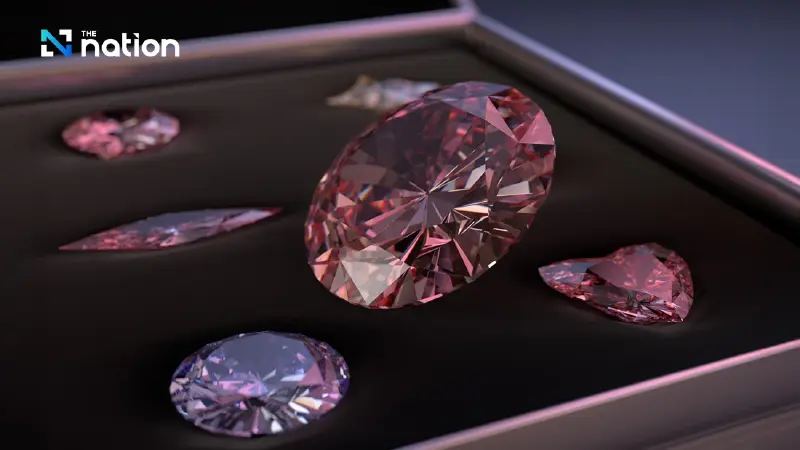


Thailand’s jewelry and gemstone exports surge, with a 49% growth in the first 10 months of 2025. The industry is on track to reach 800 billion baht, its highest value in 10-20 years. GIT plans to elevate standards to solidify Thailand as a global jewelry hub.
Despite global economic uncertainty, including trade wars, the Russia-Ukraine conflict, and the COVID-19 pandemic, Thailand’s jewelry and gemstone industry has proven resilient, showing impressive growth. According to the Gem and Jewelry Institute of Thailand (GIT), exports of gemstones and jewelry grew by 49% in the first 10 months of 2025, reaching nearly 23 billion USD. The industry is on track to hit a record 800 billion baht by the end of the year, marking its highest value in 10-20 years.
The United States and India remain key markets for Thailand’s jewelry exports, with Switzerland, Hong Kong, Italy, and the United Kingdom also contributing significantly. Despite the impact of the Trump-era tariffs on the U.S. market (19% tax), U.S. imports of Thai jewelry have increased by 20%, while the Chinese market has remained stable despite some slowdown in high-cost categories like diamond jewelry.

Sumed Prasongpongchai, Director General of GIT, highlighted that the jewelry and gemstone sector remains Thailand’s third-largest export. In October alone, exports reached 35 billion baht (around 11 billion USD), a figure that exceeded expectations.
For 2026, GIT plans to focus on elevating industry standards across the entire supply chain—from sourcing to finished products. The institute aims to strengthen Thailand’s position as a global leader in the jewelry trade by enhancing transparency, governance, and sustainability.
GIT's key initiatives for 2026 include:
- GIT Standard 3001 - A risk management and supply chain verification standard.
- Responsible Jewellery Council (RJC) - A global governance standard for the jewelry industry.
- Carbon Footprint for Organizations (CFO) - A new tool helping SMEs track environmental impacts in line with global sustainability trends.
GIT has already trained over 300 companies, with 40 selected for a Review-Improve-Audit process to help them meet international standards, including the RJC certification. However, only 107 Thai businesses have passed RJC certification due to its rigorous standards. GIT has proposed accepting the JTI Standard as a minimum certification for SMEs to ensure they remain part of the global supply chain.
Despite the challenges, Thailand’s jewelry and gemstone industry continues to show impressive growth, with GIT working to strengthen the entire sector and position Thailand as a sustainable global hub for jewelry and gemstones.
