
Ekniti outlines four strategies to reset Thailand's economy
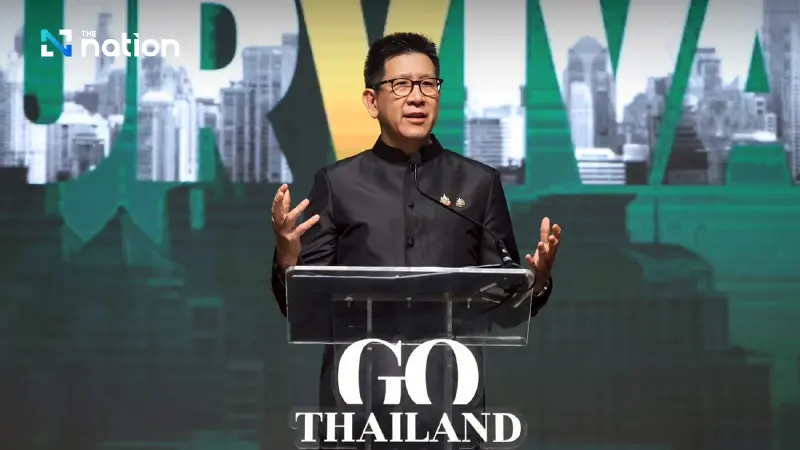


Finance Minister Ekniti Nitithanprapas unveils four key strategies to reset the economy, with 2026 marked as the year of investment for sustainable growth.
- Reset economic growth by shifting focus from past successes to domestic investment, easing household debt, and supporting small and medium-sized enterprises (SMEs).
- Create stable growth by improving the country's fiscal health, aiming to repay government debts and reduce the budget deficit.
- Address societal challenges such as the ageing population and wealth inequality by upskilling the workforce and attracting highly skilled individuals.
- Tackle environmental issues and new global regulations by investing in clean energy and preparing for rules like the Carbon Border Adjustment Mechanism (CBAM).
Ekniti Nitithanprapas, Finance Minister, delivered a keynote address at the "Go Thailand 2026: Beyond Survival" event hosted by Thansettakij on Tuesday (December 2). He highlighted the urgent need to “reset” Thailand’s economic structure in four key areas:
Reset growth and stop relying on past successes
Ekniti pointed out that Thailand’s economic growth has significantly slowed, from an average of 7% in the 1990s to just 2% today. This decline reflects Thailand's dependence on past investments.
"If we compare Thailand to a factory, it has become outdated and no longer produces goods that meet global demands. Even rice is still sold the same way, while cars have shifted to EVs and hybrids, and tourists now seek wellness. We need a complete reset," he said.
Ekniti proposed a shift towards domestic growth, aiming to ease household debt and improve SMEs’ liquidity. The year 2026 was designated as the "Year of Investment" to help drive this transformation.
Create stable growth
While Thailand’s financial institutions remain robust, with low non-performing loans (NPL) under 3% and a capital adequacy ratio of 20%, the country's fiscal health is weak. The government plans to address this by repaying debts and reducing the fiscal deficit to under 3% of GDP by 2029.
Address the ageing society, inequality, and weak SMEs
Thailand is ageing, with income inequality on the rise. The top 20% of earners control 50% of the country’s wealth, while the bottom 20% only receive 6%. Ekniti stressed the need to strengthen SMEs by improving their liquidity and encouraging digital access and financial inclusion.
In response to Thailand's decreasing population, he called for programs to upskill and reskill the workforce, such as the “Let’s Go Halves Plus” initiative. He also called for attracting highly skilled individuals to work alongside Thais.

Tackle environmental challenges and new global rules
The recent floods in Hat Yai, Songkhla, highlighted the urgency of addressing global warming. Ekniti mentioned the government’s efforts to create long-term sustainable measures and prepare for global environmental regulations, such as the Carbon Border Adjustment Mechanism (CBAM) and green loan schemes.
The focus will be on clean energy, with initiatives to unlock direct power purchase agreements (PPA) and invest in industries with high potential, including smart farming, food processing, electronics, EV manufacturing, and medical hubs.
With over 80 investment projects worth 460 billion baht already approved but stalled due to infrastructure and legal challenges, the government is set to expedite progress through public-private partnerships (PPP) and infrastructure funds.
"This is the final opportunity to drive investments that are valuable and aligned with the new world. Invest in people, invest in new industries of the future, to ensure that Thailand’s economy can grow back in a stable and sustainable way," Ekniti concluded.
