
Global trade in 2026: WTO’s three rules for staying competitive
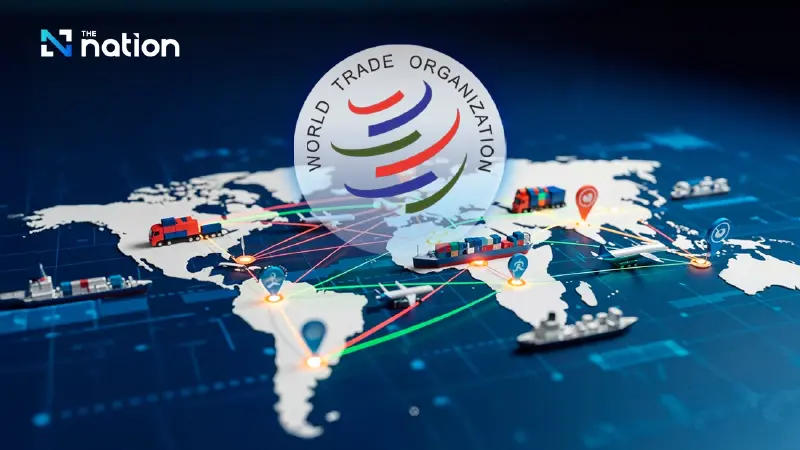


WTO’s 2025 GVC report says globalisation isn’t over—supply chains are rewiring. Three priorities for 2026: inclusion, resilience and sustainability.
The World Trade Organisation (WTO) recently released The Global Value Chain Development Report 2025: The Re-wiring of GVCs in a Changing Global Economy.
The report finds that global value chains are resilient and adapting to new challenges, with GVCs proving more robust in the face of rising geopolitical tensions, financial uncertainty, climate pressures and the lingering impact of the Covid-19 pandemic.
WTO Director-General Dr Ngozi Okonjo-Iweala said foresight is crucial amid ongoing change to ensure that people and economies are integrated into global value chains.
“The new report confirms what the WTO has said all along: globalisation is not over, and global value chains remain vital. The share of GVC-related trade in overall global trade has dipped only slightly, from a peak of 48% in 2022 to 46.3% last year,” she said.
A trade-finance shortfall of more than US$1 trillion a year is another major challenge.
The report also says the restructuring of GVCs largely benefits countries that are already established as suppliers. If GVCs are to become more deconcentrated, diverse and resilient, all parties will need to develop solutions that can overcome existing barriers.
It also serves as a lesson that traditional forms of bilateral and multilateral agreements may no longer work—or may have little practical impact—given that more than 180 trade agreements as of 2024 have focused on digital trade and critical minerals, rather than goods trade as in the past.
In summary, the factors and approaches for managing global value chains are no longer the same. The report identifies three key priorities.
First, globalisation must be more inclusive. Expanding access to finance, technology and markets for developing economies and small enterprises is essential. Digital trade platforms, trade-finance initiatives and regional integration programmes can help lower barriers to market entry.
Capacity-building support from multilateral institutions should focus on logistics, modernising customs, and digital infrastructure—areas that determine readiness to participate in global value chains.
Second, globalisation must be more resilient. Diversified sourcing, transparent supply-chain mapping and stable macro-financial frameworks can help economies withstand shocks.
Governments should promote data-sharing between the public and private sectors to anticipate disruptions. Regional emergency preparedness—such as cooperative stockpiling or mutual-assistance frameworks for essential goods—can further strengthen stability.
Financial resilience is equally important. Keeping capital flows stable and managing debt prudently can help prevent sudden reversals that undermine trade and investment.
Third, globalisation must be sustainable. Climate and trade policies need to be aligned so that emissions reductions and competitiveness reinforce each other. Carbon accounting standards, investment in renewable energy and support for circular-economy practices can ease environmental pressure without limiting growth.
International coordination on carbon pricing and border adjustment measures will be vital to prevent fragmentation. Developing countries also need access to climate finance and technology to participate fairly in the transition to a green economy.
Overall, the changes under way reflect a more “organised” globalisation—shaped by overlapping regional networks and a wider variety of rules and institutions. Success, or even survival, in this new environment will depend on countries’ ability to adapt, innovate and cooperate.
Policies that broaden participation, manage risk and reduce environmental impacts form the foundation of what the report calls the reorganisation of globalisation.
