
HSBC: ASEAN-China trade to top US$984bn as Chinese FDI surges in region
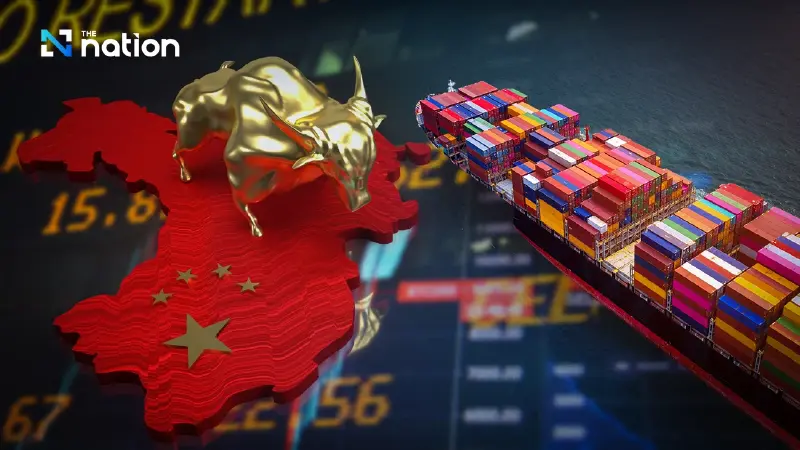


HSBC says ASEAN-China trade in 2025 is set to exceed US$984bn, with supply-chain links deepening and Chinese FDI rising above 25% in Thailand, Indonesia and Vietnam.
ASEAN has overtaken the European Union to become China’s largest trading partner since 2020, and two-way trade in 2025 is on track to exceed 2024’s record of US$984 billion, according to HSBC Global Investment Research.
In a research note by Yun Liu, ASEAN economist at HSBC Global Investment Research, the bank said ASEAN’s widening trade deficit with China partly reflects deeper supply-chain integration, especially in electronics and electrical machinery (E&E). Around 30% of ASEAN’s exports to China are E&E products, and roughly 30% of its imports from China come from the same sector — a dynamic that particularly benefits tech-linked economies such as Singapore, Malaysia and Vietnam.
HSBC added that ASEAN still runs a trade surplus with China in agriculture and commodities, with Indonesia heavily reliant on commodity exports. Thailand and the Philippines remain strong in agriculture, while Vietnam is catching up rapidly after signing multiple protocols with China.
One standout growth story has been durian. HSBC said China’s durian demand has become a multi-billion-dollar market. Thai exporters have dominated since 2005, but competition has intensified: Vietnam, which shipped no durians to China until 2020, saw exports surge to US$3 billion in 2024, lifting its market share from 0% to more than 40% in three years. Malaysia, known for Musang King, also entered the race after agreeing to export fresh durians from August 2024.

Chinese FDI deepens, with EVs and metals prominent
HSBC said trade tensions since 2018 have helped revive foreign direct investment (FDI) into the region. The ASEAN-6 now captures 14.5% of global FDI, though 65% of that goes to Singapore.
China has increased investment in ASEAN, HSBC said. In manufacturing, China’s share of each ASEAN economy’s FDI portfolio was barely 10% in 2015, but Thailand, Indonesia and Vietnam have since seen China’s share jump to more than 25%. Chinese FDI remains less dominant in Malaysia and Singapore, which receive more advanced Western investment in E&E, while Chinese FDI in the Philippines is described as almost negligible.
The direction of Chinese investment varies by country:
- In Indonesia, Chinese investment — including EV battery maker CATL and stainless-steel producer Tsingshan — has supported a nickel-smelting boom, a key input for EV batteries.
- In Thailand, major Chinese EV producers BYD, Great Wall Motor and SAIC have set up production lines.
- Malaysia has attracted green-sector investment as it competes in EV manufacturing.
- In Vietnam, Chinese investors are targeting its strengths in consumer electronics to expand capacity.
“Trump 2.0” tariff question, and Thailand’s digital tilt
HSBC said clients are increasingly asking whether the “China+1” strategy can be sustained amid “Trump 2.0” tariff dynamics. Based on early high-frequency indicators, the bank said trade is continuing to flourish and FDI trends have intensified.
HSBC highlighted Thailand as a notable case, with approved FDI applications rising to close to 7% of GDP, about 40% of which is in the digital sector, which the bank suggested may largely reflect data centres. Since the start of 2025, China has accounted for close to 40% of Thailand’s total approved FDI applications, with most directed towards metals, E&E and digital.
However, HSBC cautioned that it remains uncertain whether the pace can be sustained, given Thai-Cambodian border clashes and the February 2026 election. It added that Chinese approved FDI applications have also surged in Malaysia through the third quarter of 2025, while in Vietnam, steady new Chinese inflows have partly offset falling investment from other sources.
