
Bangkok Bank outlines 5 key trends defining ASEAN’s future in 2026
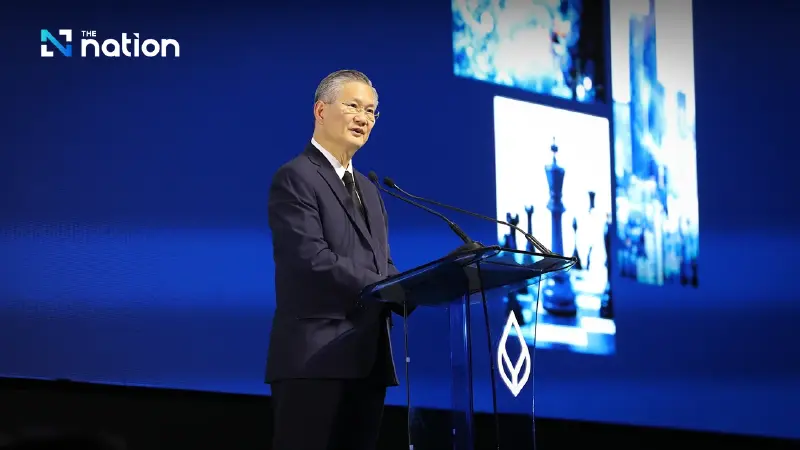


Bangkok Bank highlights 5 mega trends that will shape the future of ASEAN in 2026, addressing challenges such as geopolitical tensions, global trade shifts, technology, climate change, and demographic changes.
Chartsiri Sophonpanich, President of Bangkok Bank, pointed out that in 2026, the world will continue to face risks, volatility, and uncertainty, driven by five key factors which will serve as both obstacles and opportunities in shaping ASEAN’s future.
He made this remark during the opening of the ‘AEC Business Forum 2026,’ held for the seventh time by the bank under the theme ‘New ASEAN: A Paradigm Shift’ on Wednesday (January 14).
Geopolitical tensions
Chartsiri explained that we live in a multipolar world, shaped by the rise of China, Russia, and the BRICS, challenging the global rule-based order. This rivalry is leading to trade fragmentation and disruptions in technology and supply chains.
The struggle for dominance among major powers affects everyone. In 2025, this rivalry led to trade fragmentation, with what began as a trade conflict and limited competition evolving into widespread disruptions in technology, supply chains, and global logistics.
This factor, he noted, has prompted many countries to focus on maintaining balance and promoting cooperation both domestically and internationally to strengthen regional economies.
As for Thailand, he mentioned that the Bank of Thailand (BOT) has pushed for the use of the Thai baht and local currencies in international trade, instead of the US dollar, while also promoting financial cooperation and linking investment and payment systems within ASEAN.
This initiative is expected to help Thai businesses access a larger market of over 660 million people, with a GDP exceeding $4.25 trillion, he added.

Shifting trade flow
Chartsiri explained that global trade wars have redirected Chinese products away from the US towards Southeast Asia, while trade between ASEAN and the US has risen rapidly by about 30% in 2025.
ASEAN is becoming a key player in the multipolar global trade system, with a large market and an economy expected to be the fourth-largest in the world by 2030. The region has vast human resources and a strategic location linking global supply chains, making it a key target for foreign direct investment (FDI).
FDI has increased from 5% ten years ago to 20% in 2024, particularly focusing on strategic industries such as semiconductors, electric vehicles, data centres, and biotechnology, with a strong emphasis on countries like Vietnam, Indonesia, Thailand, Malaysia, Singapore, and the Philippines.
“These kinds of investments have the potential to raise our technological and production capabilities, creating a stronger middle-income base and improving living standards,” he said.
Technological transformation
ASEAN is increasingly becoming a hub for technological innovation, with a strong push from a digital-savvy population. New investments are flowing into sectors like Artificial Intelligence (AI), data centres, and advanced manufacturing, all of which are accelerating growth across various industries.
Singapore aims to become a global AI hub, home to more than 1,000 AI startups and major tech companies such as OpenAI, Google, and NVIDIA. Meanwhile, many countries in the region are advancing their own AI strategies.
However, Small and Medium Enterprises (SMEs), the backbone of the economy, are facing pressure from rapid changes in markets and technologies. They will require support to adapt to the digital age.
Climate change
Severe climate events are becoming more frequent. Last year, storms, landslides, and floods caused devastating damage in Thailand, Vietnam, the Philippines, Malaysia, and Indonesia, resulting in many lives lost and billions in damage.
This factor has led to new regulations and international standards, such as the Carbon Border Adjustment Mechanism (CBAM) and the EU Deforestation Regulation (EUDR), which are shifting trade towards low-carbon supply chains.
"Therefore, all businesses must adapt and plan long-term to manage and transition towards net zero," he said, adding that a stronger green transition could also position ASEAN as a global leader in sustainable growth.
Demographic Shift
Some countries, like the Philippines and Indonesia, have young workforces, while Singapore and Thailand are ageing rapidly, leading to labour shortages in agriculture.
This shift means that the region must attract younger generations back into agriculture and adopt modern technologies, like AI, to increase productivity and maintain ASEAN’s role as a major food producer.
"We are fortunate that we already see critical issues and opportunities to upskill our workforce, enhancing productivity with automation, robotics, and AI, particularly in sectors like health, wellness, housing, and financial services," Chartsiri said.

Despite the aforementioned challenges, Chartsiri believes that each of these factors presents an opportunity to strengthen the region’s competitive edge.
He emphasises that if member countries enhance cooperation and leverage these mega trends—by investing in green technology, digitalisation, and workforce skills—ASEAN can become one of the world’s most attractive regions for investment.
"Therefore, cooperation is the key to transforming uncertainty into a driving force for the region's future," he said.
As a leading financial institution in the region, Bangkok Bank is ready to support its clients with a network covering 9 of the 11 ASEAN member countries, enabling them to seize new opportunities and drive strong, sustainable business growth, Chartsiri concluded.
