
Delayed government formation may cost Thailand’s GDP 90 billion
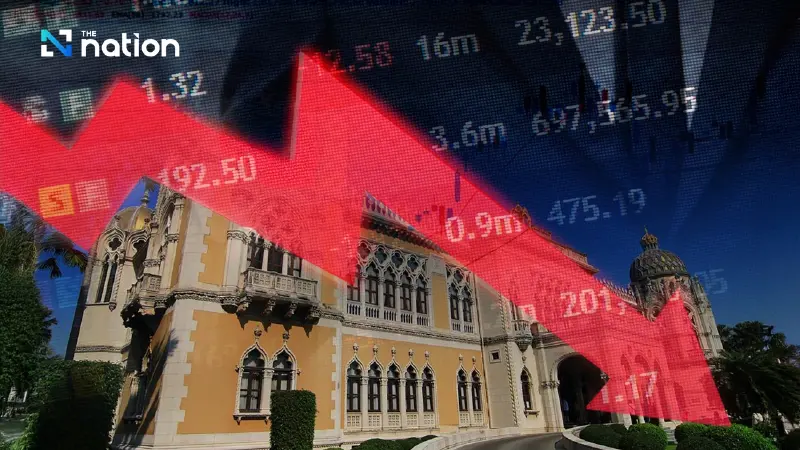


Private sector warns a delayed government could shrink GDP by up to 90 billion baht, urging political parties to form a government within 30 days
The private sector has warned that delays in forming a government for more than 2-3 months could result in a loss of up to 95 billion baht in Thailand's GDP.
The main impacts would stem from lost confidence, a slowdown in investor activity, and a policy vacuum that hampers economic governance. The private sector is calling on political parties to expedite the formation of a government within 30 days to create economic clarity and stability.
Kriengkrai Thiennukul, Chairman of the Federation of Thai Industries (FTI) and Chairman of the Joint Private Sector Committee (JCC), stated that businesses are not concerned about which party leads the government but are worried about how quickly the political situation stabilises. He emphasized that the economy cannot wait while the government is not in place. If the delay lasts for 2-3 months, the damage will not only be seen in GDP figures but will also impact long-term confidence.
He added that, while Thailand is already facing external pressures, including the volatility of the global economy and regional competition, a policy vacuum will only exacerbate the situation. "Right now, Thailand is like a patient. If doctors argue about who should treat them, the patient’s condition will only worsen," he said.
Three Post-Election Scenarios
Visit Limlurcha, Vice Chairman of the Thai Chamber of Commerce, said that the private sector has identified three main scenarios following the election. The best-case scenario would see one party win decisively or form a coalition quickly within 30 days. "Clarity is key. Both domestic and international investors want to see clear direction for at least the next 4 years," he said.
The second scenario would be a coalition government that reaches a quick agreement. Even though negotiations would be required, this would still be seen as a positive outcome, provided the economic team is clear and policies are not in conflict. "A coalition government is not a problem if talks are concluded quickly and there is clear fiscal discipline. The market would accept it," said Visit.
However, the third scenario, which businesses consider the riskiest, is a situation where negotiations drag on for an extended period, resulting in a delayed government formation. "If it lasts beyond 60 days, the impact will be clear. Investors will hold back, the budget will be delayed, and economic activities will come to a halt immediately," he said. He added that the damage could reach tens of billions of baht in the short term.
Stability as a Starting Condition
From an academic perspective, Dr Attasit Pankaew, a political science lecturer at Thammasat University, stated that the stability of the government is a fundamental condition for economic policies. "No matter how good the policies are, if the government lacks sufficient support, it will be difficult to push them forward. Political uncertainty will immediately be reflected in the capital market," he said.
Meanwhile, Associate Professor Dr Aat Pisanwanich, an independent scholar and expert on international economics and ASEAN, mentioned that the Thai economy is in a vulnerable phase. "If government formation takes as long as it has in the past, confidence will quickly erode, and recovery will take much longer than the GDP figures would suggest," he said.
Private Sector Urges Deal Completion Within 30 Days
As a result, the private sector is urging political parties to expedite negotiations and form a government within 30 days. This would allow for the immediate announcement of a clear economic direction, including short-term stimulus measures, household debt management, and international trade negotiations.
"We are not taking sides with any political party, but we are choosing clarity and stability. Every day that politics is stalled is an economic opportunity lost for the country," Kriengkrai concluded.
