
Industrial Sector Lands US$100m World Bank Boost for Green Transformation
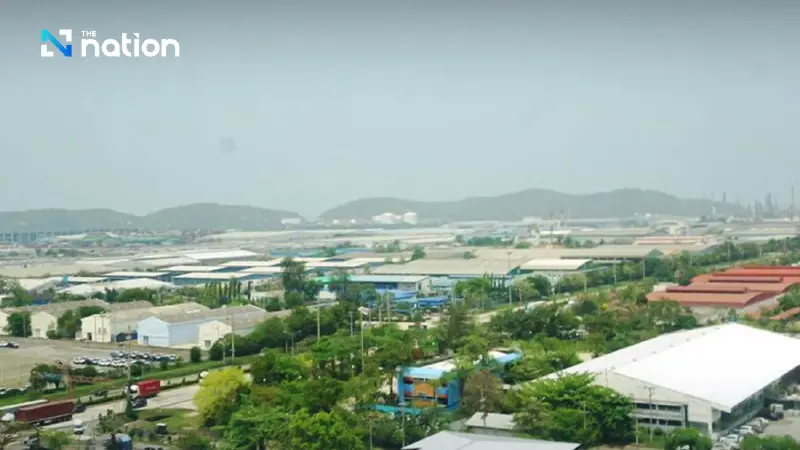


Pilot schemes at Map Ta Phut and Laem Chabang aim to slash 2.33m tonnes of CO2 while shielding Thai exporters from the EU’s looming CBAM carbon taxes
- Thailand’s industrial estate regulator has secured a US$100 million loan from the World Bank to transform the nation's industrial centers into low-carbon hubs.
- Pilot projects at the Map Ta Phut and Laem Chabang industrial estates will deploy green technologies, including solar power, large-scale battery storage, and EV infrastructure.
- The initiative is projected to cut 2.33 million tonnes of CO2 emissions over ten years while generating premium-grade carbon credits for the global market.
- A key economic goal is to shield Thai exporters from the EU's Carbon Border Adjustment Mechanism (CBAM) and attract foreign investment in green manufacturing.
Pilot schemes at Map Ta Phut and Laem Chabang aim to slash 2.33m tonnes of CO2 while shielding Thai exporters from the EU’s looming CBAM carbon taxes.
The Industrial Estate Authority of Thailand (IEAT) has secured an initial US$100 million (approximately 3,400 million baht) loan from the World Bank to transform the nation’s industrial heartlands into low-carbon hubs.
The funding marks the first phase of a broader US$200 million initiative designed to decarbonise heavy industry and establish Thailand as a leader in the global carbon credit market.
IEAT governor Sumet Tangprasert confirmed that the "Low Carbon City and Carbon Market Development" project is now in full swing.

The programme involves a high-level integration of the Ministry of Finance, the Department of Climate Change and Environment, EXIM Thailand, and the World Bank to overhaul national green infrastructure.
The Map Ta Phut and Laem Chabang industrial estates have been selected as the primary pilot sites.
Extensive World Bank research identifies these zones as having the highest potential for significant greenhouse gas reductions, capable of generating premium-grade carbon credits for international trade.

The financial framework, approved in principle by the Cabinet on 9 December 2025, sees the World Bank lending through EXIM Thailand.
These funds are then channelled to Energy Service Companies (ESCOs) and contractors to deploy advanced green technologies, including:
Solar Energy: Ground-mounted, rooftop, and floating solar arrays.
Energy Storage: Large-scale battery systems for industrial stability.
EV Infrastructure: Expanding the network of industrial electric vehicle charging stations.

“The IEAT will not bear the investment costs directly,” Sumet explained. “Instead, we will gain from lower utility overheads and revenue sharing from carbon credit sales. These reductions will be verified using a real-time Digital MRV (Monitoring, Reporting, and Verification) system to ensure compliance with global standards.”
A dedicated Coordinating and Managing Entity (CME), likely to be managed by Krungthai Bank, will oversee the trading of these credits.
The IEAT has set a target for 2026 to bring the first one million tonnes of "Gold Standard" carbon credits to the global market—a high-quality benchmark that commands premium prices.

Over the next decade, the project is forecast to prevent 2.33 million tonnes of carbon emissions.
Beyond the environmental impact, the scheme is a strategic economic move to protect Thai exporters from the European Union’s Carbon Border Adjustment Mechanism (CBAM) and to attract foreign investors who are increasingly prioritising "green" manufacturing bases.

“This is not merely an environmental endeavour; it is a structural redesign of the Thai industrial economy,” Sumet added. “It connects the world of green finance with real-world technology and global investment.”
