
Ekniti urges Team Thailand to press on with US talks as tariff falls to 15%
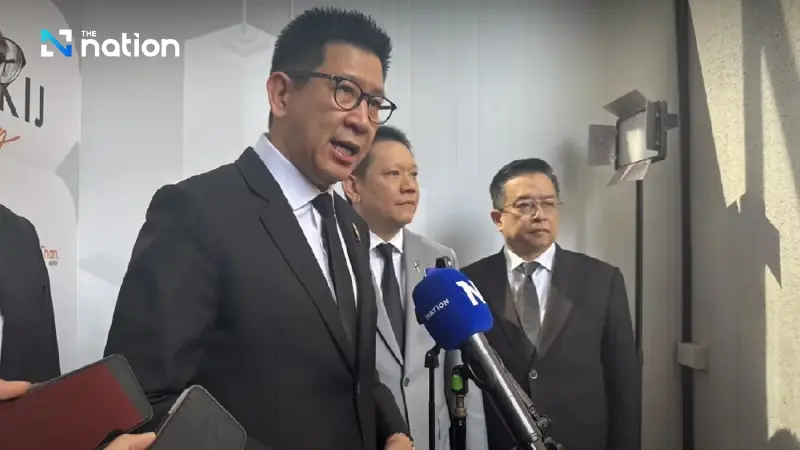


Ekniti tells Team Thailand to keep negotiating with the US, saying the new 15% tariff could bring Thailand short-term gains.
Ekniti Nitithanprapas, Deputy Prime Minister and Minister of Finance, outlined Thailand’s approach to managing the impact of US President Donald Trump’s latest tariff adjustments, saying he is coordinating closely with the Ministry of Commerce to craft a negotiation strategy and prepare the best possible response.
In the short term, he said this is a positive psychological boost to market sentiment for both the capital market and Thai products, because the United States cannot easily use its previous tool of reciprocal tariffs, and has therefore turned to other provisions in US trade law instead.
At present, the average tariff rate for Thailand and ASEAN is about 19%, but the latest US measure sets it at 15%, to take effect for 150 days. This reduction could lower the effective rate on some Thai products to below 10%.
Thailand would also gain greater comparative advantage, as competitor countries that previously enjoyed a 10% tariff rate would be raised to 15% as well, making competition more even.
However, he has instructed the Commerce Ministry to continue negotiations with the Office of the United States Trade Representative (USTR) to protect Thailand’s interests and prepare for other tariff measures in the longer term.
Asked about Team Thailand’s next strategy for negotiations with the US, Ekniti stressed that exports of goods and services are the key driver, accounting for a combined 70% of GDP—60% from goods and 10% from services.
The government is focusing on accelerating free trade agreement (FTA) negotiations to open new markets and attract investment, positioning Thailand as an important production base in the global supply chain.
On concerns that India could compete for foreign direct investment (FDI) in sectors such as automotive manufacturing and printed circuit boards (PCBs), Ekniti said competition is normal, but Thailand’s policy is to position itself as a “partner” by linking into India’s supply chain, given India’s vast market.
He also spoke of the importance of tackling corruption through digital systems and transparency, with plans to connect government procurement data and the tax systems of various departments within the Finance Ministry through a data lake.
“We have discussed with Microsoft for the Board of Investment (BOI) and the Finance Ministry to serve as a model for government transformation, using digital technology and open data to build transparency in public-sector operations, which will help reduce corruption in a tangible way,” Ekniti said.
