
IMF Chief Warns Middle East Conflict Poses Triple Threat to Global Economy
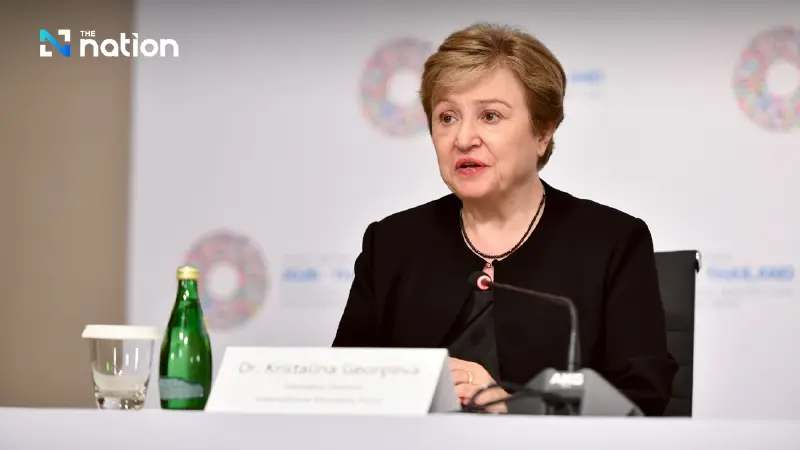


Georgieva identifies energy prices, market sentiment and trade disruption as key risks, with resolution timeline the decisive factor
- IMF Chief Kristalina Georgieva warns the conflict could drive up global energy prices due to the Middle East's crucial role in energy supply.
- A second identified threat is heightened market uncertainty, which discourages business investment and reduces consumer spending.
- The conflict also risks causing widespread disruptions to international trade, travel, and tourism, with effects felt far beyond the immediate region.
- The ultimate scale of the economic damage is considered highly uncertain and will depend on the duration of the conflict.
Georgieva identifies energy prices, market sentiment and trade disruption as key risks, with resolution timeline the decisive factor.
Kristalina Georgieva, managing director of the International Monetary Fund, has cautioned that the ongoing conflict in the Middle East presents a threefold risk to the global economy, warning that the ultimate scale of the damage will hinge on how swiftly a resolution can be achieved.
Speaking at a joint press conference in Bangkok on Wednesday alongside Thailand’s Finance Ministry Dr Ekniti Nitithanprapas and the Bank of Thailand governor Vital Ratanakorn, Georgieva said the developments in the Middle East were “concerning” and set out three distinct channels through which the conflict could reverberate across the world economy.
The first concern, she said, centres on energy prices. Given the Middle East’s pivotal role in global energy supply, any prolonged instability in the region carries the potential to push prices higher, with knock-on consequences for economies worldwide that rely heavily on imported fuel.
The second risk pertains to market sentiment. Georgieva noted that uncertainty had already been elevated across global markets, and the conflict serves to deepen it further. She stressed that heightened uncertainty is detrimental across the board — discouraging businesses from investing, dampening consumer spending, and unsettling financial markets.
The third channel involves disruptions to travel, tourism and trade. Georgieva underscored that the ripple effects of such disruptions extend well beyond the immediate conflict zone, affecting countries and industries far removed from the region — including, she noted, economies such as Thailand.
While setting out these risks, Georgieva was careful to note that the magnitude of the impact remains deeply uncertain.
“What we don’t know is what is the duration — how or if there would be a resolution,” she said, describing this as “the most important factor” in determining the eventual toll on both the region and the wider world.
She acknowledged that Thailand’s government and central bank had been “very accurate” in identifying these risk factors and were actively considering their response.
Despite the sombre assessment, the IMF chief struck a note of cautious optimism, describing herself as a “self-declared optimist” and expressing her belief that a resolution would come sooner rather than later.
Georgieva’s remarks came during a press conference ahead of the IMF and World Bank Annual Meetings, which are scheduled to be hosted in Bangkok in 2026. Thailand is positioning itself as a key destination for international financial dialogue, with the event expected to draw senior policymakers and financial leaders from across the globe.
