
Oil prices to stay high after Middle East energy attacks: NESDC
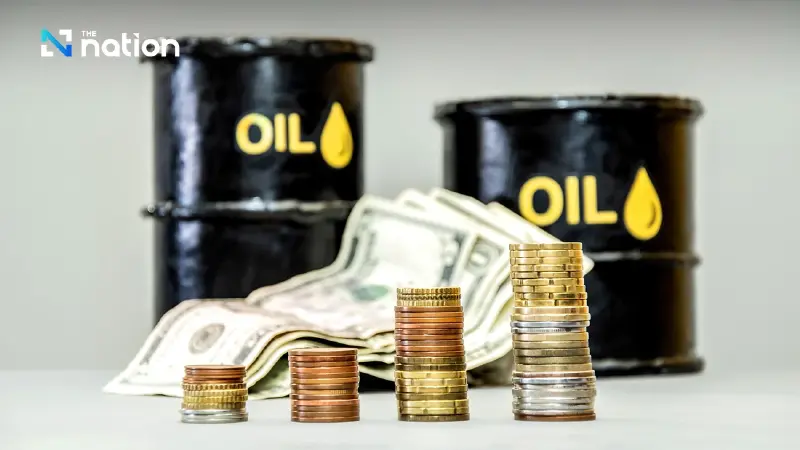


Thailand’s planning agency says oil may remain elevated even if fighting eases, as damaged energy infrastructure in Arab states will take time to restore.
- The National Economic and Social Development Council (NESDC) predicts that global oil prices will remain at elevated levels for a significant time due to high uncertainty from attacks in the Middle East.
- Even if the conflict ends, prices are not expected to fall quickly because damaged energy infrastructure in the region will take time to restore to full production capacity.
- The severity of the situation is highlighted by refined diesel prices in Singapore, which have already surpassed the peak levels seen during the Russia-Ukraine war.
- As a result of the sustained high prices and market volatility, the NESDC is urging the public to conserve energy to help manage the situation.

Danucha Pichayanan, Secretary-General of the National Economic and Social Development Council (NESDC), in his capacity as secretary of the Joint Management and Monitoring Centre for the Situation in the Middle East, said the situation in the Middle East remained highly uncertain and global oil prices were likely to stay at elevated levels for some time.
As a result, any assessment of where the diesel price cap should be set would have to track world market prices, as the global market was now highly volatile.
Refined diesel prices in Singapore were currently above US$200 a barrel, compared with a peak of about US$135 a barrel during the Russia-Ukraine war, when many countries had to manage prices similarly.
At that time, the Oil Fuel Fund had once fallen into a deficit of about THB120 billion.
Even if the Middle East situation were to end, that would not mean oil prices would quickly return to normal.
Prices would remain high and then gradually ease.
Energy infrastructure in Arab countries had been affected by the fighting, so restoring those facilities to their previous production capacity would take time, while each country continued to need oil every day.
About borrowing by the Oil Fuel Fund, Danucha said such borrowing was still at the preparatory stage.
As the government had already incurred public debt, it would be necessary to wait until the new government was able to administer the country fully and all procedures had been completed.
Danucha said the fund’s role was to maintain price balance and try to prevent excessive volatility in domestic energy prices, though how far it could do so would depend on several factors.
He nevertheless insisted that support could still be provided for now, though it would depend on how long that capacity could be sustained.
Danucha noted that Malaysia, which had long subsidised fuel prices, was no longer doing so, and its fuel prices were now higher than Thailand’s.
It was the first time in his life, he said, that he had seen such a situation, as Malaysian fuel prices had normally always been lower than Thailand’s.
Many countries were likely to roll out measures, possibly including targeted assistance for different groups.
Preparations were now underway, and once the new government was fully in place, those measures would likely be accelerated, with several areas requiring support for specific groups.
As for managing the domestic oil situation, Danucha said the government had already done everything it could by easing oil reserve requirements so that more fuel could be delivered to service stations.
However, he asked the public to reduce panic and help conserve fuel, as Thailand’s five refineries had a combined production capacity of around 175 million litres per day and could increase output by no more than 10% from that level.
In such abnormal circumstances, public cooperation in conserving energy was essential, he said.
“The most helpful thing people can do is conserve energy. We ask for the public’s cooperation in saving energy, especially oil. Although the Oil Fuel Fund still has enough capacity to provide support, we also need cooperation from the public because this is not a normal situation. We will have to live with these abnormal conditions for some time yet.”
