
Ekniti unveils 3T plan as crisis seen worse than Covid fallout
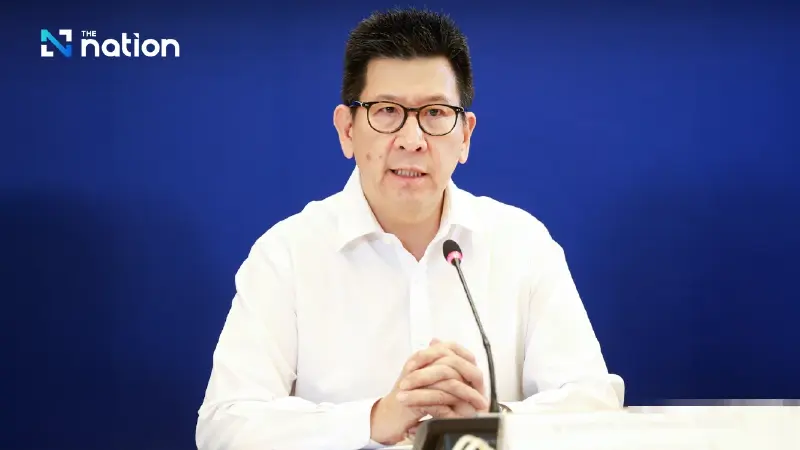


Ekniti Nitithanprapas says the Middle East-driven economic shock could be worse than Covid-19, outlining a 3T strategy to steer Thailand through the crisis.
Ekniti unveils 3T strategy for crisis he says is worse than Covid-19
Deputy Prime Minister and Finance Minister Ekniti Nitithanprapas has unveiled a three-pronged economic strategy to help Thailand navigate a crisis he warned could prove more severe than the fallout from Covid-19, as the Middle East conflict continues to fuel global energy disruption.
Ekniti said the world was entering a new phase of upheaval driven by war and structural energy problems, with damage to oil and natural gas infrastructure likely to keep energy prices elevated for a prolonged period. He said the crisis was not a short-term shock and required governments to think beyond immediate relief measures.
“The world has changed,” Ekniti said. “We cannot think only in the short term. We have to think long term, because whoever adapts first will be the winner.”
3T strategy to reshape Thailand’s response
To help Thailand adjust to the new global environment, Ekniti said the government would press ahead with a 3T strategy comprising Target, Transition and Transform.
Under the first pillar, Target, Thailand would move away from broad-based energy subsidies and instead focus support on vulnerable groups and those genuinely in need. He said blanket subsidies were no longer sustainable in a period of sharply higher global oil prices and could create new fiscal risks if the government continued to resist market forces.
He added that Thailand would also focus more heavily on future industries where it has growth potential, including smart agriculture, food processing, electric vehicles and the wellness sector, while continuing to attract high-technology investment.
Clean energy and capital market reform
The second pillar, Transition, centres on speeding up the shift to clean energy and modernising the capital market.
Ekniti said Thailand needed to accelerate investment in solar farms and floating solar not only for sustainability but also for energy security. He also called for progress on Direct PPA policies to allow private-sector trading of clean electricity, as well as opening the transmission system to greater private investment.
He said Thailand should also establish a Thailand Future Fund to mobilise capital for infrastructure development and support policies that make it easier for global companies investing in Thailand to list on the Thai stock market through dual listing.
At the same time, he said the government would continue to promote long-term savings through a Thailand Individual Saving Account, particularly as the country moves deeper into an ageing society.
AI to drive productivity gains
The third pillar, Transform, focuses on using technology to boost efficiency and productivity, particularly through artificial intelligence.
Ekniti said Thailand should embrace AI as a tool to raise productivity rather than fear job losses. He added that the government planned to build on the Khon La Khrueng Plus scheme by adding embedded AI features to help small merchants analyse sales, manage costs and gain easier access to formal funding.
He also said he had instructed the Finance Ministry and the Board of Investment to act as model agencies in adopting agentic AI within six months to improve internal efficiency.
Long-term adjustment, not short-term thinking
Ekniti said the strategy reflected a recognition that the global environment had fundamentally changed and that Thailand could no longer rely on old policy tools.
He warned that if Thailand remained stuck with traditional subsidy policies and failed to speed up reform of infrastructure and human capital, it risked becoming a loser in the new economic order. But if it adapted successfully, he said, the country could achieve more resilient and sustainable growth while better withstanding future global shocks.
