
Who owns the PC Siam Petroleum empire in 57-million-litre fuel case?
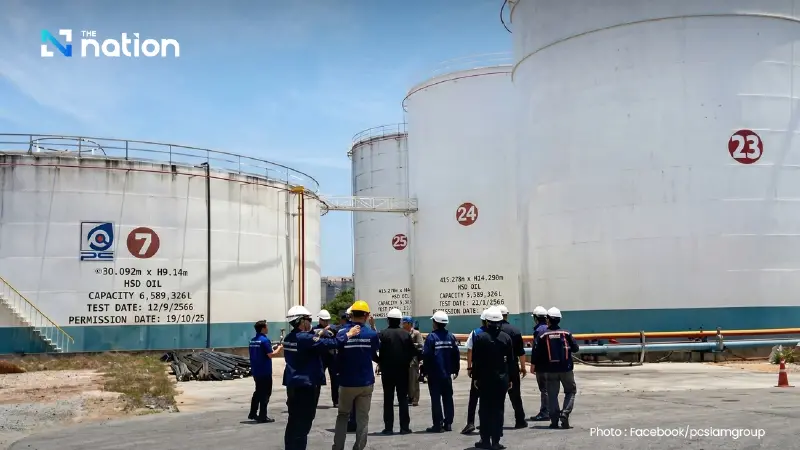


Behind the PC petrol station brand is a tightly held family empire spanning depots, tankers and terminals, now under scrutiny in Surat Thani.
Who owns the PC Siam Petroleum empire at the centre of the 57-million-litre fuel case?
For years, the name Pornchai Lueangkamthon was not especially prominent in national business circles. But in Surat Thani and across Thailand’s upper South, the “PC” brand has long been a familiar name on petrol station signs, oil trucks and logistics facilities.
Now that empire is under intense scrutiny after PC Siam Petroleum Co Ltd was accused in connection with the alleged hoarding of 57 million litres of fuel, a case that has pushed the family-run group into the national spotlight.

At the heart of the empire is Pornchai Lueangkamthon, the businessman who founded PC Siam Petroleum on October 18, 1990 in Surat Thani. The company began as a fuel trader and later became a Section 7 oil trader, a status that allowed it to import refined fuel, store it in its own depots and legally distribute it to retailers.
From that base, the company expanded into a sizeable regional energy network. The PC brand first appeared on a petrol station sign in Tha Chang district in 1992, and the network has since grown to more than 30 petrol stations across Surat Thani and nearby provinces.
But the story is not just about a chain of filling stations. According to business data cited in the source material, the wider PC Siam Petroleum empire now holds total assets of more than 2.132 billion baht, generates revenue of more than 1.841 billion baht, and is linked to at least 26 companies spanning energy, logistics, mining, agriculture and property.

A family-controlled empire
What stands out most is how tightly ownership is concentrated within a single family.
In PC Siam Petroleum, Pornchai Lueangkamthon holds 95.78% of the shares, or 47.89 million shares, worth around 921 million baht. That makes him the undisputed controlling figure in the group.
The remaining shares are held by other family members.
Priyanuch Lueangkamthon owns 1.80% and is linked to shareholdings in 17 companies, with the total value of her holdings across those firms estimated at around 22.75 million baht.
Chaiwat Lueangkamthon holds 1.20% and is connected to a shareholding network across 26 companies.
Porntip Lueangkamthon, who also holds 1.20%, is a shareholder in 24 companies, with the total value of her holdings estimated at around 52.7 million baht.
Taken together, the structure shows that control of the business remains firmly in the hands of the Lueangkamthon family, with Pornchai at the centre.

More than petrol stations
The group’s strength lies not only in retail sales, but in its control of infrastructure across the oil supply chain.
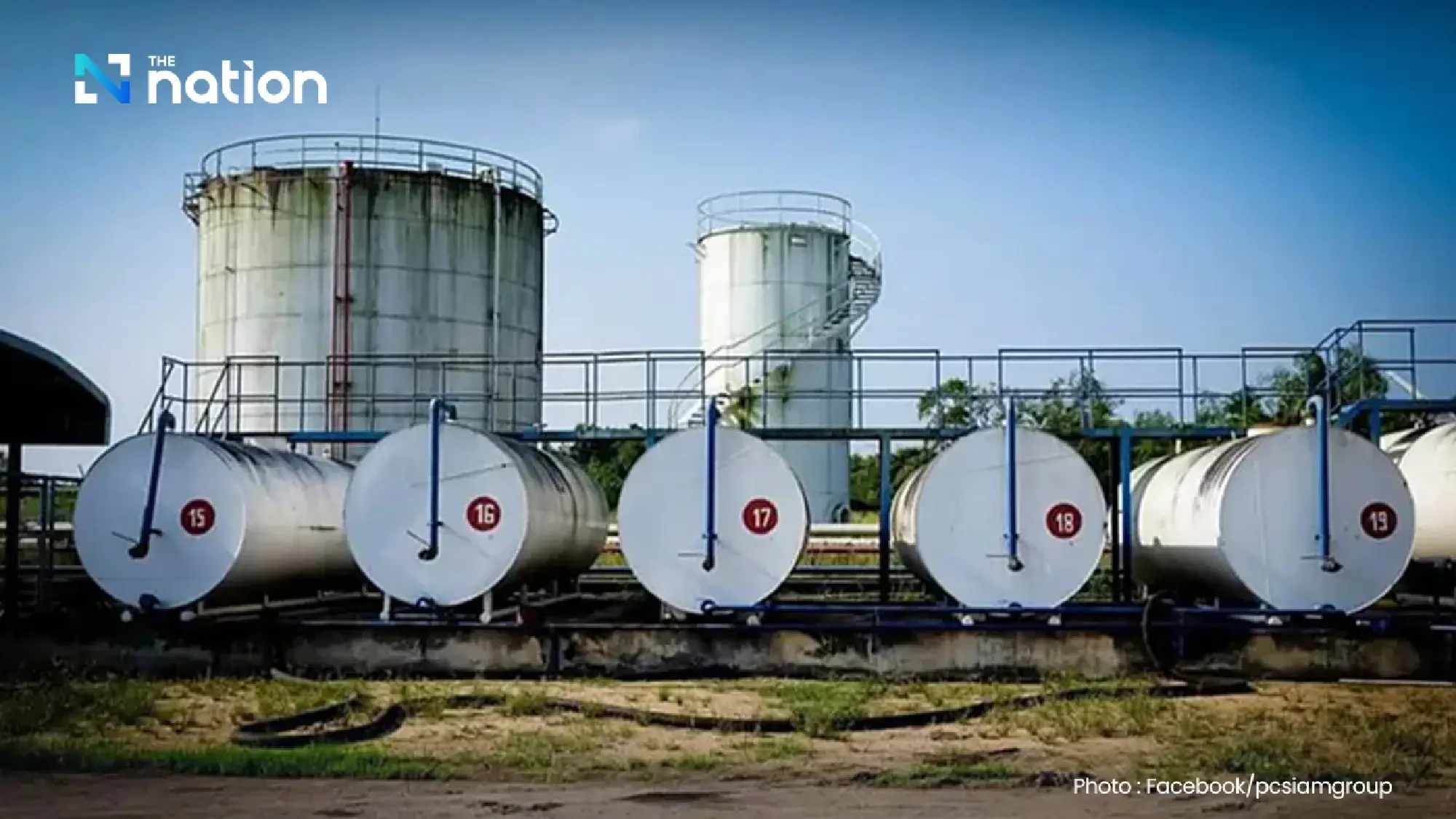
The core of that system is a network of four bonded oil depots licensed by the Customs Department. The main one, Tha Thong depot in Surat Thani, is the site now at the centre of the current investigation. The others are in Songkhla, Bang Pakong in Chachoengsao, and Nakhon Sawan.
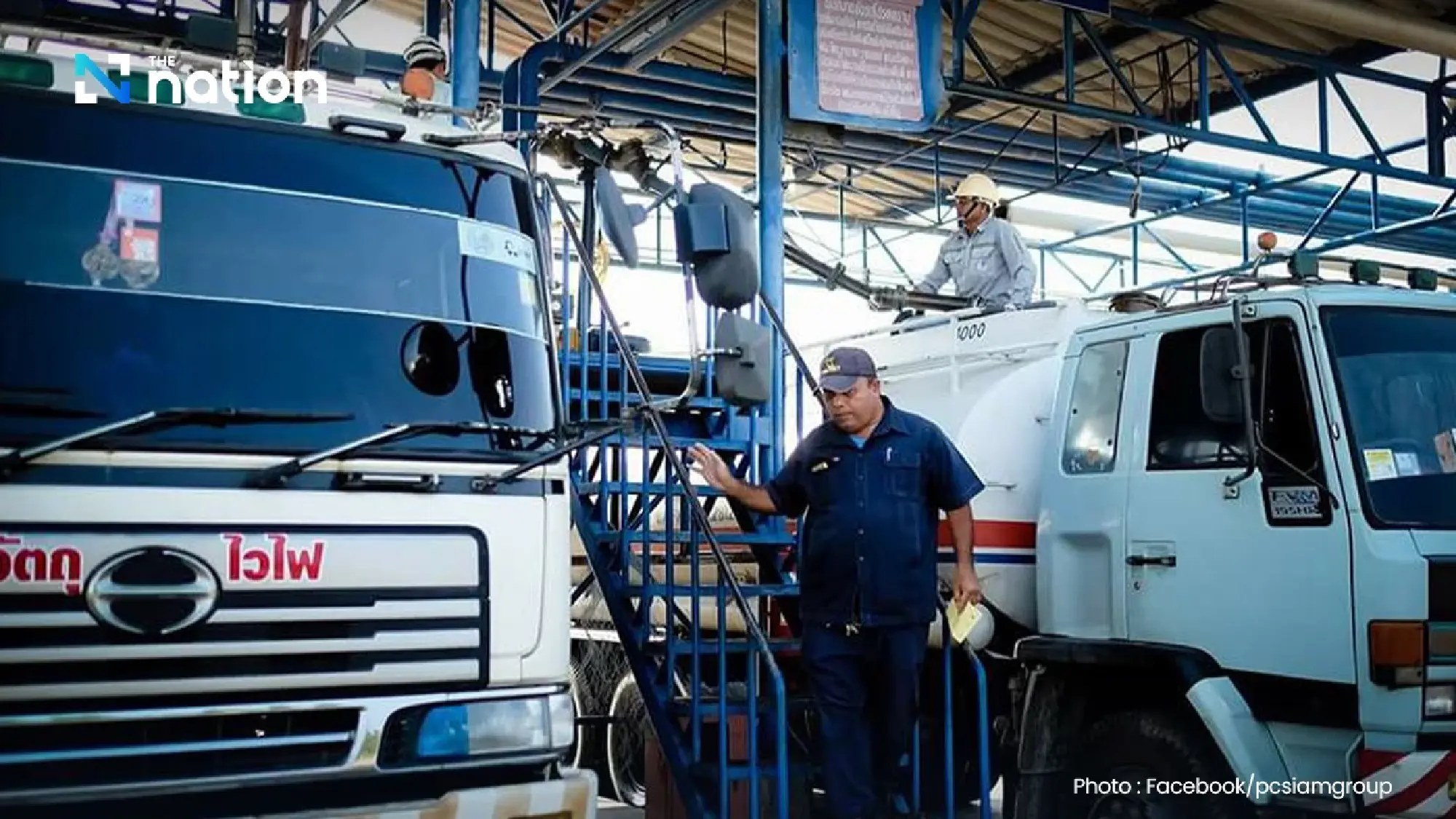
From those depots, fuel is transported by a fleet of more than 100 trucks, each capable of carrying 30 to 32 tonnes, to petrol stations and smaller retailers across the upper South.
The group also built a strong logistics arm. PC Petroleum and Terminal Co Ltd, or PC Terminal, developed more than 70 rai along Tha Thong canal into a major port and cargo hub in Surat Thani, offering berths, warehouses, bulk cargo yards, container facilities and distribution services.
On the maritime side, Siam Nawi Co Ltd operates tankers and dry cargo vessels, handling goods ranging from fuel and fertiliser to gypsum, coal and rice. That gives the group a rare degree of control over both land and sea transport.

A business web stretching beyond oil
The empire stretches well beyond petroleum.
In mining, the family has interests in gypsum and anhydrite through companies such as Laiyamat Co Ltd and Sakchai Co Ltd, while mineral trading and exports are handled through Gypsum Trading 2004 (Thailand) Co Ltd.
In alternative energy, the family expanded into oil palm plantations through PC Palm (2007) Co Ltd, which has more than 3,000 rai of plantations in Surat Thani and plans for a large palm oil extraction plant in Don Sak. The group also invested in biomass power generation through Don Sak Bio Power Tech Co Ltd.
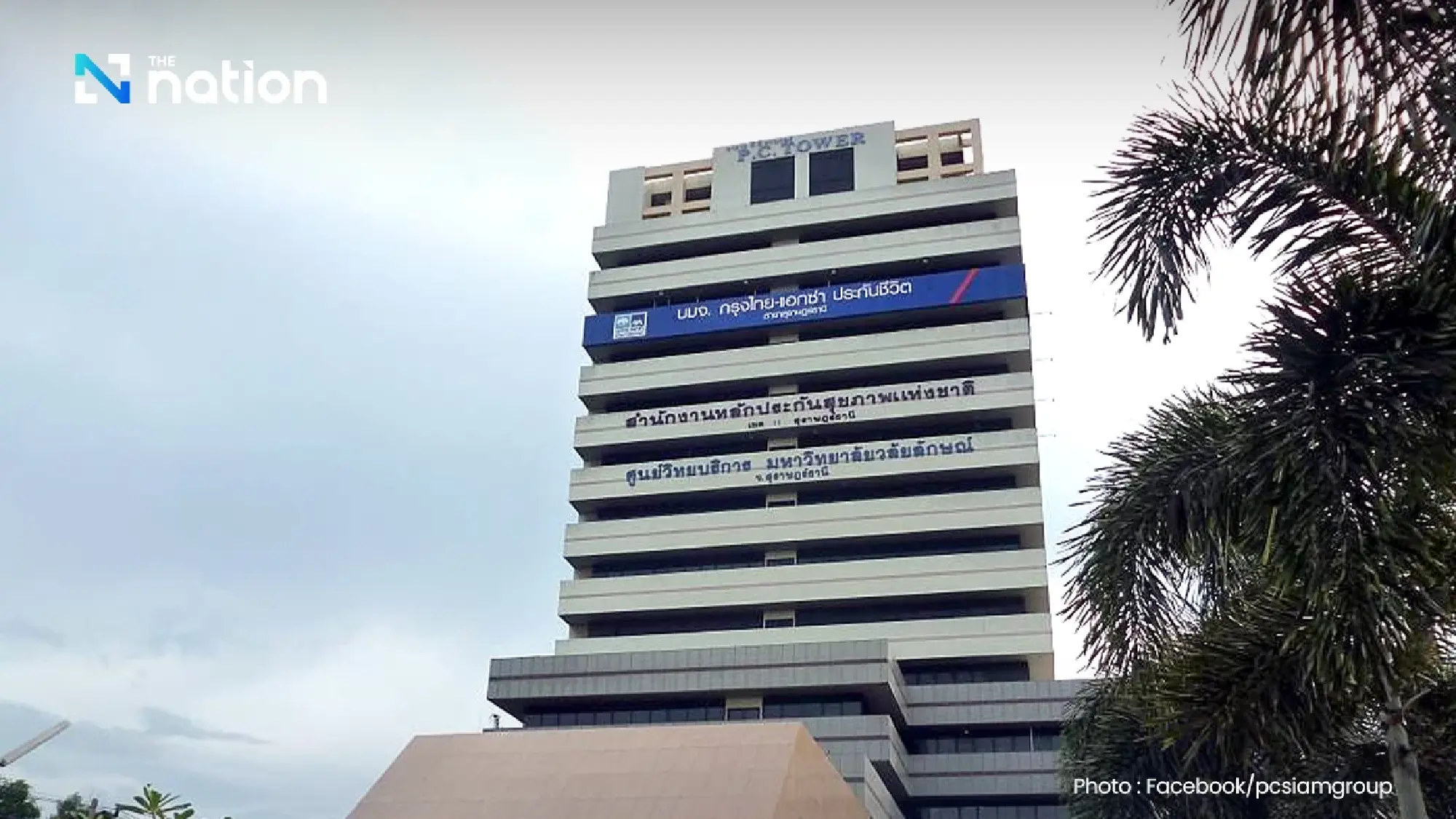
In property, PC Tower and Property (1996) Co Ltd manages a 16-storey office tower in central Surat Thani, providing a steady stream of rental income.
There are also ventures in training, fertiliser and modern retail, although some of those businesses appear less stable, with certain firms reportedly showing negative shareholders’ equity.
Why the ownership matters now
The question of ownership has become more important because the current case is not about a small operator, but about a business group with deep control over fuel storage, transport and retail distribution in the region.
Authorities have alleged that 57 million litres of fuel went missing in transit in Surat Thani. The accusation has placed the spotlight not only on one company, but on the structure of an empire that controls depots, trucks, terminals, vessels and petrol stations across the South.
That is why the name Pornchai Lueangkamthon now matters far beyond the Tapi River basin.
For decades, the PC name stood for a powerful regional fuel business built by one family. Now, as investigators dig deeper into the alleged hoarding case, that same family-controlled structure is facing the most serious test in its history.
