
1973 fuel decree looms as government weighs refinery powers
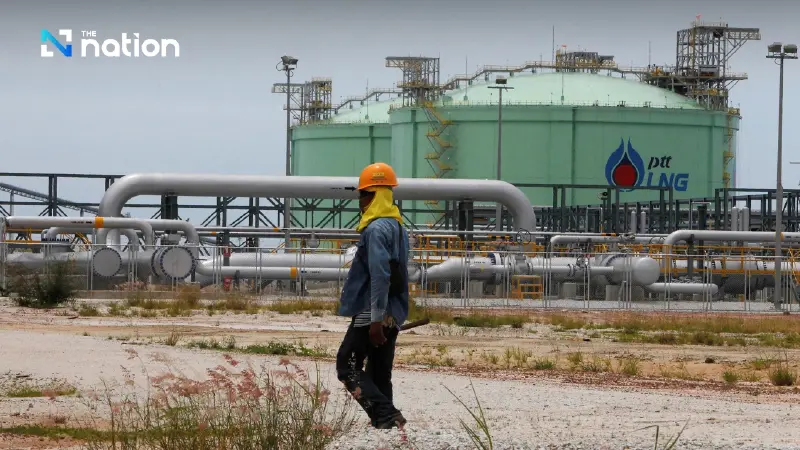


The government is weighing use of a 1973 emergency fuel law that would let the prime minister intervene directly if refinery talks fail to ease the oil price squeeze.
The new government is weighing whether to invoke a 1973 emergency fuel law that would give Prime Minister Anutin Charnvirakul sweeping powers over the oil market if talks with refineries fail to bring down unusually high refining margins. The issue moved into sharper focus after the Cabinet on April 7 approved negotiations with refiners and acknowledged possible wider use of the decree as part of the government’s response to the energy crisis.
Emergency powers move into focus
The law at the centre of the debate is the Emergency Decree on Remedy and Prevention of Shortage of Fuel Oil B.E. 2516 (1973). It was issued to let the prime minister act immediately when global crude prices surge and supplies tighten, without having to wait for separate action from multiple ministries and agencies.
Pressure has grown after Energy Minister Akanat Promphan said refining margins, which normally sit at just over 2 baht and have stayed below 3 baht for the past four to five years, rose to 7 baht in March and then jumped to 16-17 baht per litre in the first few days of April. Cabinet has since instructed the Energy Ministry to press ahead with refinery talks and to study broader measures under the 1973 decree.
Four powers in the prime minister’s hands
Under Section 3 of the decree, the prime minister can order measures in four main areas:
- Control the entire fuel chain — including the production, distribution, transportation, possession, reserves, exports and imports of all kinds of fuel oils.
- Control electricity and other energy — including the production or distribution of electric energy or other forms of energy.
- Set conditions on energy use — including factory operating days and hours, opening and closing times for entertainment venues and restaurants, vehicle use in both the public and private sectors, and electricity use in buildings and advertising signs.
- Ration fuel — the decree explicitly empowers the prime minister to impose rationing on all kinds of fuel oils.

The same section also allows the prime minister to authorise a person or committee to act on his behalf, subject to any conditions he considers appropriate.
Penalties are severe
The decree carries heavy penalties. Anyone who violates or fails to comply with an order issued under Section 3 can face up to 10 years in prison, a fine of up to 100,000 baht, or both. Anyone who obstructs officials or refuses to provide cooperation under the law can face up to six months in prison, a fine of up to 5,000 baht, or both.
The government is currently trying to bring down fuel costs without relying solely on subsidies, while also reviewing the ex-refinery pricing structure and broader emergency tools. For now, ministers are still pursuing negotiations with refiners first. But the 1973 decree has re-emerged as the government’s strongest legal fallback if those talks do not produce a workable outcome.
