
Blackchin Tilapia, the Ornamental Fish Trade, and the Challenge of Cross-Border Movement of Aquatic Species
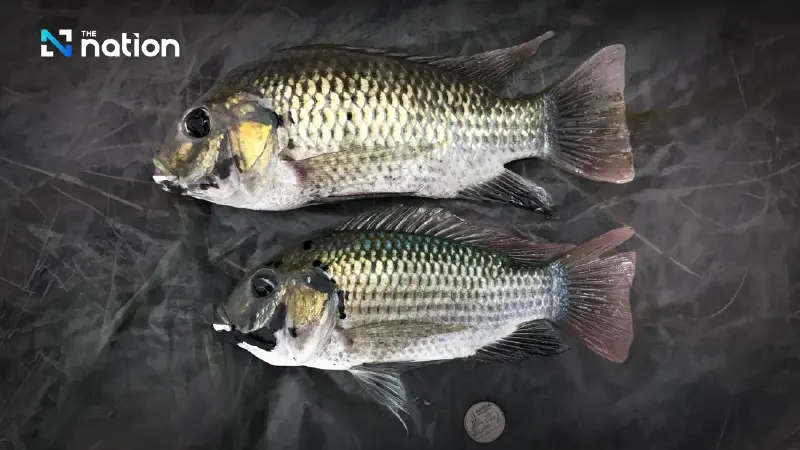


Blackchin tilapia’s spread highlights global risks from cross-border aquatic trade, aquaculture imports and pet releases into ecosystems.
- The spread of Blackchin Tilapia is presented as a case study for the broader global challenge of non-native aquatic species moving across borders through various pathways.
- The ornamental fish trade is a primary and fast-growing pathway for this movement, complicated by illegal importation, species misidentification, and hard-to-monitor online sales.
- This is a shared international problem, with examples like the lionfish in the US and other aquarium species in Australia establishing invasive populations after escaping or being released.
- The article stresses that the key challenge is not to ban the trade but to strengthen preventative governance through measures like risk assessments, permitted/prohibited species lists, DNA-based inspections, and public awareness campaigns.
The spread of blackchin tilapia should not be viewed merely as a problem of one fish species or as an issue confined to any single country. Rather, it should be understood as part of a broader global lesson on the cross-border movement of aquatic species, particularly through the ornamental fish trade, aquaculture imports, scientific research, illegal importation, and the release of unwanted pets into natural ecosystems.
From an academic perspective, evidence from many countries suggests that the emergence of non-native aquatic species is not driven solely by commercial aquaculture. It is also linked to increasingly complex aquatic animal trade systems, including ornamental fish markets, online shops, social media platforms, international logistics, and gaps in regulatory oversight. When live aquatic organisms are moved from one ecosystem to another without adequate control, monitoring, and escape-prevention systems, they may pose risks to ecosystems, fisheries economies, and national biosecurity.
Blackchin tilapia, or Sarotherodon melanotheron, is a brackish-water fish native to West Africa. It has high adaptive capacity and can survive in freshwater, brackish water, and marine environments. It can also reproduce successfully in tropical conditions. For this reason, it represents an important example of a non-native aquatic species that may establish populations in the wild if it escapes from controlled systems.
In many countries, reports of blackchin tilapia and other non-native aquatic species have been associated with multiple pathways, including aquaculture, the ornamental fish trade, importation for education and research, escape from small-scale holding facilities, and the release of unwanted pets into the environment. The key issue, therefore, is not to assign blame to any single operator, but to examine whether national systems for regulating aquatic animal imports are sufficiently robust.
The ornamental fish market is one of the fastest-growing segments of the global pet trade. Many tropical fish species are attractive because of their bright colors, unusual shapes, and high market value. As a result, large volumes of fish are traded across borders through both legal and illegal channels. Although most trade is conducted legally, many countries continue to face challenges related to species misdeclaration, unauthorized importation, smuggling, and online sales that are difficult to monitor.
This problem is difficult to control for several reasons. Many exotic fish are small, easy to transport, and easy to conceal in boxes or plastic bags. In addition, trade names used in the ornamental fish market often do not correspond to scientific names, making species identification difficult for enforcement officers, particularly when the fish are juveniles or resemble permitted species. Online trade further complicates enforcement, as sellers and buyers no longer need physical shops. Meanwhile, government databases are often fragmented across customs, fisheries, environmental agencies, police authorities, and online platforms.
International experiences illustrate this issue clearly. In the United States, the lionfish, an ornamental fish native to the Indo-Pacific region, was first observed in Florida waters in the 1980s and later became a non-native species in the Atlantic Ocean and the Caribbean. Researchers believe its presence may be linked to aquarium release or escape from captivity. This case demonstrates that a fish admired for its beauty in an aquarium can become a difficult-to-control predator in the wild if it has no natural enemies and can reproduce rapidly.
In Brazil, research on the ornamental fish trade has shown that social media has become an important channel for selling freshwater and marine ornamental fish. Sellers can advertise, negotiate, and deliver fish without relying on formal retail shops. This makes government oversight more difficult because transactions are decentralized, fast-moving, and geographically dispersed.
In Australia, studies have documented aquarium fish that have established populations in the wild, including guppies, swordtails, certain cichlids, and other non-native species. Many cases began with aquarium keeping before the fish were released or escaped into natural water bodies. As a result, Australia places strong emphasis on import-permitted species lists and strict control of high-risk aquatic species.
In Europe, although legal systems and import controls for aquatic species are relatively strict, the European Union continues to emphasize transparency in supply chains, accurate species identification, and traceability of origin. Europe is one of the world’s major markets for marine ornamental fish. The European lesson is clear: even where legal frameworks are strong, weak trade transparency can still create regulatory gaps.
In Asia, the Philippines provides a case that is particularly relevant to Thailand because both countries are tropical and have comparable coastal ecosystems. Blackchin tilapia was reported in Manila Bay in 2015. Researchers suggested that the species may have entered the country through aquaculture, the ornamental fish trade, or release into natural waters. This case reflects the higher risk faced by tropical countries, where environmental conditions are more favorable for the establishment of non-native aquatic populations.
Thailand is one of the world’s important centers for ornamental fish breeding and export. The country has strong capabilities in fish farming, experienced operators, and export markets. However, Thailand also faces risks from the importation of exotic fish, predatory fish, and non-native aquatic species, similar to other countries. Key concerns include informal import channels, online trade in exotic fish, the release of fish that owners can no longer keep, the lack of a central database for non-native aquatic species, and incomplete data integration among customs checkpoints, fisheries checkpoints, shops, farms, and online platforms.
The case of blackchin tilapia in Thailand should therefore be used as a systemic lesson rather than as an exercise in assigning responsibility to a single party. Publicly available information indicates that blackchin tilapia In 2024, media reports and government reviews also referred to historical export records involving several operators, including information indicating that at least 11 exporters appeared in international trade databases.
However, the presence of names in trade databases cannot, by itself, establish the cause of the species’ occurrence in natural ecosystems. Further scientific evidence is needed, including genetic analysis, movement-pathway investigation, and information on post-import management. The central academic question is therefore how to strengthen the governance of non-native aquatic species in order to prevent future risks.

The potential impacts of exotic fish and non-native aquatic species that escape into natural ecosystems can occur at several levels. These include competition with native fish for food and habitat, predation on juvenile fish, shrimp, mollusks, and small aquatic organisms, the introduction of new diseases and parasites, biodiversity loss, impacts on fisheries and aquaculture livelihoods, and increased public expenditure for long-term control. The key principle is prevention before the problem occurs. Once a non-native species establishes a population in the wild, complete eradication is often extremely difficult, and long-term control can be costly and time-consuming.
Policy responses should begin with the establishment of clear species lists, including both a Positive List and a Negative List. A Positive List would identify aquatic species permitted for import and keeping because they have been assessed as low-risk. A Negative List would identify prohibited species, such as predatory fish, fast-breeding species, species with documented invasion histories in other countries, or species known to carry diseases. The objective is not to ban the ornamental fish trade altogether, but to distinguish low-risk species from high-risk species.
A second measure is to implement a risk assessment system before import approval. Authorities should assess whether a species has an invasion history in other countries, whether it can survive in Thailand’s water conditions and climate, whether it reproduces rapidly, whether it is predatory, whether it may carry diseases or parasites, and whether it would be difficult to eliminate if it escaped.
Another important measure is to strengthen border inspection through DNA barcoding technology. Many exotic fish species look similar, especially at juvenile stages. Visual inspection alone may not be sufficient. A DNA reference database for high-risk aquatic species would help fisheries and customs officers identify species more accurately.
At the data-system level, Thailand should develop a centralized database linking information on importers, exporters, farms, shops, permits, species, import volumes, transport routes, and violation records. If unusual patterns are detected, such as repeated imports of high-risk species or the use of trade names that do not match scientific names, the system should generate automatic alerts.
Online trade control is also essential, as much of the exotic fish trade has moved onto digital platforms. The government should work with online platforms to prohibit listings of banned aquatic species, require identity verification for sellers of high-risk species, remove illegal listings, provide public reporting channels, and use AI tools to detect risky sales advertisements. Public awareness is equally important. A national campaign should communicate a simple message: do not release exotic fish into natural waters. Many people do not intend to cause harm but may release fish because they can no longer care for them, because the fish have outgrown their tanks, or because they do not know what else to do. The government should continuously communicate that exotic fish should not be released into rivers, canals, lakes, ponds, or the sea because they may become a problem for entire ecosystems. A return or surrender system for unwanted aquatic pets should also be established.
At the same time, the ornamental fish industry should not be treated as a problem in itself. Many operators comply with the law and possess significant technical expertise. The government should support responsible operators through certification systems such as green ornamental fish shops, farms free from prohibited species, traceability systems, biosecurity standards, and training for sellers and breeders. Such measures would give responsible businesses a competitive advantage while reducing the space for illegal markets.
For Thailand, the strategic direction should be to shift from reactive control after outbreaks occur to preventive governance before problems arise. This could include establishing a national surveillance center for non-native aquatic species, creating a national database of imported ornamental and exotic fish, implementing QR-based traceability for importers and shops, increasing penalties for illegal importation of prohibited aquatic species, developing DNA barcoding laboratories at key checkpoints, collaborating with online platforms, and building a reporting network involving citizens, anglers, farms, and academics.
In conclusion, illegal importation of ornamental and exotic fish, together with the broader cross-border movement of aquatic species, is a shared challenge faced by many countries, including the United States, Europe, Brazil, Australia, the Philippines, and Thailand. The core issue is not to prohibit the ornamental fish trade, but to ensure that trade is legal, transparent, traceable, and does not impose long-term costs on nature.
The blackchin tilapia case should therefore be used as a lesson to upgrade national biosecurity, traceability, and digital enforcement systems. If Thailand can build a strong and modern governance framework, it will be better able to balance the growth of the ornamental fish industry, the responsibility of operators, and the long-term protection of national biodiversity.
