
Why Nordics Queue Up to Pay Tax While 21m Thais Stay Off the Books
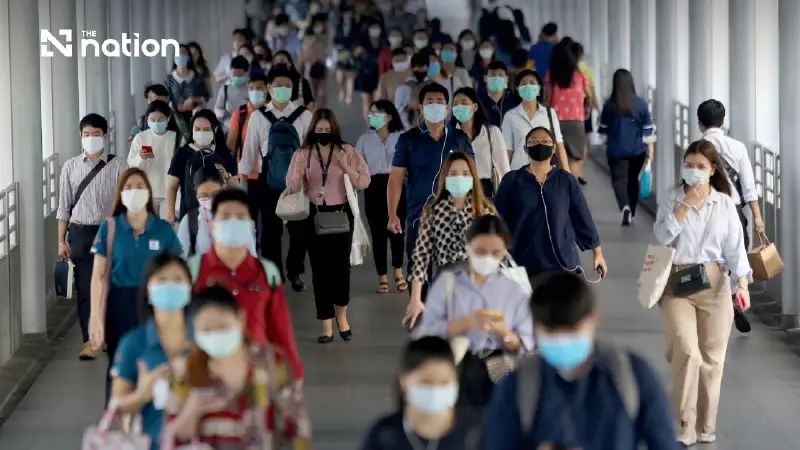


Lessons from the welfare state, and the case for raising incomes before raising taxes
- A major reason 21 million Thais remain outside the tax system is that many earn subsistence-level wages below the taxable income threshold, making the cost and paperwork of formalizing outweigh any benefit.
- Many Thais perceive a poor return on taxes paid, as they do not see tangible improvements in public services like healthcare or education, weakening the social contract and incentive to pay.
- In contrast, Nordic countries achieve high tax compliance because wages are set well above the cost of living and citizens receive high-quality public services in return, viewing tax as a form of insurance.
As only 5 million of 12 million filers actually pay income tax, economists debate whether Thailand should lift wages before it widens the tax net.
When Thailand's Revenue Department released its latest personal income tax filing figures, the headline number was not the roughly 12 million people who submitted a return. It was the much smaller group behind it: an estimated 5 million filers, or around 40 per cent of those who filed, who actually owed any tax at all.
The gap looks starker still when set against the size of Thailand's workforce, which numbers close to 40 million. That implies more than half the country's workers — an estimated 21 to 22 million people — sit entirely outside the formal tax system.
The policy question this raises is not simply how to compel these workers into the tax net. It is whether Thai household incomes are high enough to bear taxation in the first place and why paying tax feels like a burden in some countries and a form of insurance in others.
An informal economy built on survival, not evasion
Research from the Thailand Development Research Institute (TDRI) and the World Bank consistently places Thailand among the economies with the largest informal sectors in the world, with informal activity estimated at somewhere between 40 and 50 per cent of GDP.
The reasons so many workers remain outside the tax system are structural rather than a simple matter of avoidance. For freelancers, market traders and micro-enterprises, the calculation is straightforward: the cost of formalising exceeds the benefit.
Two dynamics stand out:
Subsistence-level earnings. Net income for a large share of informal workers falls below the roughly 150,000 baht annual threshold at which tax becomes due. Registering formally adds a burden of paperwork and bookkeeping without any offsetting gain.
A weak sense of return on tax paid. Many Thais report that the tax they do pay does not translate visibly into better public transport, education or healthcare – services many end up paying for privately regardless.
What the Nordic model gets right
The contrast with the Nordic welfare states — Denmark, Sweden and Norway — is instructive. Personal income tax rates there run as high as 30 to 50 per cent, yet these countries report some of the highest tax compliance rates in the world and comparatively negligible informal economies, according to OECD revenue and social expenditure data.
Two factors underpin that success.
A high income floor. Wages across the Nordic labour market are set well above the cost of basic living, leaving enough headroom that taxation does not threaten a household's ability to get by.
A durable social contract. Nordic taxpayers largely do not experience tax as a confiscation. It functions closer to an insurance premium: a high tax paid in exchange for free education through to the doctoral level, high-quality free healthcare, and unemployment support substantial enough to genuinely protect living standards.
The policy fight: raise incomes first, or widen the net first?
Thai economists and policymakers are currently split over sequencing – which comes first, income growth or tax-base expansion.
The case for raising incomes before raising taxes:
Analysis from KKP Research, the research arm of Kiatnakin Phatra Financial Group, and from TDRI both point to the same underlying cause of the narrow tax base: most Thai workers simply do not earn enough, rather than being sheltered by overly generous deductions aimed at the wealthy.
On this view, aggressively pushing low-income workers and small businesses into the formal tax system before their incomes clear the poverty line risks squeezing already-thin cash flow and driving more activity underground rather than less.
The preferred remedy is to lift labour productivity and support small business growth so that incomes rise organically past the tax threshold — expanding the tax base as a consequence of growth, not a precondition for it.
The case for formalisation first:
The Revenue Department and the Ministry of Finance take a different view: bringing the 21 million informal workers into the data system is not primarily about extracting tax revenue from low earners immediately. It is about building the administrative capacity to target welfare accurately.
The Covid-19 pandemic exposed this gap starkly when the government struggled to distribute relief payments because it lacked reliable data on informal workers.
Tools such as big data analytics, data matching and the e-Tax Invoice & e-Receipt standard are being deployed less to chase tax revenue than to build a consistent, fair administrative baseline.
A new social contract for Thailand
The figures — roughly 12 million filers, only around 5 million of them actually paying tax — are more than a fiscal statistic. They are a fairly accurate mirror of Thailand's underlying economic structure.
Thailand is unlikely to move towards a welfare state or build long-term fiscal resilience through stricter tax enforcement alone so long as most of the workforce is still struggling to make ends meet.
The more durable path runs on two tracks at once: raising skills and incomes so more Thais clear the tax threshold naturally, alongside genuine reform of how public money is spent, so that services taxpayers can actually feel become the norm rather than the exception. The goal is to shift the national mindset from avoiding tax to being willing to pay it – for one's own future and the country's.
Sources
Revenue Department of Thailand — personal income tax filing statistics (PND 90/91)
Thailand Development Research Institute (TDRI) — research on the informal economy and Thai tax reform
KKP Research (Kiatnakin Phatra) — analysis on Thailand's tax structure and inequality
World Bank Group — Thailand Economic Monitor: Informality and the Labour Market
OECD — Revenue Statistics and Social Expenditure Database (Nordic welfare model)
