
Thai garment industry eyes technology and capital to become regional hub
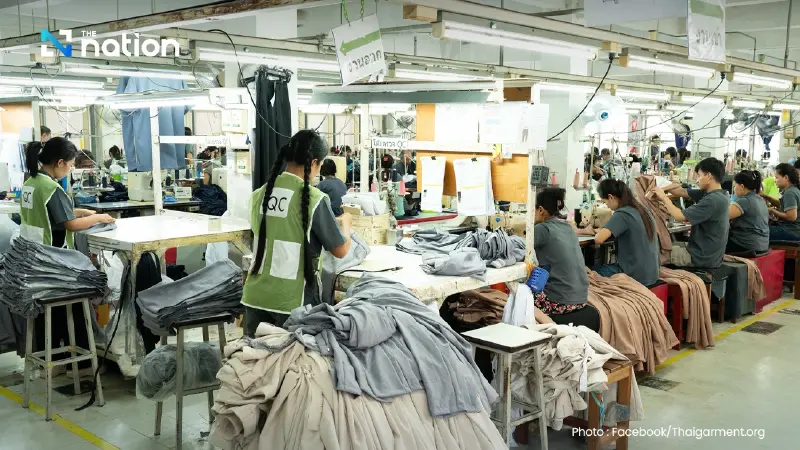


Thailand’s garment sector is urged to move beyond sewing, using technology, branding, FTAs and transparency to stay competitive.
Thailand’s garment industry is looking to bring in technology and domestic capital to reorganise production, break through existing limitations and establish itself as a regional hub.
Thai garment exports in March 2026 were valued at US$187 million, while exports from January to March totalled US$528 million, making the garment industry one of the key mechanisms helping to drive the economy.
Chalumpon Lotharukpong, president of the Thai Garment Manufacturers Association (TGMA), said the way forward for continued economic growth is to build domestic supply chains, generate income within the country, and rethink how Thailand uses its existing resources and strengths, such as soft power, to create value and sustainable growth.
“That means building domestic brands in a Thai way. Take Italy as an example. Italy still has garment factories today and has its own brands. Its industry is worth 12 times more than Thailand’s. That means if Thailand changes its mindset, moves in the right direction and keeps developing without stopping, there is an opportunity to grow 12-fold waiting ahead,” he said.

However, achieving that goal requires building a system and embedding Thailand’s strengths into it, such as the country’s beauty, culture and even Thai lifestyle. If the current situation is viewed as a crisis, then the way out must be strategic, he said, citing South Korea as an example of a country that emerged from the Tom Yum Kung crisis and moved on to become a leader in several areas.
“I think we should talk more about the future and build an ecosystem that will allow Thailand to continue growing. In the role of the association, we want the industry to be competitive and to have a strong, valuable production foundation. This requires cooperation among operators and support from the government in many areas,” he said.
Thamonwan Virodchaiyan, vice president of TGMA, said Thailand’s garment industry is now facing tougher competition, including wages, energy costs, currency volatility and competition from low-cost countries. However, she said the global market is also increasingly looking for “reliable factories”.
After the Covid-19 crisis, many brands no longer look only for the cheapest price. They have started to place greater importance on consistent quality, reasonable pricing, transparency and compliance. For example, the United States has stepped up checks on whether child labour or forced labour is being used. This has led to the Good Labour Practices, or GLP, project in cooperation with the Department of Labour Protection and Welfare under the Labour Ministry, even though Thailand already meets inspection standards required by European customers, which are even higher.
Factories that survive will also need fast response, flexibility and sustainable development. Thai factories may not win on being the “cheapest”, but they still have strengths in precision, communication, problem-solving and reliable delivery.
“The factories that survive from now on will not be those competing to be cheap, but those that make customers willing to pay,” she said.
In the past, many people viewed manufacturing through an outdated image, or may never have had the opportunity to see inside industrial factories. In reality, many Thai factories have already developed significantly in terms of quality systems, labour standards, technology and management.
Opening factories to visitors, therefore, is not just about showing production lines. It is about showing that Thai factories have real capability, systems, standards and the ability to create value-added products.

However, for the industry to move forward strongly, government support is needed. This includes improving productivity, as Thailand can no longer compete on low wages. The government should support automation, machinery, lean transformation, digitalisation, workforce upskilling and AI learning.
As this industry employs large numbers of people, upgrading it would generate strong employment. At the same time, technological improvement would encourage more young people to return to the manufacturing system.
Support is also needed for free trade agreements and international trade, especially with the European Union, where negotiations are currently under way. She said she hoped Team Thailand would succeed, because Europe is a market that values standardised production and is willing to pay for it.
“On international trade, we would like buyer groups to be invited in, or support to be given to activities carried out by the Commerce Ministry, such as trade fairs, for operators that are ready to support exports,” she said.
Another key issue is support for SMEs to access funding, especially manufacturing factories facing tight cash flow. Many factories are stuck in the middle “like a sandwich”, having to pay upfront for raw materials while waiting until production is completed, or even longer, before receiving returns. This is a very important issue.
“Many manufacturing businesses are not only short of orders, but also lack appropriate working capital,” she said.
The final issue is reducing corruption and increasing transparency and fairness. Operators who comply with the rules should compete on quality and efficiency, not hidden costs.
She said the government should promote procurement from domestic operators under Made in Thailand, especially those operating properly, rather than relying on imports and bidding processes that compete only on price. She said she wanted Made in Thailand to become a trusted label, like brands from Taiwan, Japan or South Korea.
“If the system has greater transparency, operators that invest for the long term will have more confidence to grow,” she said.
The Thai Garment Manufacturers Association, or TGMA, is currently sharing information and organising training for its members to make the industry’s production more than just sewing.
This is the origin of the “Beyond Sewing” concept, which involves opening factories for visits and working together to build an ecosystem that can help drive the Thai economy as a whole.
