
Next 50 years begin – Thailand and Vietnam chart deeper strategic partnership


Thailand sees President To Lam’s visit as a milestone for deeper trade, investment, Mekong cooperation and ASEAN unity
Thailand expects the upcoming visit of Vietnamese General Secretary and President To Lam to open a new phase in relations between the two countries, as Bangkok and Hanoi look beyond 50 years of diplomatic ties towards deeper economic, strategic and regional cooperation.
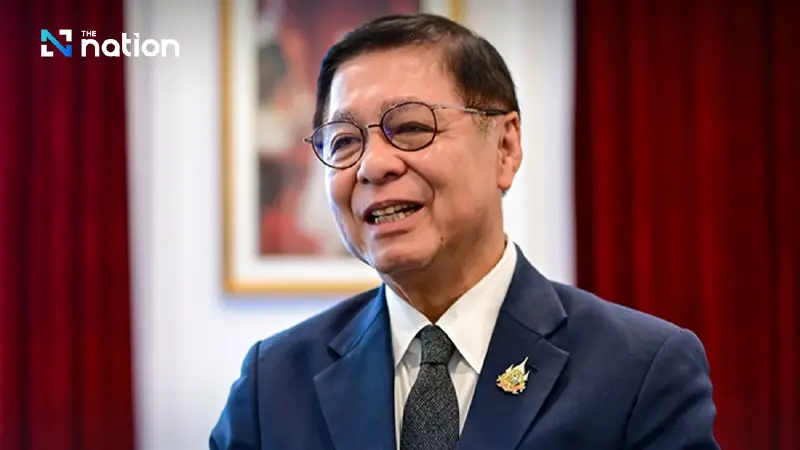
Deputy Prime Minister and Foreign Minister Sihasak Phuangketkeow said the high-level visit would give fresh momentum to the Thailand-Vietnam Comprehensive Strategic Partnership and help set a long-term direction for cooperation over the next five decades.
Speaking by telephone from Paris to a correspondent of the Voice of Vietnam in Thailand, Sihasak said the relationship between Thailand and Vietnam had become increasingly complementary rather than competitive, especially as the two economies become more closely connected through trade, investment and supply chains.
He said Thailand is Vietnam’s largest trading partner in ASEAN, while Vietnam is Thailand’s second-largest trading partner in the grouping. Thailand is also the eighth-largest foreign investor in Vietnam, reflecting the growing depth of economic ties between the two countries.
Bilateral trade has already reached US$22 billion and is on track to meet the target of US$25 billion, he said, adding that the two sides still have strong potential to further expand trade and investment.

Sihasak said one of the most important features of the relationship is the way the two economies are now linked through production networks. Many Thai exports to Vietnam are intermediate goods that are further manufactured there before being turned into final products for export to global markets.
This pattern, he said, shows the kind of partnership both countries should continue to build, with Thailand and Vietnam strengthening each other’s competitiveness rather than competing in the same space.
Several Thai companies have already invested in major projects in Vietnam, and many are expected to expand further, he said. More Thai firms are also looking at investment opportunities in Vietnam as the country continues to grow as a manufacturing and investment hub.
Bangkok hopes Vietnamese central and local authorities will continue to facilitate Thai investment and help ease some restrictions faced by investors, Sihasak said, adding that smoother investment conditions would bring mutual benefits.
Three Connects to drive cooperation
Sihasak said the two countries are working on an action plan expected to be signed during To Lam’s visit. The plan is intended to serve as a key mechanism to move the Comprehensive Strategic Partnership forward in practical terms.
At the heart of the partnership is the Three Connects Strategy, which focuses on connecting supply chains, connecting local economies and connecting sustainable development.
- The first area, supply-chain connectivity, aims to strengthen the economic competitiveness of both countries by linking production networks more closely.
- The second, local economic connectivity, is intended to ensure that the benefits of trade, investment and wider economic cooperation reach local communities rather than remaining concentrated only at the national or corporate level.
- The third area focuses on sustainable development and green growth, reflecting the need to ensure that economic expansion proceeds in a way that is environmentally responsible and resilient over the long term.
Sihasak said this direction is especially important as both Thailand and Vietnam are going through economic transitions. Future cooperation should therefore expand into new growth areas, including the green economy, the digital economy, science and technology, and human-resource development.
He said these sectors would help define the next phase of the Comprehensive Strategic Partnership and prepare both countries for future regional and global economic shifts.
Visit marks highlight of 50th anniversary
Sihasak described the 50th anniversary of Thai-Vietnamese diplomatic relations as a major milestone, especially now that the two countries have elevated their relationship to a Comprehensive Strategic Partnership.
He said To Lam’s visit would be the highlight of the anniversary year and a clear signal of where both countries want the relationship to go over the next 50 years.
The visit will be To Lam’s first official trip to Thailand and the first official leader-level visit under Prime Minister Anutin Charnvirakul’s current administration. Thailand also welcomed the fact that it would be the first ASEAN country To Lam visits officially after assuming the presidency.
Sihasak said this timing was highly significant and reflected the importance Vietnam places on its relationship with Thailand.
The programme for the visit is expected to be substantive. To Lam is scheduled to meet Prime Minister Anutin, have an audience with Their Majesties the King and Queen, and meet the president of the National Assembly and the Speaker of the House.
He is also expected to preside over the opening ceremony of the Thailand-Vietnam Business Forum, which is expected to draw around 300 participants from the business communities of both countries.
An official dinner will also be hosted by the prime minister at Government House.
Sihasak said the programme demonstrated the importance Thailand attaches to the visit and underscored the political will of both sides to continue moving the relationship forward.
Mekong cooperation and ASEAN centrality
Sihasak said the Comprehensive Strategic Partnership is not limited to bilateral cooperation, but also reflects shared interests at sub-regional and regional levels.
He said Thailand and Vietnam should work more closely together to promote development in the Mekong sub-region, where several cooperation frameworks already exist.
Given that the Mekong sub-region includes neighbouring countries such as Laos, Myanmar and Cambodia, Thailand and Vietnam could play a stronger role in driving cooperation and supporting regional development, he said.
At the ASEAN level, Sihasak said both countries share a similar outlook on the region and should work together to strengthen ASEAN unity and centrality.
He said ASEAN stands at an important crossroads. While the grouping has achieved many successes, it also faces major challenges from geopolitical rivalry, conflict and uncertainty in the global environment.
Sihasak said Thailand and Vietnam should help advance regionalism in ASEAN, promote peace and progress, and ensure that ASEAN remains a “safe zone” from geopolitical competition and conflicts.
Such a role, he said, would help ASEAN continue attracting foreign investment, promoting intra-Asian economic cooperation and deepening regional integration.
He said this is an opportune time for the region, and the partnership between Thailand and Vietnam carries both economic and strategic importance.
By working more closely together, Sihasak said, the two countries can help strengthen not only their bilateral relationship but also the stability, prosperity and competitiveness of ASEAN as a whole.
Credit: Voice of Vietnam
