
Property developers pivot to hotels amid tourism shifts, unfazed by decline in Chinese visitors
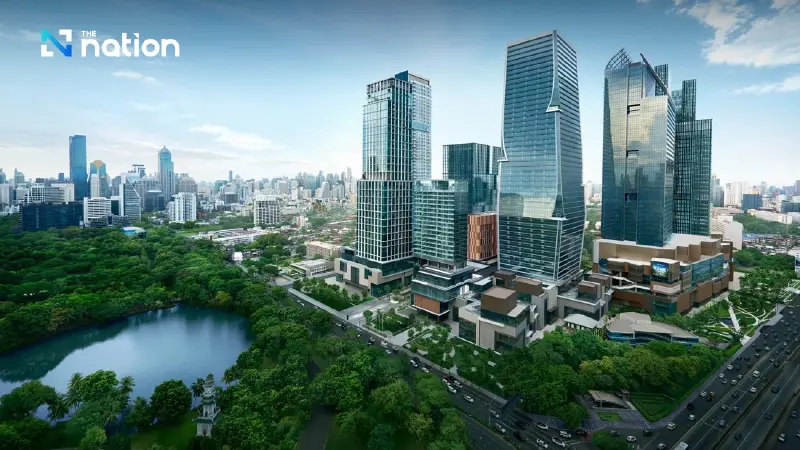


Thailand’s major developers expand into hotels and retail for steady income as Chinese tourism falls and sustainability trends reshape hospitality
Thailand’s major property developers are accelerating their expansion into the hotel sector to secure steady income streams and capture the growing demand from younger and more sustainability-minded travellers across the region. Despite a sharp decline in Chinese tourists, developers remain optimistic as total hotel supply nationwide stands at 703,751 rooms.
In the first half of 2025, the hotel industry saw signs of a mild slowdown due to softening demand. According to data from the Real Estate Information Center (REIC) under the Government Housing Bank, the number of international visitors to Thailand dropped by 4.7% year-on-year to 16.68 million, with arrivals from China plunging 34.1%, significantly impacting hotel revenue and occupancy in key tourist cities.
Despite the dip in arrivals, the average hotel occupancy rate nationwide rose to 60.8% from 59.1% last year, reflecting continued demand for accommodation. The southern region recorded the highest occupancy at 70.9%, while Bangkok and its vicinity saw a slight 0.7% decline amid intensified competition and growing oversupply.
Hotel supply, meanwhile, is in a consolidation phase. Only 232 new hotels with a total of 8,946 rooms were approved nationwide during the first half, a 34.6% drop from last year. This suggests investors are taking a short-term wait-and-see approach. Thailand now has 16,369 operating hotels with a combined 703,751 rooms, down slightly from last year.
Signs of renewed investment are emerging, particularly in hotel construction, which rose 29.6% year-on-year. The Bangkok metropolitan area saw a dramatic 230.7% surge, indicating that major developers are strategically positioning themselves for a long-term market recovery.
Phuket led the nation in new hotel construction with over 195,000 square metres of approved space — nearly one-third of the national total — underscoring investor confidence in the island’s global tourism potential. Other top provinces included Bangkok, Chon Buri, Kanchanaburi, and Phang Nga, all key tourist destinations.
According to Cushman & Wakefield Thailand, even with Chinese arrivals down 35%, Thailand remains a leading destination for travellers from India, Russia, and the United Kingdom, each increasing by more than 10%. This shift continues to support both hospitality and retail sectors through robust consumption and travel spending.
Norasak Suphakorntanakit, Head of Capital Markets and Investment at Cushman & Wakefield Thailand, said hotel investment trends remain positive, particularly for lifestyle and boutique hotels that appeal to Gen Z travellers who prioritise unique and authentic experiences over traditional luxury. Designs now emphasise identity, sustainability, and distinct aesthetics to stay relevant in a rapidly evolving market.

Large developers are increasingly diversifying into recurring income businesses such as hotels and retail, which provide stable cash flow amid economic volatility. This strategy also encourages joint ventures between Thai and foreign investors to develop new hotel formats in both major and secondary cities.
Retail developments are growing alongside hotels, evolving into “lifestyle hubs” that combine dining, shopping, and leisure. Together, these sectors are becoming dual growth engines that support Thailand’s economic recovery.
Looking ahead to 2026, the Thai hotel market is shifting from competing on room rates to competing on concept, branding, and sustainability. Developers that adapt to the “experience-driven” travel trend will emerge as new leaders in the industry.
The real estate sector is thus entering a pivotal transformation. Developers are restructuring strategically — spreading risk from a cooling housing market, generating recurring revenue from hotel stays, and maximising high-value urban land through mixed-use projects. Partnerships with global hotel, automotive, and fashion brands are enhancing prestige and differentiation in a crowded market.
However, challenges remain. Rising operating costs — from staffing and service systems to maintenance — and potential imbalances between demand and supply could create financial strain if occupancy rates underperform. Poorly designed mixed-use projects may also cause quality-of-life conflicts among tenants and residents. Developers with high debt burdens could face pressure if hotel revenue falls short of expectations.
Still, data from JLL show that Thai hotel investment reached USD 301 million (approx. THB 9.8 billion) in the first half of 2025 and could exceed USD 650 million by year-end, reflecting strong investor confidence. Meanwhile, HospitalityNet reports rising demand for branded properties, signalling that hotel-residential hybrids are no longer niche — they are becoming a new industry standard. Developers who can design efficiently operated projects catering to both residents and travellers will be best positioned to thrive in this competitive landscape.
