
Bangkok land prices remain red-hot despite economic slowdown, Colliers reports record highs in prime CBD areas
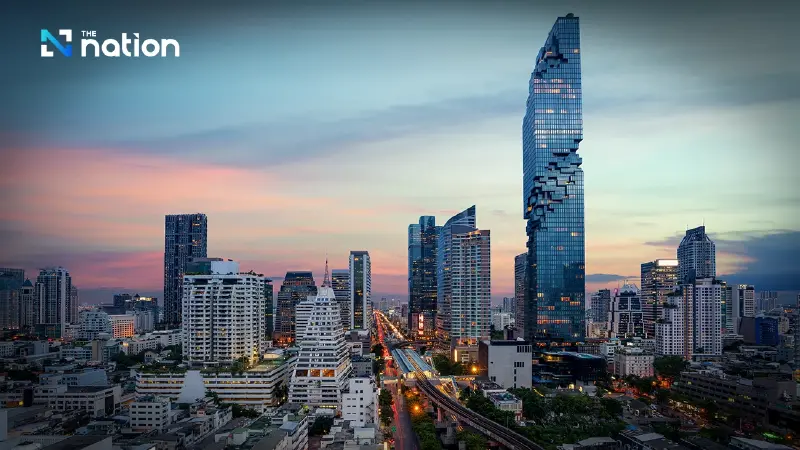


Colliers Thailand reports Bangkok land prices continue to climb, with top CBD plots reaching 4 million baht per sq wah despite slower economic growth.
Despite Thailand’s sluggish economy, Bangkok’s land prices continue to surge — particularly in the central business district (CBD) — according to the latest data from Colliers International (Thailand).
The report found that in 2025, prime land plots across Bangkok are still commanding record-breaking prices, with most owners refusing to sell. There are no signs of price cuts, even as overall economic conditions remain subdued.
Strong demand from major listed developers and private investors has kept the market buoyant. In recent months, several high-profile transactions have underscored the enduring appeal of Bangkok real estate.
Among them:
- Sansiri acquired land on Sarasin Road for an average of 3.9 million baht per sq wah, the highest price ever recorded in Thailand’s property market.
- AIA Thailand purchased an 8-rai plot on Ratchadaphisek Road for 3.5 billion baht, averaging 1.1 million baht per sq wah.
- Land in Chidlom recently changed hands for over 3 million baht per sq wah, while plots in the Sukhumvit-Thonglor area reached 2.86 million baht per sq wah.
These figures, Colliers said, confirm that “Bangkok land prices only move in one direction — up.”
While Bangkok’s high-end land market remains active, nationwide data from the Bank of Thailand paints a more cautious picture.
During the first seven months of 2025, total land and property transactions amounted to 403.9 billion baht, down 41.4% year-on-year — the lowest level in 16 years. This reflects investor hesitation in light of global and domestic economic uncertainty.
Top 10 most expensive locations in Bangkok
According to Colliers, the highest asking prices for land in Bangkok are concentrated in key CBD zones:
- Wireless Rd - 4,000,000 baht/sqw
- Chidlom - 3,200,000 baht/sqw
- Ploenchit - 3,000,000 baht/sqw
- Silom - 2,700,000 baht/sqw
- Sukhumvit-Thonglor - 2,600,000 baht/sqw
- Sathorn - 2,500,000 baht/sqw
- Sukhumvit-Asoke - 2,550,000 baht/sqw
- Yaowarat - 1,900,000 baht/sqw
- Phaya Thai - 1,800,000 baht/sqw
- Sukhumvit-Ekkamai - 1,800,000 baht/sqw
Phattarachai Taweewong, Director of Research and Communications at Colliers Thailand, noted that CBD locations such as Lang Suan, Silom, Sathorn and Sukhumvit remain the country’s priciest areas.
Following the sale of the Australian Embassy on Sathorn Road — averaging 1.45 million baht per sq wah — nearby land prices have now climbed to around 2 million baht per sq wah.
Many landowners are increasingly turning to alternative income models instead of selling outright. These include leasehold developments and joint ventures, especially in prime areas where land values continue to appreciate by over 10% per year.
Phattarachai said owners prefer to “monetise their land through partnerships rather than permanent sales,” ensuring ongoing revenue amid rising market value.
Colliers forecasts that Bangkok’s CBD land prices will continue rising in 2026, as Thailand’s land values rarely decline once they have risen.
This structural upward trend will likely drive up development costs, which could eventually impact housing and condominium prices in the coming years.
“Bangkok’s land market remains one of the most resilient in Asia,” Colliers said, adding that while economic caution persists, investor confidence in prime locations remains unshaken.
