
Thai Property Market Faces Worst Slowdown in Nearly 30 Years
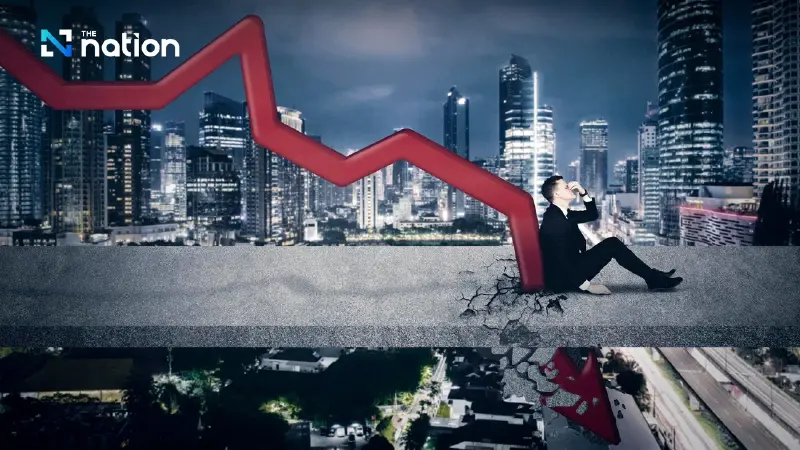


Thailand’s real estate market faces its worst slump since the 1997 crisis, with over 400,000 unsold condos. High debt and rising interest rates hamper recovery.
The Thai real estate market is experiencing its most severe downturn in nearly three decades, since the 1997 financial crisis. The stock of unsold residential properties has skyrocketed, with new project launches falling sharply. Consumer purchasing power has weakened due to high household debt, and the mortgage lending situation is tighter than ever before.
Experts are uncertain whether the market will recover within the next 2–3 years, especially given the ongoing low economic growth in Thailand. The International Monetary Fund (IMF) forecasts that Thailand's economy will grow by only 1.6% in 2026, reflecting the deep structural issues still present in the economy. This downturn may not just be a cyclical slow down but could be a prolonged adjustment, with no clear end in sight.
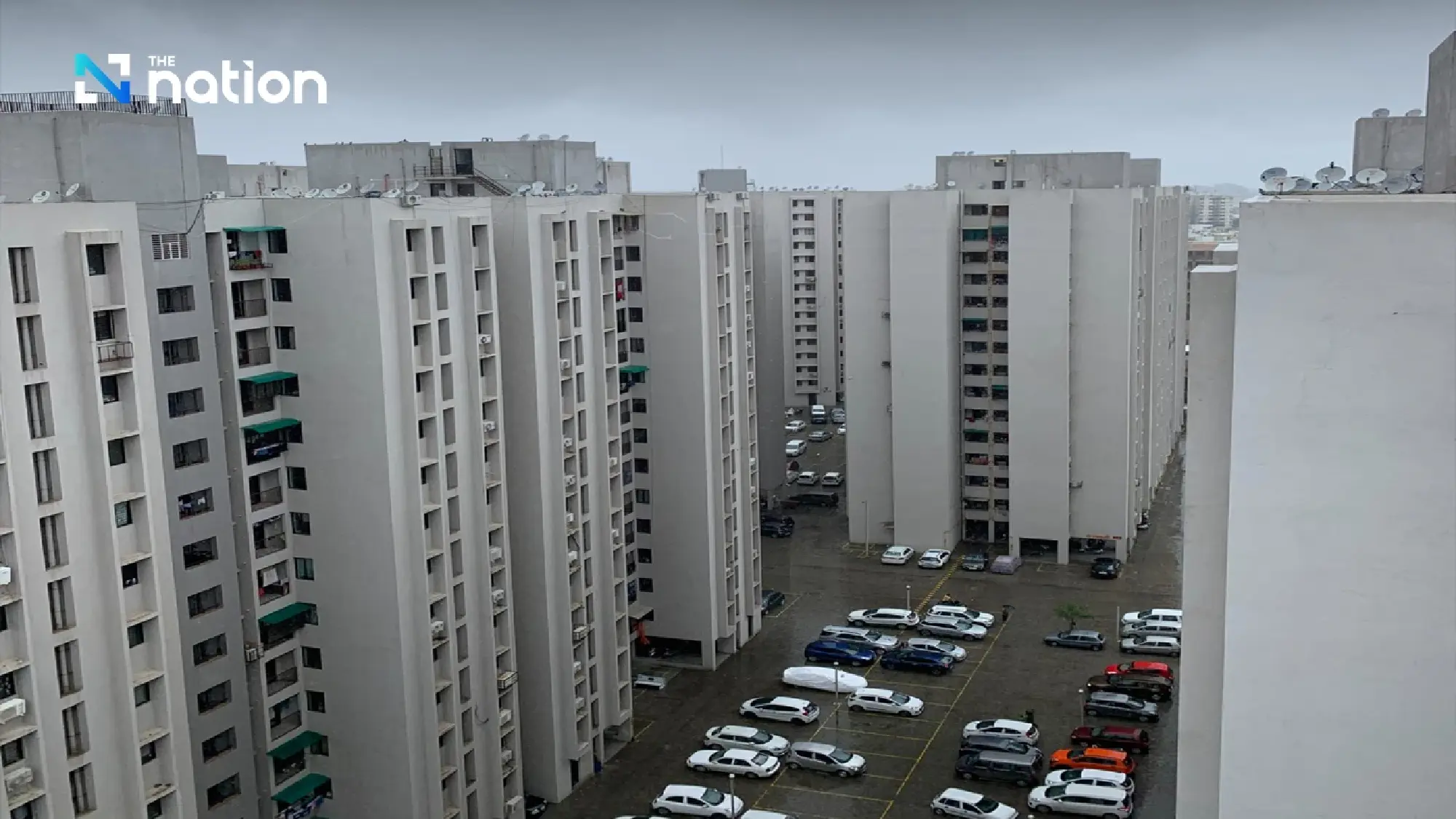

400,000 Unsold Condominiums
One of the most concerning signs of the downturn in the Thai real estate market is the volume of unsold housing units, which has been building up over the years and has become a significant financial burden for property developers.
Dr Sopon Pornchokchai, President of the Thai Real Estate Information Center at the Agency of Real Estate Affairs, told Nikkei Asia that there are about 220,000 unsold condominium units in Bangkok alone, and the total number nationwide could reach 400,000 units. These unsold units are mostly held by property developers and have become a major financial liability for them.
These unsold units are not only “unsold homes” but also represent ongoing financial costs, including loan interest, property holding costs, project management expenses, and the pressure of upcoming bond repayments, particularly when the capital market is not favorable.
Data from real estate consulting firm CBRE clearly shows the “slowdown” in the market, with only 13,700 new condominium units launched in Bangkok in the first 9 months of 2025, compared to an average of around 52,000 units per year between 2014 and 2024, including the COVID-19 pandemic period.
The contraction in new supply is not a sign that demand is returning but indicates that many developers are choosing to “pause before facing more losses” as launching new projects amid the oversupply of existing units only increases liquidity risks and the potential for debt repayment problems.
CBRE predicts that new condominium supply in Bangkok will continue to decrease, dropping to below 40,000 units in 2026, and further falling to around 20,000 units in 2027, with only about 10,000 units per year in the following two years. These levels are abnormally low for the capital and signal that the real estate business is entering a “long-term defensive mode.”


Interest Rate Hikes Stifle the Thai Property Market
The core issue behind this crisis is the rapid expansion during the low-interest rate period, which encouraged borrowing. Many real estate developers accelerated new projects, expanded their portfolios, and used high leverage, operating under the assumption that interest rates would stay low and the middle class would recover quickly after the COVID-19 pandemic.
However, this assumption collapsed abruptly when the Bank of Thailand raised its policy interest rate from a record low of 0.5% to 2.5% within just a year. This sharp increase in mortgage rates has led to a surge in borrowing costs, while the demand for housing has decreased.
At the same time, the government has become more serious about controlling the country’s high household debt, which, as of the first quarter of 2025, stood at 88.2% of the country’s GDP, the second highest in Asia after South Korea, according to data from Trading Economics. This has led commercial banks to tighten credit standards, directly impacting the housing market.
The Real Estate Developers Association reported that the average rejection rate for housing loans has reached 40%, and in some cases, it has nearly doubled, especially for projects priced below 3 million THB. The main reasons for rejections include high debt burdens, unstable income, and weak financial histories.
“One analyst stated, ‘This is a very high number. Some publicly listed property developers have become ‘zombie companies,’ unable to repay their loans or trying to restructure their bond payments, and they can hardly sell any of their projects.’”
Mass Market Stagnation, but High-End Market Still Moving
The Thai Stock Exchange’s real estate and construction index has dropped more than 42% from its peak in early 2023, though it has slightly recovered following interest rate cuts. Stocks that have seen sharp declines include WHA Corporation, Land and Houses, and Sansiri.
However, in Bangkok, real estate in locations connected to public transport systems, near hospitals and educational institutions, and within business districts is still performing relatively well.
“For example, in areas near Chulalongkorn University, real estate is still selling, and we are still doing business quite well,” said Poomipak Julmanichoti, Director and Chief Strategy Officer of Sansiri, in an interview with Nikkei Asia.
He added, “Frankly, as long as we continue operating at the current level, we’ll be fine. Therefore, we have no issues with our inventory.” He further pointed out that unsold inventory is mostly found in peripheral areas and in the mass-market segment, with units priced at 3 million THB or lower.
Signs of Recovery Outside Bangkok – FDI Boosts Industrial Property
According to a survey by the Agency of Real Estate Affairs (AREA), certain regions outside Bangkok are showing brighter prospects in the housing market, including Phuket, Pattaya, Koh Samui, Hua Hin, and Sriracha, particularly in the Eastern Seaboard area. Sriracha, in particular, is home to a large Japanese expatriate community, the second largest in Thailand after Bangkok, most of whom work in industrial estates within the Eastern Economic Corridor (EEC).
At the same time, the “industrial and logistics real estate sector” has performed better compared to other sectors, buoyed by strong foreign direct investment (FDI) in 2025.
“The manufacturing sector is relatively strong,” said Marcus Burtenshaw, Head of Strategy and Industrial Solutions at global real estate firm Knight Frank. “We’re seeing very high demand, not only from China but from across the region, including ASEAN, Europe, and the US. The export-oriented manufacturing sector remains quite stable.”
Additionally, the tightening of credit standards has made “second-hand homes,” which are more affordable, an increasingly attractive option. This has led to a slight improvement in the secondary housing market, which typically has lower liquidity. At the same time, it has increased pressure on new housing projects.
Summary:
While certain segments and areas of the real estate market still show promise, the overall market remains sluggish, with properties continuing to be difficult to sell. Sopon Pornchokchai from AREA stated that for the real estate market to stabilize in the long term, Thailand needs political stability, effective property tax reforms for vacant properties to boost liquidity, increased infrastructure investments, and additional measures to reduce household debt.
“If we really want to help the market, the first thing to do is reduce interest rates,” he said.
“Many expect that next year, economic growth may be below 2%, so the property market likely won’t see a major turnaround unless we do more than what we are doing now,” Sopon concluded.
