
Mass transit expands access to city living—yet affordability gaps widen for low-income households
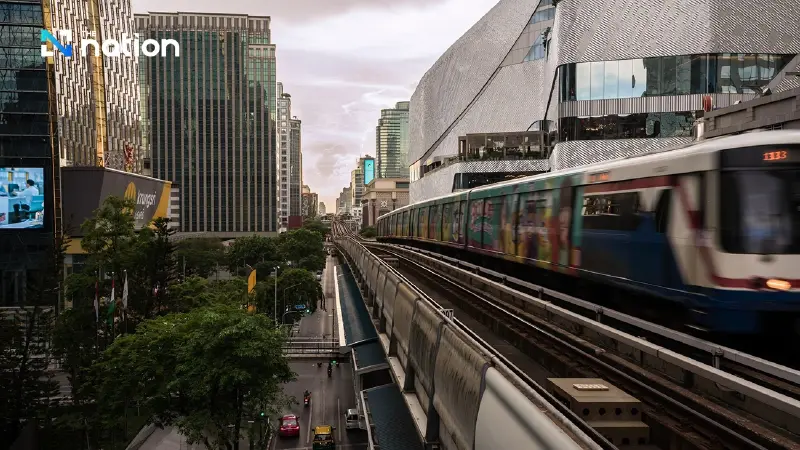


Bangkok’s expanding rail network is reshaping urban living and boosting transit-oriented housing, but rising land prices and tighter credit are making homes near stations harder to afford for low-income residents.
Urban rail is a critical piece of infrastructure that has reshaped how people live—especially in fast-growing large cities. It improves access and quality of life by making travel more convenient and saving time, allowing people to live farther from the city centre while still commuting to work or study.
Reliable travel times also make it easier to plan appointments and conduct business on schedule, strengthening economic efficiency. Rail use reduces fuel consumption, supports a more environmentally friendly city, and cuts pollution and carbon emissions. It can also lower commuting costs and stress compared with relying on private cars.
As of early 2026, Bangkok and the surrounding provinces have around 13 urban rail lines in service, spanning 276.84 kilometres and more than 190 stations. Under the M-MAP 2 plan, the network is slated to expand to 33 lines and 550+ kilometres by 2030–2032, aiming for more complete coverage and better links to new routes.
This expansion has supported housing opportunities, particularly through transit-oriented development (TOD). Condominiums, apartments and mixed-use projects have increased around stations, offering more choices—from short-term rentals to long-term home purchases. These developments have been especially attractive to younger people and urban workers who value mobility.

At the same time, rail has significantly changed Bangkok and its surrounding areas. Development has spread along the rail corridors, pushing land prices higher—often in step with construction timelines, station openings and post-opening demand.
As land costs rise, housing patterns have shifted from low-rise to high-rise. Lifestyles have also changed, particularly among younger residents, office workers and businesspeople—both Thai and foreign—who increasingly prefer living near rail lines or on the edge of station areas.
Proximity to workplaces, schools, key business districts and major shopping hubs has fuelled the growth of condos next to stations. Developers market “walk to the station” convenience as a selling point that fits modern lifestyles. For some buyers, condos have also offered long-term rental returns.
However, higher costs for users and for housing development near rail lines have made such homes increasingly out of reach for low-income groups. Many rely on state support to avoid being pushed out of the city to distant suburbs, far from jobs. Meanwhile, the traditional search for affordable low-rise homes in the inner city has largely ended—if such homes can be found, they tend to be priced far higher due to land costs.
This trend is especially visible along major city routes such as the BTS Sukhumvit Line (Green Line) and the MRT Blue Line, which serve as core corridors and extend outward. It also includes newer lines such as the Yellow Line and Pink Line. In addition, routes under construction—such as the Purple Line South and the Orange Line—have already attracted condo projects positioned in advance, further lifting land prices even as purchasing power weakens.
The market is also being squeezed by tighter lending, with some borrowers facing loan rejections, while foreign demand has slowed amid broader economic conditions and the tourism sector’s performance.
Data from the Real Estate Information Centre (REIC) indicate that in 2025, new unsold condo supply in Bangkok and the surrounding provinces is projected at around 52,000 units, down 17% year on year.
Within this, the 2–3 million baht price bracket has the largest unsold stock, at 17,268 units—more than 27% of the total—making it the most at-risk segment.
Overall, the Bangkok–metro condo market, both along rail corridors and nearby areas, is now facing oversupply, particularly in the 2–3 million baht range. Developers are being forced to adjust strategies to match changing demand. Units priced below 2 million baht exist, but are typically in outer areas, or farther from rail access—if available at all.
Despite these challenges, demand for housing among city residents remains steady, and there is still ample inventory. Developers are offering promotions, alongside state measures, but outcomes depend on households’ ability to service long-term instalments and whether financial institutions are willing to extend credit in today’s uncertain economic climate.
