
Thai property slumps to 7-year low, luxury homes pile up
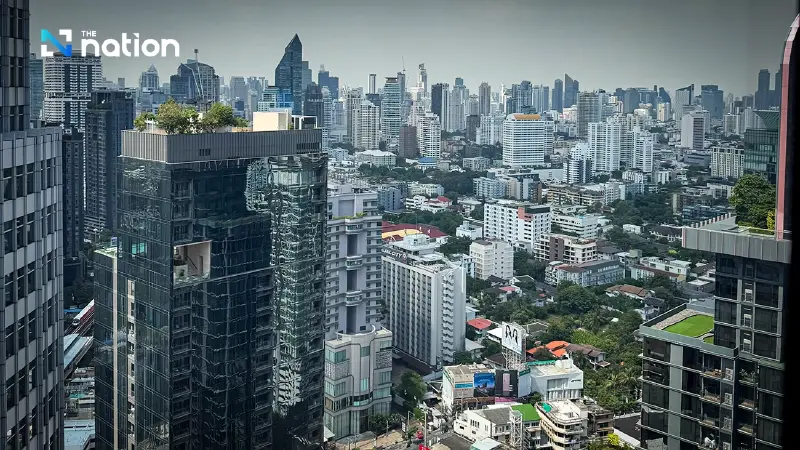


Property market sinks to a 7-year low; experts warn luxury homes and condos face oversupply, urge developers to target “specific demand”
Thailand’s property market in 2025–2026 is entering what experts describe as its most challenging test in a decade. Economic and real estate specialists say the sector is clearly in a correction phase, with any recovery expected to be gradual. They forecast the slowdown could persist for another two to three years, as current sales remain far below pre-Covid levels (2019), when Greater Bangkok recorded around 120,000 units a year.
A key warning sign is nationwide ownership transfers in 2025, projected at around 300,000 units—the lowest level in seven years—down from a “normal” pace of roughly 400,000 units annually. New project launches in Greater Bangkok have also fallen significantly, down more than 33%, or about 20,000 units compared with the previous year.
Luxury detached homes and condos flash oversupply warnings
Segment-level data suggests the most concerning area is luxury detached houses priced 25–50 million baht. Over the past one to two years, developers launched too many units, leaving an accumulated unsold stock of about 3,000 units. Based on current absorption rates, it could take five to six years to clear the backlog. Broader economic weakness spreading into exports and industrial business is also weighing directly on high-income buyers in industrial estate areas.

The condominium segment has seen the steepest sales contraction, down 28%, reflecting a structural shock to incomes and purchasing power among middle- and lower-income consumers. Meanwhile, townhouses priced 2–5 million baht hold the largest remaining stock—about 115,000 units, or 57% of all unsold units—raising the risk of a near-term price war.
Foreign demand and “specific potential” locations
Foreign transfers are estimated to be down around 4% overall. In major destinations such as Chonburi and Chiang Mai, transfers are said to have fallen by 15–28%. However, Bangkok and Prachuap Khiri Khan recorded increases, suggesting foreign buyers continue to prioritise core economic hubs and premium leisure destinations.
Experts say areas benefiting from new infrastructure could still offer growth opportunities, including locations along new rail lines such as the Purple Line South, Pink Line, and Orange Line. Provinces with strong real demand are also highlighted—particularly Phuket, where transfers have continued to rise, supported by leasehold buyers and families seeking homes near international schools.
Credit outlook and the “survival strategy”: specific demand
On the financial side, research suggests new project loan approvals in 2025–2026 could decline by around 20%, as lenders tighten standards and align lending with economic conditions. Banks are expected to prioritise developers with long track records and locations with proven demand.

The recommended survival strategy for developers includes:
- Choose locations and target “specific demand”: focus on areas near major employment hubs, schools, or shopping centres to capture genuine end-user demand.
- Reduce project size: to manage risk and control construction budgets.
- Shift towards green and sustainable living standards: using low-carbon materials, passive design to save energy, and smart-living technology—seen as key competitive tools as environmental rules become stricter.
Source: Kiatnakin Phatra Bank Plc.
