
Inside Keeree Kanjanapas’s pivot to ‘Baan Chao Thai’
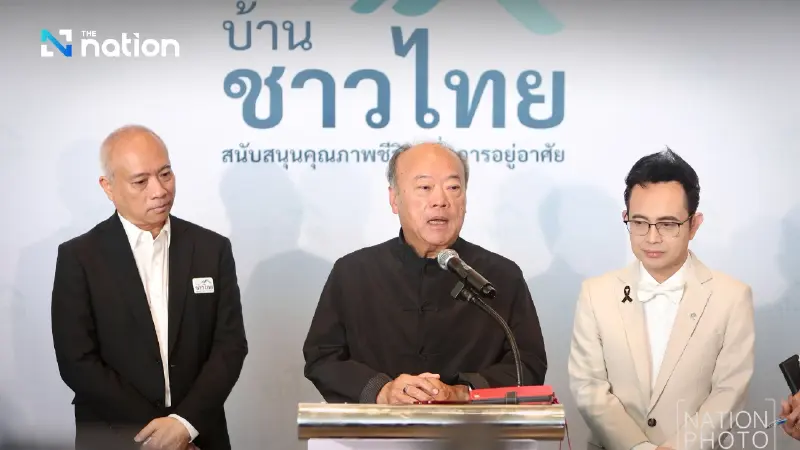


Tracing the business path of ‘Keeree Kanjanapas’: an expensive lesson before stepping into the grassroots challenge

Tracing the path of Keeree Kanjanapas from property to the loss-heavy BTS electric railway—so severe it led to a business rehabilitation process—towards the “Baan Chao Thai” project, a grassroots economic challenge aimed at addressing Thailand’s structural housing problem.
Today (January 19, 2026), Keeree Kanjanapas, Chairman of BTS Group Holdings Public Company Limited, officially launched a housing development project under the brand “Baan Chao Thai”, and announced a total investment of 100 billion baht to expand opportunities for people to access homes at affordable prices.
For most people, the image of Keeree Kanjanapas is that of the “BTS rail tycoon”, tied to investment in Thailand’s first urban rail line. But Keeree’s business path did not begin with social projects or large-scale infrastructure like the BTS. Instead, it grew out of the world of full-scale business.
From finance and real estate to major infrastructure, “risk” and “failure” were part of the learning process—leading to his latest role in “Baan Chao Thai”, now being closely watched as an attempt to solve the country’s structural housing challenge.

Real estate in the boom era, and the start of tough questions
In the period before and after the Tom Yum Kung crisis, Keeree was active in commercial property—both office buildings and projects in Bangkok’s economic districts that grew alongside urban expansion. However, this phase showed him a key limitation of Thai real estate: city development that is disconnected from transport systems.
A building may sit in a prime location, but access can be difficult, travel costs high, and users’ quality of life out of step with economic growth. The problem highlighted that property development alone cannot create sustainable value without supporting infrastructure.
A major gamble on the BTS
From those property lessons, Keeree decided to move into an even riskier investment: rail mass transit, through Bangkok’s first elevated rail project under BTS—seen at the time as “too early” for Thai society.
In its early days, BTS faced intense financial pressure. Ridership was below expectations, the network was short and did not cover real travel needs, and debt from costly infrastructure investment was heavy. The business therefore faced sustained accumulated losses, amid an economy still not fully recovered after the financial crisis.
Losses and rehabilitation: an expensive lesson
During the crisis, BTS entered a rehabilitation process to restructure debt and keep the business alive. This period was a major turning point for Keeree as a businessman, reinforcing that infrastructure cannot rely on a single revenue stream and cannot be judged by short-term returns.
From a project once questioned for its value, BTS became a business proving ground that shaped a new idea: rail systems must be designed as an “economic backbone”, not merely a tool for moving people.
Turning the game with an ecosystem model
After rehabilitation, Keeree began shifting BTS’s business model from a transport operator to building an ecosystem around the rail system—spanning advertising media, digital services, payments, and property development along the transit corridors. This helped diversify income sources, reduce reliance on fares alone, and allow long-term network expansion.
The approach not only moved BTS away from a loss-making model towards greater stability, but also reflected Keeree’s structural mindset—seeing business as a tool for tackling wider urban problems.
From big cities to the grassroots challenge
As Bangkok and major cities became increasingly saturated, Keeree turned to a new challenge: housing for low-income earners and the working class—another bottleneck in Thailand’s economy. High housing costs that exceed purchasing power do not only harm quality of life; they also reflect long-standing structural inequality.
“Baan Chao Thai” is therefore not a return to old-style property development, but an effort to apply lessons from property, BTS, and the rehabilitation process in a new dimension—from building transport infrastructure to building housing infrastructure.
In Keeree’s view, housing is not merely a real estate product; it is the foundation of quality of life, labour productivity, and long-term economic stability.
A test for an infrastructure businessman
Keeree Kanjanapas’s journey—from property, to a loss-making rail business, to rehabilitation, and now to “Baan Chao Thai”—clearly shows that each investment step was not driven by trends, but by reading the country’s “structural problems” ahead of time.
“Baan Chao Thai” is therefore not just another project in a business portfolio, but the next chapter for an infrastructure businessman—expanding the meaning of “infrastructure” from rail lines and big cities to the “life base” of most Thais within the economy.
