
Keeree to meet EEC in December to unlock 200-billion-baht incentives for Eastern Aviation City
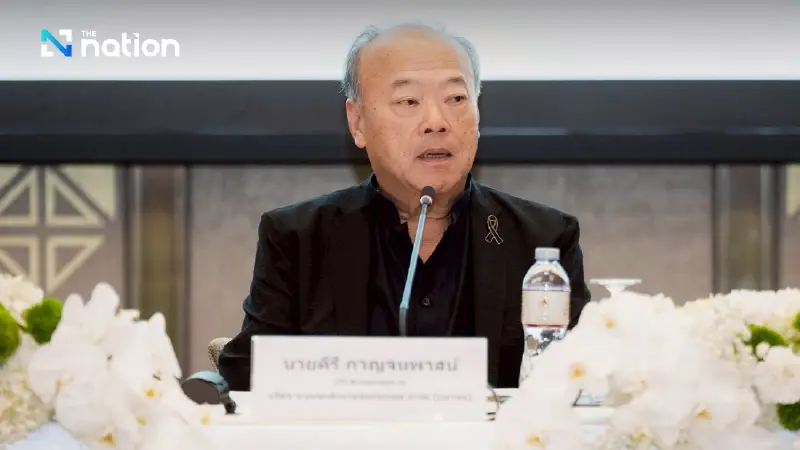


The December meeting with EEC aims to clarify investor incentives and revive momentum for U-Tapao Aviation City, a key driver of the Eastern Economic Corridor
The U-Tapao Airport and Eastern Aviation City Development Project, operated by U-Tapao International Aviation Company Limited (UTA) — linked to Keeree Kanjanapas, chairman of BTS Group Holdings Public Company Limited — has faced more than five years and five months of delay since the contract was signed.
Key turning point expected in December
The project has reached a crucial juncture as UTA and the Eastern Economic Corridor Office (EEC) signed a memorandum of understanding (MOU) extending the deadline for the Notice to Proceed (NTP) to December 2025.
Keeree Kanjanapas is scheduled to meet with the EEC in December to unlock investment incentives and consider a possible extension of the project contract. UTA will finalise progress and direction during that month and announce updates to the public.
Causes of delay and project stagnation
The NTP has yet to be issued due to complications with related infrastructure projects — particularly the high-speed rail network connecting the three airports (Suvarnabhumi–Don Mueang–U-Tapao), which still lacks a clear construction start date.
Another major obstacle lies in the uncertainty over investor privileges, a crucial contractual condition that must be resolved before the project can move forward.
Pushing for incentives to attract investors
Keeree stressed that the key issue now concerns the clarity of investment privileges due under the contract, particularly:
- Infrastructure: including the high-speed rail, expressways, and passenger terminals designed to handle 12 million passengers annually.
- Tax incentives and free-zone benefits.
He noted that clear and competitive incentives are vital, as the global investment climate remains weak and Thailand must compete with other regional economies such as Singapore, Vietnam, and China, which offer attractive investor privileges.

Commitment to proceed and investment potential
UTA reaffirmed its commitment to continue the project without terminating the contract, though the initial phase may be scaled down to match current economic conditions.
- Initial investment: Once incentives are clarified, UTA expects to invest about 20 billion baht in core infrastructure during the first phase.
- Attracting investors: With clear benefits in place, UTA plans a roadshow to draw investors, projecting total investments of over 200 billion baht once operations begin.
- Returns: The project’s internal rate of return (IRR) is estimated at 10.2 percent, a modest figure for a development of significant national benefit.
Keeree emphasised that the project concerns not only the 6,500 rai airport site but also the surrounding hundreds of thousands of rai, which will serve as a key gateway to the EEC. “If the airport does not begin, nothing else can start,” he said.
Unlocking the gateway to EEC growth
Overall, the situation resembles unlocking a grand gateway — with the “investment incentive” as the key. The December discussions will be the final opportunity for the EEC to turn this key and open the door for over 200 billion baht in investment to flow into U-Tapao Aviation City and the wider Eastern Economic Corridor.
