
Thai Developers Lobby for Radical Land Reform to Rescue Housing Market
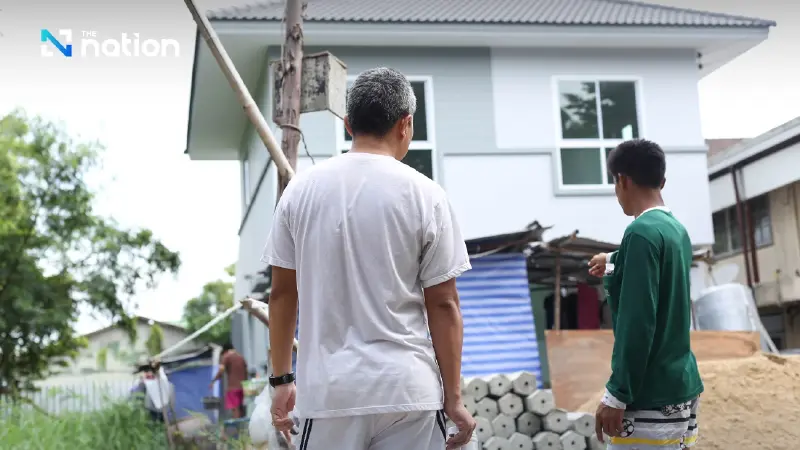


Three major property bodies call for 60-year leases and smaller plot sizes to accommodate shrinking households and support struggling first-time buyers
- Three major Thai property associations are lobbying for significant land reform to address the housing market's challenges, driven by shrinking household sizes and declining affordability for first-time buyers.
- One key proposal is to reduce the minimum land plot sizes for detached houses, semi-detached houses, and townhouses to lower the entry price of homeownership.
- The developers also propose extending property leasehold rights to a 60-year term (an initial 30 years with a 30-year renewal) to provide greater security for homeowners and attract foreign investment.
Three major property bodies call for 60-year leases and smaller plot sizes to accommodate shrinking households and support struggling first-time buyers.
The Thai property market is at a crossroads as three leading industry bodies—the Thai Condominium Association, the Thai Real Estate Association, and the Housing Business Association—lobby the Department of Lands for a "major surgery" of national land regulations.
The proposed overhaul aims to realign land laws with the reality of Thailand's shrinking demographics and declining purchasing power.
Addressing the ‘Bottleneck’ for First-Time Buyers
Sunthorn Sathaporn, president of the Housing Business Association, stated that current regulations were designed for a bygone era of population expansion.
With birth rates plummeting and households becoming smaller, the industry argues that mandatory large plot sizes have become a financial "bottleneck," pushing new developments to the fringes of cities and inflating costs.
To bring homes back within reach of the "First Jobber" demographic, the associations have proposed a significant reduction in minimum land requirements:
Detached Houses: To be reduced from 50 to 35 sq. wah.
Semi-Detached Houses: To be reduced from 35 to 28 sq. wah.
Townhouses: To be reduced from 16 to 14 sq. wah.
The move is designed to lower the entry price for homeownership and allow for more efficient, high-density living closer to urban employment hubs, thereby reducing commuting burdens on the modern workforce.
The 60-Year Leasehold Compromise
The second pillar of the proposal seeks to modernise "Superficies" or leasehold rights.
Following fierce public opposition to a previous 99-year lease concept, the associations have suggested a 60-year framework (an initial 30-year term with a guaranteed 30-year renewal).
Industry experts believe this 60-year cycle is sufficient to cover two generations of mortgages while providing security for foreign investors.
Proponents argue that while regional competitors like Vietnam and Malaysia offer longer terms of up to 80 years, Thailand’s superior infrastructure and lifestyle appeal remain a competitive "edge" that can attract global talent without the need to sell off Thai land ownership.

A Shift Towards ‘Flexible Living’
The Department of Lands is currently "taking the lead" on the proposal, with plans to consult the Architect Council of Thailand and urban planning authorities.
The initiative reflects a broader structural shift from the traditional "large family home" to a "right-sized, flexible" model.
Analysts warn that if Thailand persists with regulations designed for a different century, the cost of living will continue to outpace income, stifling the quality of life for the next generation.
This reform is seen not merely as a commercial boost, but as a necessary evolution to ensure Thailand remains a viable hub for both domestic residents and international investment.
