
Pinklao: From a pass-through area to a new urban node in western Bangkok
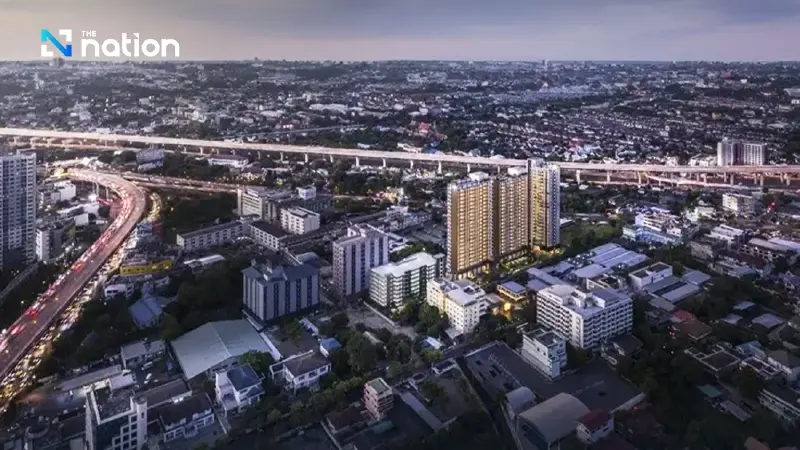


As transport links and infrastructure improve, housing demand is shifting. Pinklao–Borommaratchachonnani is emerging as a new urban node on Bangkok’s western side.
The latest survey by LWS Wisdom and Solution indicates that Pinklao continues to see strong demand for housing—particularly condominiums close to mass transit and major shopping centres—while supply in the market remains limited.
It is a classic real-estate equation: high demand, low supply, and increasingly visible growth potential.
Limited supply in an area that is “waking up”
A site survey found that Pinklao currently has only five condominium projects on the market, totalling 2,342 units. More than 64% have already been sold—averaging around 6–7 units per month per project—leaving roughly 830 units genuinely available in the market.
Notably, over the past decade, there has been no new condominium project located directly on Borommaratchachonnani Road, the area’s main thoroughfare. In other words, the best plots in Pinklao have seen virtually no new supply entering the market.
The catalyst: a broader shift in the urban structure
Pinklao’s renewed momentum is not only a property story, but also the result of structural changes in the city across multiple dimensions.
One key variable is the major transformation of Central Pinklao, backed by investment of more than 1.7 billion baht—its biggest overhaul in nearly 30 years. This is more than a shopping-centre refurbishment; it is an upgrade in status towards becoming the “district leader” on Bangkok’s western side.
The move signals that purchasing power and economic activity in the area are strong enough to draw mega-project investment.
The Orange Line: a strategic turning point
Another major driver is the Orange Line (Bang Khun Non–Min Buri), which will link Bangkok’s western and eastern sides and connect with almost every main rail line.
Combined with the arterial road network—Borommaratchachonnani, Charan Sanitwong, Sirindhorn, and the Prachim Ratthaya Expressway—Pinklao is no longer simply a residential destination. It is increasingly becoming a true mobility “junction” within the city.
Crucially, the area also sits close to major employment centres, large hospitals, and leading educational institutions—such as Siriraj, Thonburi, Thammasat and Silpakorn—supporting sustained housing demand from medical staff, students, and working professionals across generations.
From a residential area to a mixed-use district
Taken together, Pinklao is beginning to take on the characteristics of a mixed-use district, with economic activity throughout the day, rather than falling quiet after office hours as it once did.
It is becoming a place for younger generations seeking quality of life close to the city, while still looking for housing costs that feel more “attainable” than in the CBD.
Prices that have yet to fully reflect the upside
Condominium prices in Pinklao currently sit at around 1.97–3.10 million baht, or an average of 79,000–110,000 baht per square metre, for entry-level units of roughly 23–24 sq m—still lower than many inner-city locations offering similar lifestyles.
Rents start at around 10,000 baht per month for a studio and 13,000–15,000 baht per month for a one-bedroom unit, delivering an average yield of about 6% per year.
With the city’s infrastructure continuing to advance and new supply still constrained, Pinklao may be more than an “up-and-coming” location—it is increasingly positioning itself as one of the future key areas of western Bangkok.
