
The 150 Billion Baht Time Bomb: Thailand’s Condo Sector Braces for Liquidity Crunch
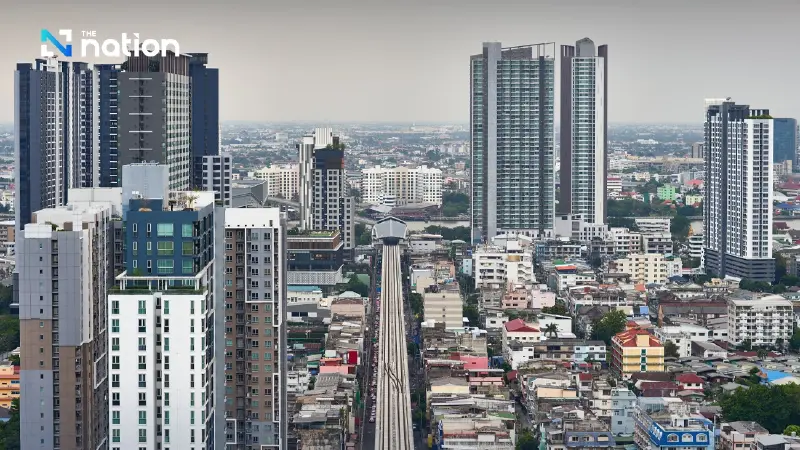


As 147bn baht in condos hit the market alongside massive bond expiries, industry experts warn of a ‘domino effect’ threatening the wider Thai economy
- Thailand's condo sector faces a major liquidity crisis as nearly 150 billion baht in new units are scheduled for transfer, coinciding with over 180 billion baht in corporate bonds that developers must repay this year.
- A failure to complete these property transfers would create a severe cash shortfall for developers, risking a wave of defaults, especially among mid-tier firms with lower credit ratings.
- The cash crunch is already causing a "domino effect," as developers delay payments to contractors and suppliers to preserve funds for bond repayments, threatening the wider construction industry.
- Industry leaders warn this situation could trigger a systemic economic collapse and are calling for structural reforms, such as relaxed lending rules and modernized property laws, to defuse the crisis.
As 147bn baht in condos hit the market alongside massive bond expiries, industry experts warn of a ‘domino effect’ threatening the wider Thai economy.
The Thai real estate sector is currently walking a precarious tightrope, balanced between its enduring appeal to foreign investors and a mounting liquidity crisis simmering beneath the surface.
With nearly 150 billion baht worth of condominium projects slated for completion this year—coinciding with a massive wave of maturing corporate bonds—the industry is facing a potential "iceberg" moment that could trigger a systemic economic collapse.
Speaking to Krungthep Turakij’s Busakorn Phusae, Prasert Taedullayasatit, president of the Thai Condominium Association, painted a sobering picture of an industry in "survival mode."
Since 2017, the market has struggled against global economic headwinds and fragile domestic purchasing power, relying heavily on foreign buyers to stay afloat. Currently, international investors account for roughly 25% of national condo transfers and 20% within Bangkok.
The Anatomy of a Crisis
The "time bomb" is set for 2026. Approximately 147 billion baht in newly completed condominium units are scheduled for ownership transfer this year. This figure represents more than just property value; it is the lifeblood of developer cash flow.
If these transfers fail to meet targets, the resulting cash shortfall will severely hamper developers' ability to repay project loans and settle corporate bonds. The stakes are immense: over 180 billion baht in debt paper is due for redemption this year.
The risk is particularly acute for mid-tier developers. With over half the market holding a BBB credit rating—the lowest rung of investment grade—any further economic strain could lead to downgrades. This would make "rolling over" existing debt nearly impossible, potentially sparking a wave of defaults.

The Hidden Victims: Subcontractors
While major developers have so far maintained market confidence by prioritising bond and interest payments, a silent crisis is emerging further down the supply chain. To preserve cash for creditors, many firms are reportedly delaying payments to contractors and suppliers.
"For large contractors, a payment delay might be manageable," the industry analysis suggests. "But for small-scale subcontractors with limited credit lines, a two or three-month cash gap is a death sentence."
This financial friction is already beginning to ripple through the construction, materials, and labour sectors, threatening a domino effect across the broader economy.

Shifting Sands and New Models
As the new-build market cools—now representing just 62% of total transactions—resale properties are finding a second wind. Urban townhouses in prime locations, which are increasingly scarce in the new-build sector, are attracting "real demand" buyers due to their accessibility.
In response, Asset Management Companies (AMCs) are pivoting to a new business model: purchasing older homes, renovating them, and re-entering the market with 100% financing packages. This approach targets the middle-to-lower-income segments that are frequently rejected for credit by traditional new-build projects.
Structural Surgery Required
Prasert argues that the industry needs more than just a short-term stimulus; it requires a total structural overhaul. Key proposals from the Thai Condominium Association include:
Immediate Relief: Extending Loan-to-Value (LTV) relaxations and reducing policy interest rates to lower financial burdens.
Legislative Reform: Modernising the "outdated" Condominium Act and extending leasehold terms to 60 years to attract long-term investment.
Transparency: Creating a systematic and transparent framework for foreign ownership, coupled with a robust tax system to fund public infrastructure.
Urban Unlocking: Allowing private developers to revitalise abandoned land along mass transit lines in exchange for government fees.
The coming months will be the ultimate test for Thailand’s property giants. If the 150 billion baht in transfers proceeds as planned, the fuse may be temporarily extinguished. If not, the liquidity crisis could transform from a corporate headache into a national economic emergency.
