
Luxury homes still hold firm: 10-30m baht segment emerges as key battleground in Thailand’s soft housing market
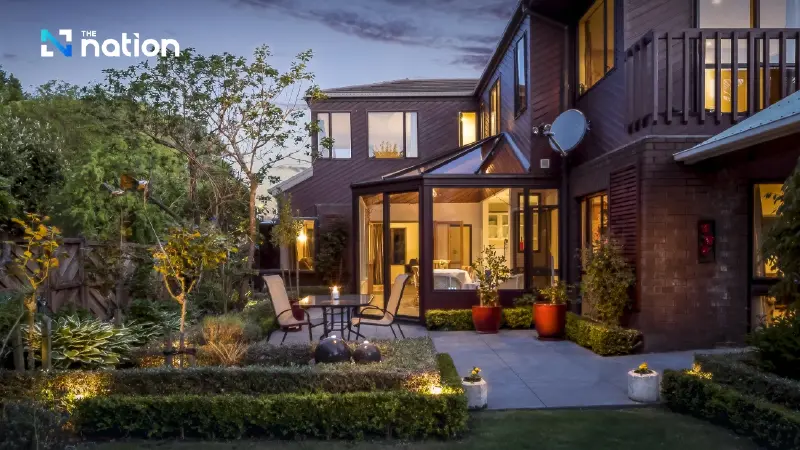


Thailand’s housing market remains under pressure from weak purchasing power, but research suggests the 10-30 million baht luxury home segment, driven mainly by low-rise projects and high-income buyers, continues to show resilience as major developers compete for the upper end.
Thailand’s housing market in Q1 2026 remains under sustained pressure from slower purchasing power and an incomplete economic recovery. Condominium developers have scaled back new launches and shifted focus towards low-rise projects to spread risk amid continued uncertainty.
The slowdown is reflected in 2025 data, with new home ownership transfers down 13.9% year on year. Middle- and lower-income buyers have been particularly cautious, weighed down by household debt and tighter lending conditions. Even so, the market has shown a clear point of strength: homes priced at 10-30 million baht, which continue to perform as one of the most resilient segments.

Surachet Kongcheep, head of research and consultancy at Cushman & Wakefield Thailand, said residential properties priced from 10 million baht have seen a markedly smaller decline in ownership transfers than lower-priced homes, indicating that upper-end purchasing power remains more resilient and less sensitive to economic headwinds.
He said the segment is driven largely by high-income buyers—business owners and senior executives—who have stronger financial positions and rely less on bank credit than mass-market buyers, allowing them to continue purchasing even in a softer economy.
A low-rise-led segment
Structurally, the 10-30 million baht market is dominated by low-rise housing, accounting for about 75-80% of the high-end segment. Condominiums at this price point remain limited, which is why most developers are concentrating on detached houses and housing estates within the bracket.
As a result, the 10-30 million baht luxury home range has become a core competitive arena for major developers. Four companies are widely seen as the main players: Sansiri, Land and Houses, SC Asset, and AP (Thailand).
- Sansiri is using brands such as Setthasiri and Burasiri, emphasising premium lifestyle design, enhanced after-sales service, and LIV-24 security systems.
- Land and Houses continues to lean on its reputation for quality and reliability through brands including Chaiyapruek, Mantana and Sivalee.
- SC Asset targets the segment with Bangkok Boulevard and Bangkok Boulevard Signature, positioning itself from 10 million baht through to above 30 million baht with a premium brand image.
- AP (Thailand) competes with The City and Centro, spread across multiple Bangkok and metropolitan locations, with an emphasis on functional design and efficient use of space.
Other developers such as Supalai and Pruksa are also competing, but the market presence and brand visibility of the four main players remains stronger.

Buyer profile: ‘young successors’ looking for real homes
On the demand side, the key buyer group is increasingly described as “young successors”—professionals and business heirs aged under 45, with high incomes and largely real demand for owner-occupation rather than short-term investment.
Their purchase decisions are not driven by price alone, but by “quality-of-life value”—including usable space, connectivity, access to international schools, facilities, project image and the social environment within the development.
Popular locations include Ram Inthra, Bang Na, Don Mueang, Ratchaphruek, and parts of the metropolitan fringe benefiting from continuing infrastructure upgrades. However, even with strong purchasing power, buyers are taking longer to decide and comparing more options, giving them greater bargaining power.
Costs rising, while financial conditions tighten
Developers are also facing pressure from rising construction material costs, estimated at 5-10%, alongside higher energy costs linked to the Middle East conflict. While current selling prices still reflect earlier cost structures, prolonged pressures could lift home prices further in the next phase.
Financing is also approaching a key turning point. Interest rates are expected to trend higher, and relaxed loan-to-value (LTV) rules allowing up to 100% financing are due to expire on June 30, 2026, unless extended.
This makes timing a critical variable. Buyers who are ready may move faster to lock in both house prices and borrowing costs before financial conditions tighten again.
Against this backdrop, the 10-30 million baht luxury home segment is no longer simply a market niche that can “still sell”—it is increasingly acting as a stabilising core for Thailand’s property sector during a period of economic transition.
